“Hell’s Printing House”—Gloze (1995)
Aside from the pages of little magazines and those of certain, indulgent anthologies, by poems really first made their way in the world in the form of chapbooks. I hadn’t yet published a full-length trade edition, when I went on a “European tour” in 1996, reading in Munich (twice), Heidelberg, and Amsterdam, two self-published chapbooks, Gloze (1995) and On the Phantom Air Ship Mystery (1995), my calling cards.
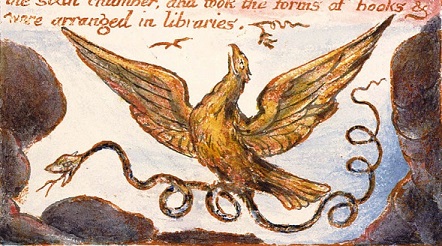
Joachim Utz, the sponsor of my reading at Heidelberg University’s Anglistiches Seminar, observed that my chapbooks reminded him of William Blake’s. This new category of post takes its inspiration from his remark. “Hell’s Printing House” will showcase my chapbooks, describing them, detailing their contents, linking poems that have already been published at Poeta Doctus, and presenting a new recording of one of their poems.
It is hoped these posts fill the lacunae between full-length collections, assuring those (apparently) few (and valued) readers who follow my production with interest that I am hard at work, going my own direction, at my own pace, trusting those intrigued might be charmed enough to tarry along….
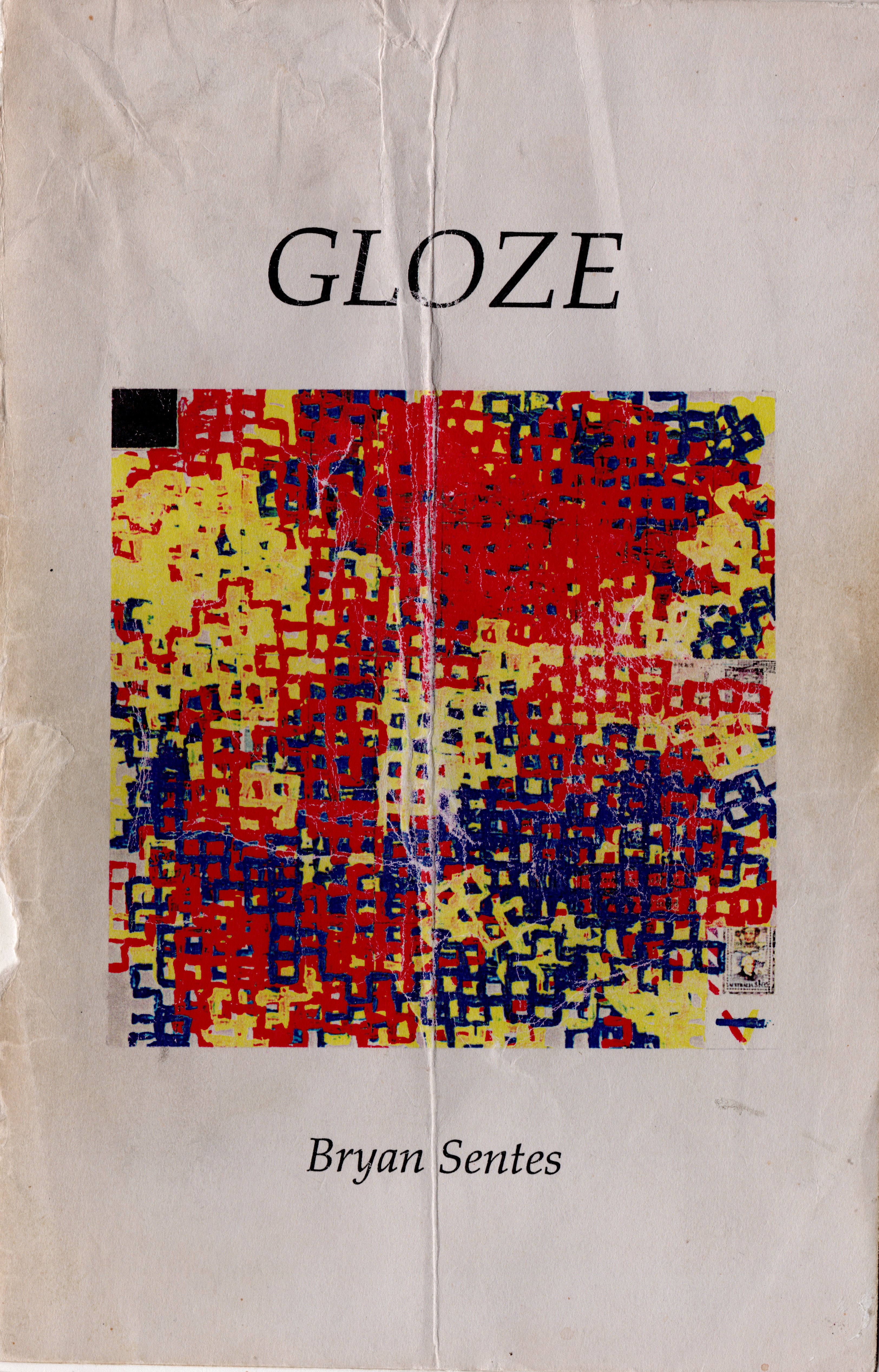
Gloze is my first self-produced, self-published chapbook, inspired by Pneuma Press’ Budapest Suites. As I note in the prefatory remarks to this series of posts, Gloze and On the Phantom Air Ship Mystery were the works that represented me during my European Tour of 1996 and for some years after, until the publication of my first trade edition Grand Gnostic Central and other poems in 1998. The cover is an original artwork of my own, an aleatoric painting in acrylic and collage.
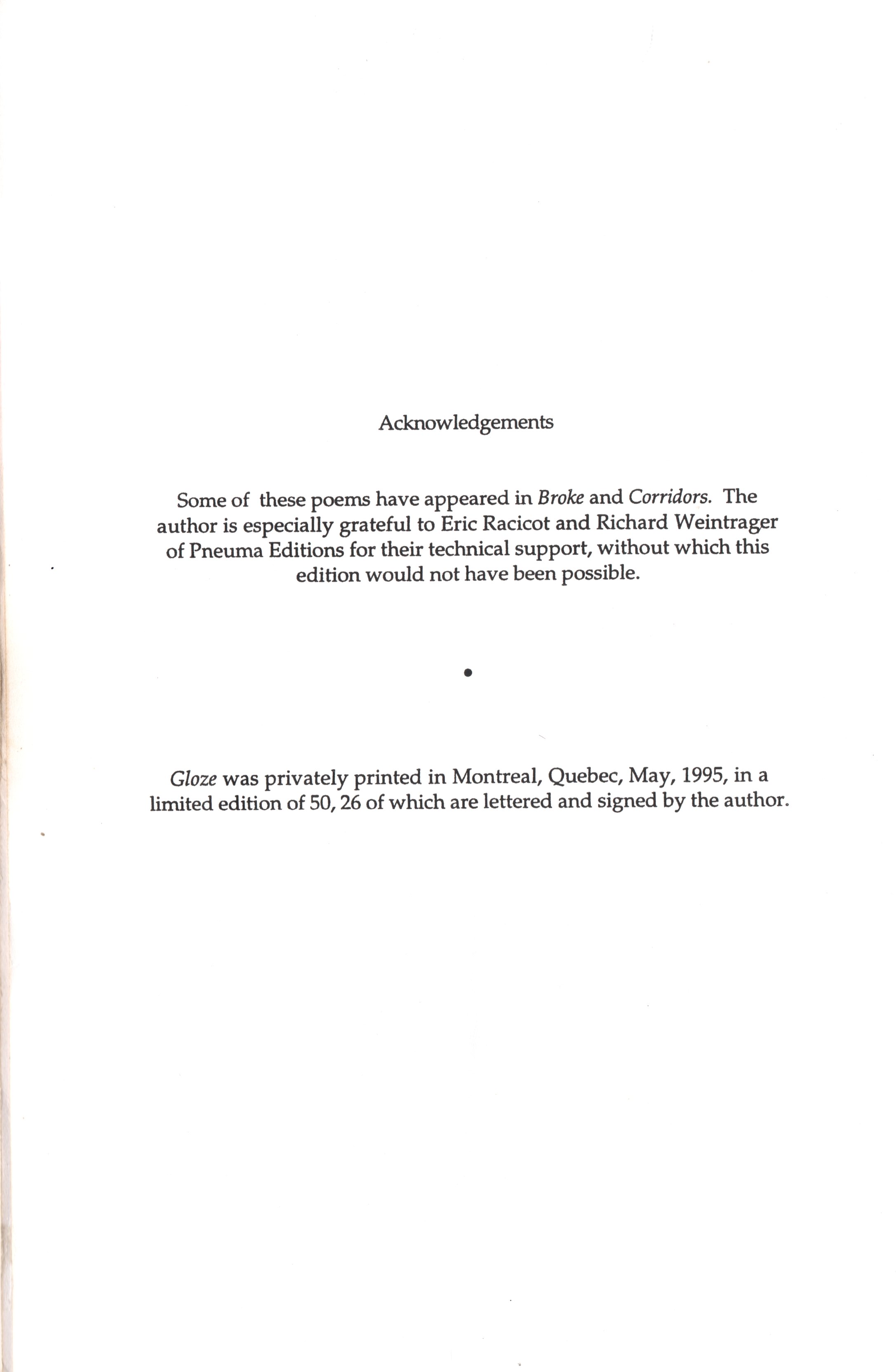
Contents
- Grand Gnostic Central
- After a Legend of the Prior of Urfort
- Smalltalk Hamburg 91
- Two
- Three
- In 1978 When Louis Zukofsky Died at 74 I Was 14
- DP Channels Baba G
- Arachnophobia Prima Facie
- Five
- Thou, Palæmon
- Transcription
- Six
- “As I delighted with the enjoyments of torment…”
- Holy Crow Channels Scardanelli
- Otto (1)
- Á Québec
- ‘Toponomy’ After a Theme von Etienne Tibor Barath
- Horizontal Gold Golden Mercury
- Tonight
- Green Wood
- Ten
- Marmitako
- Will of the Wisp
- Coda: Gloze
“Grand Gnostic Central” is, here, five prose poems (one of which can be read here) and the poem “Tonight, the world is simple and plain.” All poems hyperlinked above are “published” on Poeta Doctus; “Gloze” is represented by a YouTube rendition by “Jake the Dog.”
Although I had yet to publish a full-length trade edition, the poems collected in Gloze already gather work representative of a decade’s work and engagement with the poetry of my peers. At least the prose poem about Wittgenstein and the poem beginning “Tonight, the world is simple and plain…” along with that engaging Meister Eckhart (“After a Legend of the Prior of Urfort”) were composed during my graduate studies (1986-89), when I was labouring to write a way between and with poetry and philosophy, the topic of my master’s thesis. Nevertheless, my concerns were hardly exclusively abstruse: “Smalltake Hamburg 91″ addresses racism,”Thou, Palæmon” the first Gulf War, and “Á Québec” québecois nationalism. As down-to-earth, “Horizontal Gold Noble Mercury” and “Marmitako” ruminate on the alchemy and joy of preparing our daily bread. At the same time, “Horizontal Gold Noble Mercury,” with its allusion to alchemy and the Hermetic philosophy, betrays an interest in more recherché matters, whether the psychicomagical experimentation of Willliam Butler Yeats (“Otto (1)”) or ghost stories from my grandparents’ generation (“Will of the Wisp”), whose Hungarian side are given a nod in the poem “‘Toponomy’ After a Theme von Etienne Tibor Barath,” no less a satire of, again, ethnonationalism. “DP Channels Baba G” is a terse condensation of the life of a Hindu saint, a gesture toward an attention to more “spiritual” matters, a leitmotif in much of my poetry. “Arachnophobia Prima Facie” is more psychological, exploring a fear of spiders that reaches back to my earliest memories. “In 1978 When Louis Zukofsky Died at 74 I Was 14” is a humorous poem about poetic influence and stature.
But, apart from such thematic concerns, many of the poems are more overtly formal, compositional or artistic in their motivations. As I remark with regards to the poem “Six”:
Back in the early Nineties of last century (!) when I wrote this poem, the fashion among many Canadian (at least) poets was to write sonnet sequences. By chance, one day, I wrote a poem (“I know the Aurora Borealis” in Grand Gnostic Central) that happened to have fourteen lines. That chance (which to my ear happily rhymes with ‘chants’) occurrence began an ongoing, half-satirical series of accidentally-fourteen-line poems I called variously over the years “soughknots” (literally “air-knots”) and here “sonots” (so not sonnets!).
All the numbered poems are such sonots. Aside from the prose poem about Wittgenstein in “Grand Gnostic Central,” the others are inspired by early ‘pataphysical prose poems of Chris Dewdney’s. “Transcription” is a sequence of improvisations, likely motivated by an engagement with the spontaneous poetics of the Beats, which I had studied intensively during a memorable summer course in my graduate studies. “Tonight” pretends to this mode, but frees itself from it by means of a litotic irony turning on the ambiguity of a pronoun. “As I delighted with the enoyments of torment…,” “Holy Crow Channels Scardanelli,” and “Gloze” are all experiments in collage poetics. “Gloze,” especially, is a formal innovation of my own, prompted by the Wittgensteinian dictum that “meaning is use.” “Gloze,” and other poems, collate all the meanings of a word or phrase and represent them cubistically by means of the examples provided by the Oxford English Dictionary…
Of all the poems in Gloze, I’m most moved to share “Green Wood,” a poem that synthesizes much of the influences and experiments present in the book. On the face (and “ear” of it), it is reminiscent of the rhapsodic poetry of Allen Ginsberg and others. However, it’s opening line nods to a more radical influence, a translation from Lucretius by Basil Bunting. However much it might be said to deal with personal experience, it tends toward a more objective, metonymic, paratactical presentation, and is guided by a shy, mystical sensibility, perhaps most visible in its attention to synchronicities. Below, you can hear recordings of that poem, along with a performance of Bunting’s translation, a poem I was given to recite at the beginning of my poetry readings at the time.
“Green Wood”
Bunting’s Lucretius’ “Hymn to Venus”
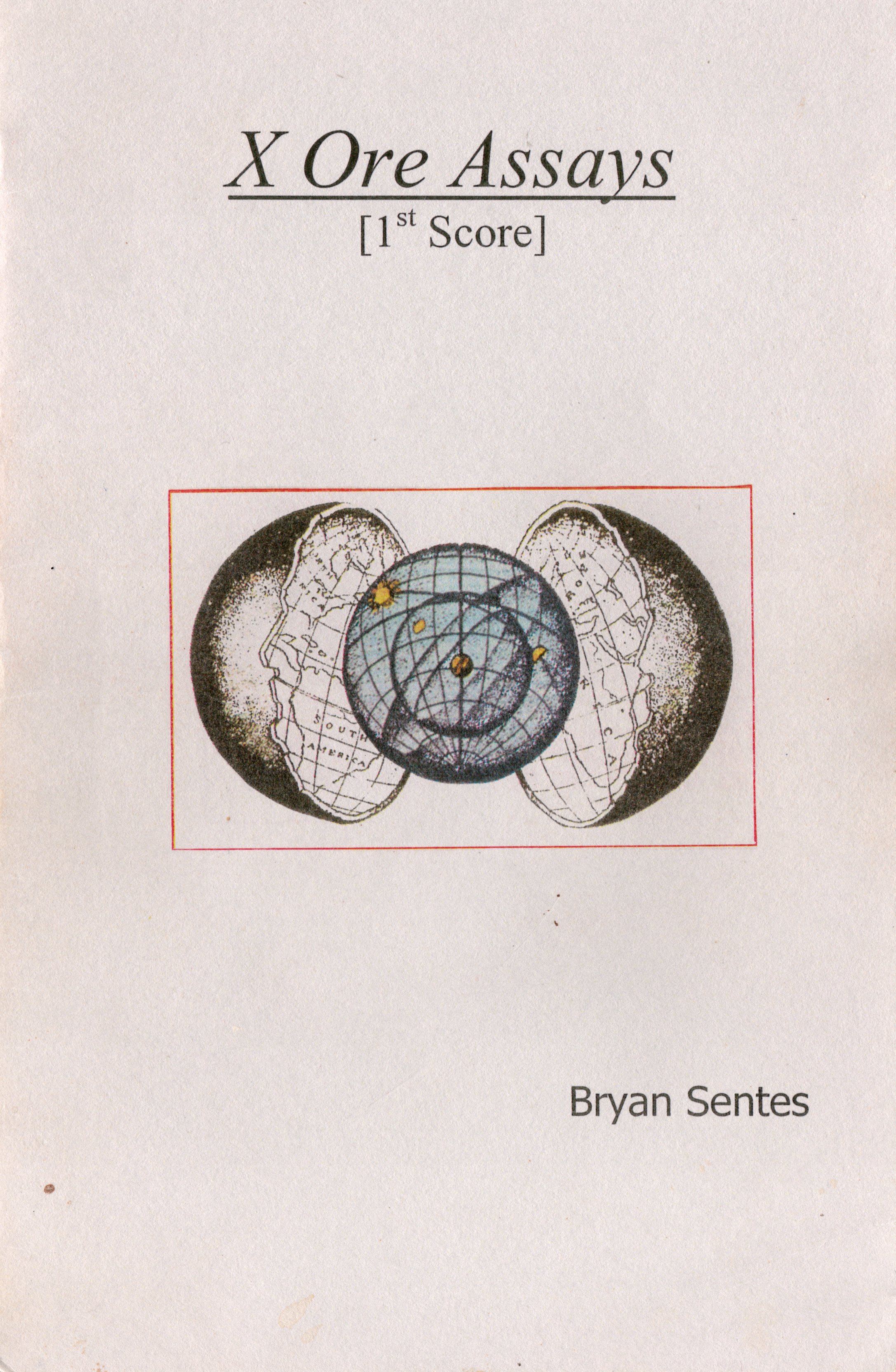
Next month, X Ore Assays (1st Score), 2001:

 Poeta Doctus
Leave a comment