Resist, much?
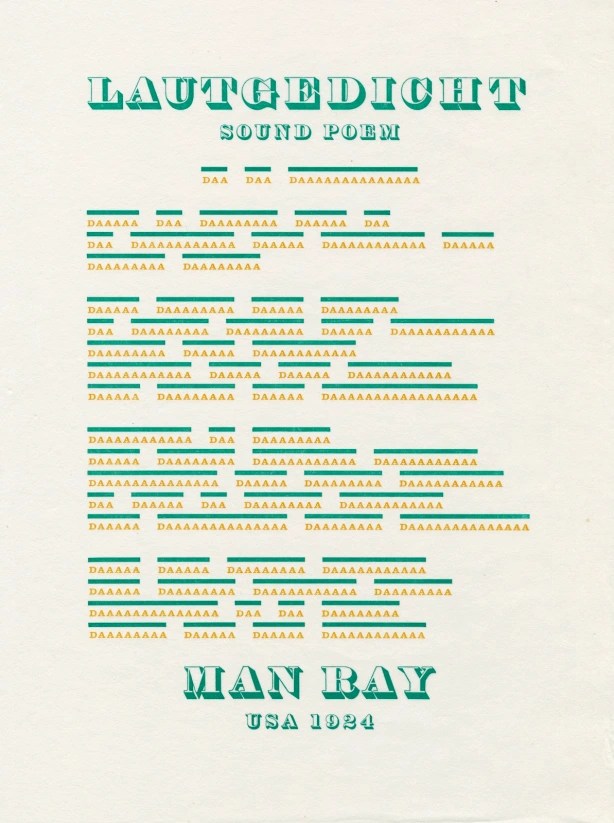
It was and remains an aesthetic, critical, compositional commonplace in some circles that the poem that resists ready understanding resists the capitalist order that would reduce all things to readily consumable commodities.
There are, of course, at least caveats to this position. No text, however transparent, is ever absolutely so, or it would be invisible. That is, all language is possessed of an aesthetic aspect (phonic, graphic, or tactile) as a condition of its possibly serving as a communicative or aesthetic medium at all; its materiality is inescapable. Moreover, no poem can possibly give over its reserves of meaning. “The words on the page” (to invoke a hoary critical paradigm), under sufficient scrutiny, betray an interpretive wealth far in excess of their immediate, prosaic, “literal” meaning. Even more, as a text, the poem is woven from and thereby back into other discourses; it is implicated in a very complex way in its culture. Furthermore, being a temporal phenomenon, that is, existing through time, this con-text will vary; being “fatherless,” the poem will be variously resituated, recontextualized, by ever new readers and thereby made to resonate in new, unforeseeable and uncontrollable ways. And one would be remiss to not remark most critically that it is not the poem that is, strictly, commodified, but what contains it, the book, periodical, or website; the poem is not consumed, per se, but the “thing” that packages it, which is bought and sold.
To these reflections, Abigail Williams’ Reading It Wrong: An Alternative History of Early Eighteenth-Century Literature seems to add a new angle. As the publisher’s description relates,
Focussing on the first half of the eighteenth century, the golden age of satire, Reading It Wrong tells how a combination of changing readerships and fantastically tricky literature created the perfect grounds for puzzlement and partial comprehension. Through the lens of a history of imperfect reading, we see that many of the period’s major works—by writers including Daniel Defoe, Eliza Haywood, Mary Wortley Montagu, Alexander Pope and Jonathan Swift—both generated and depended upon widespread misreading. Being foxed by a satire, coded fiction or allegory was, like Wordle or the cryptic crossword, a form of entertainment…
Williams’ argument is compelling in at least two ways. First, her sample texts’ being resistant to understanding is precisely their appeal, their “selling point.” Second, the horizon of this elusive, allusive aesthetic is the early morning of capitalism in England, Defoe’s Robinson Crusoe, a famous index of the ideology of the moment. However, 2023 is not 1723, however much both are determined by a shared social formation, nor is the superstructure of these two moments the same. (Habermas’ forthcoming A New Structural Transformation of the Public Sphere and Deliberative Politics is all the more looked forward to in this regard). Nevertheless, Williams’ study complicates the still vital, urgent demand to think about the place and function of poetic language in our present, critical moment….

 Poeta Doctus
Leave a comment