Hell’s Printing House: In Canus Major (2009)
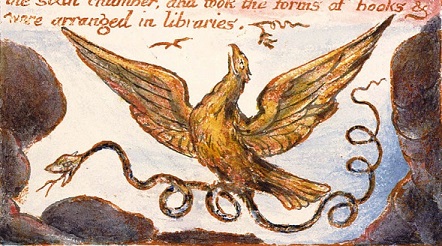
Aside from the pages of little magazines and those of certain, indulgent anthologies, by poems really first made their way in the world in the form of chapbooks. I hadn’t yet published a full-length trade edition, when I went on a “European tour” in 1996, reading in Munich (twice), Heidelberg, and Amsterdam, two self-published chapbooks, Gloze (1995) and On the Phantom Air Ship Mystery (1995), my calling cards.
Joachim Utz, the sponsor of my reading at Heidelberg University’s Anglistiches Seminar, observed that my chapbooks reminded him of William Blake’s. This new category of post takes its inspiration from his remark. “Hell’s Printing House” will showcase my chapbooks, describing them, detailing their contents, linking poems that have already been published at Poeta Doctus, and presenting a new recording of one of their poems.
It is hoped these posts fill the lacunae between full-length collections, assuring those (apparently) few (and valued) readers who follow my production with interest that I am hard at work, going my own direction, at my own pace, trusting those intrigued might be charmed enough to tarry along….
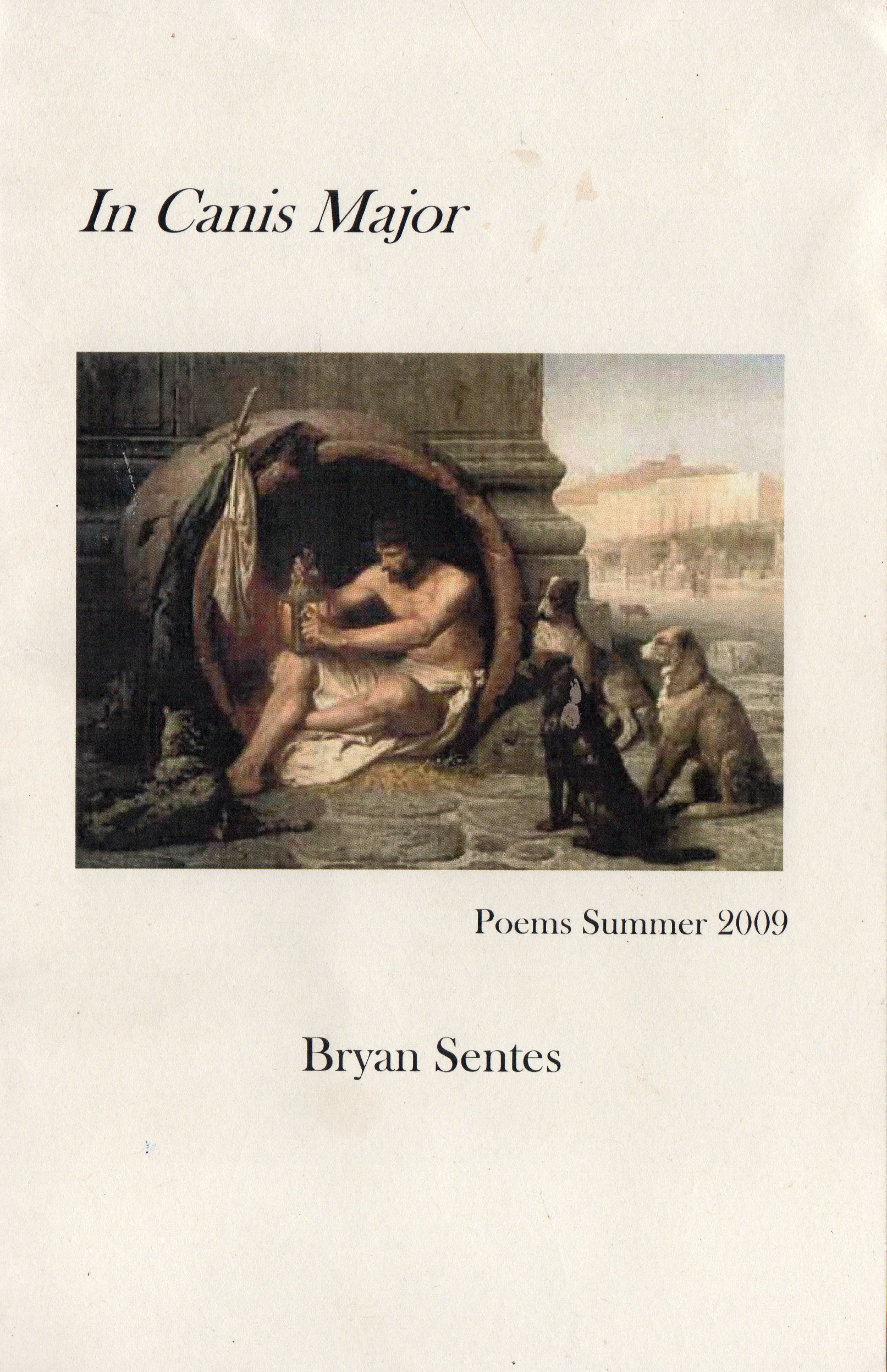
As usual, the two short poems and two sequences this chapbook collects were collated for a poetry reading the summer of the year in the subtitle.
They were collated according to their shared influence, under the sign of the Dog, which is acknowledged in the title’s resonances. One the one hand (paw?), the title refers to the constellation; on another, it suggests that the poems are composed in the key of the Dog. As well, the “title track” is titled “Dog Days.” The “dog” here is Diogenes the Cynic (pictured on the cover), whose given name rimes with ‘dog’ (“dog-genes”) and whose title is derived from the Greek kynikos, literally “dog-like,” from kyōn (genitive kynos), ‘dog’. The original Cynics were termed so because of their shameless behaviour, including urinating, defecating, masturbating, and copulating in public. (Interested parties are urged to consult The Cynics: The Cynic Movement in Antiquity and Its Legacy, eds. Branham and Goulet-Cazé, the volume which informs the take on Cynicism at work, here).
The poems/sequences collected are
- “Welcome Home”
- “Intimations of Mortality”
- “Moundt Royall one circuit”
- “It’s not that you’re young and pretty…”
- “I want to know…”
- “Re: De Rerum Natura IV: 1052-1287”
These last three poems are the sequence remarked above, “Dog Days,” now subtitled “after Corvus Sanctus the Cynic (fl. 64 BCE),” a subtitle intended to underline the poems’ stemming from the traditions of both Cynicism and classical Latin poetry, especially that of Catullus and Juvenal, both known for their forthright, unapologetic bawdiness.
I read this sequence, here.
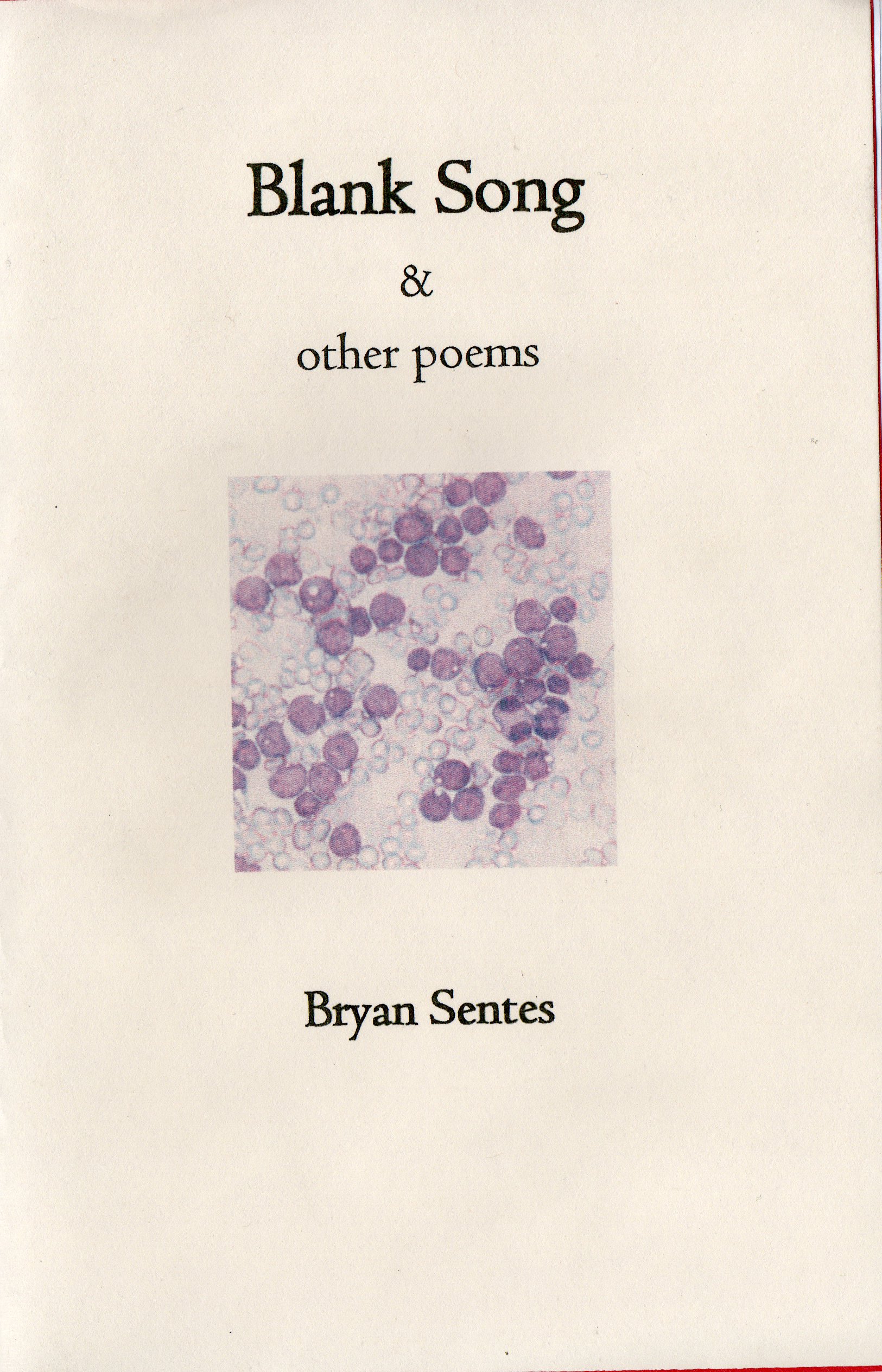
Next month: Blank Song and other poems (2017?):

 Poeta Doctus
Leave a comment