Archive for April, 2025|Monthly archive page
Poetry Month—2025
Filed under: The Brouillon | Tags: climate crisis, ecological crisis, National Poetry Month, Wo zu Dichter in dürftiger Zeit?
 Leave a comment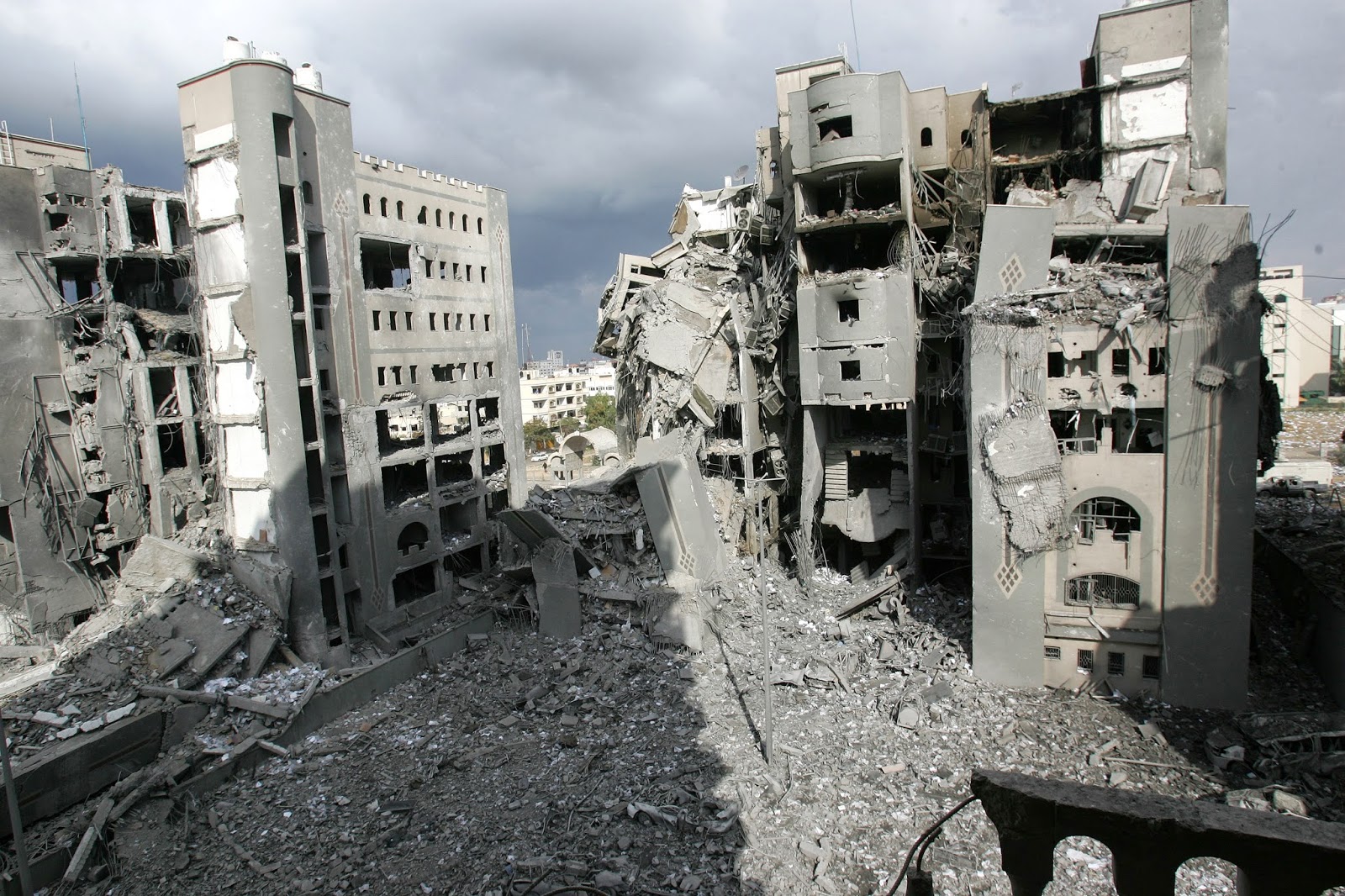
April is National Poetry Month, and it will (“cruelly”) be observed in an overwhelming number of ways. These observations will invariably (and for obvious reasons) take poetry as an art form and in terms of its place in the world as a given, unproblematic. But is the matter really so simple?
In the lecture “What Are Poets For?” (first delivered in 1946, later revised, collected, and published in Holzwege in 1950), Martin Heidegger says of those poets in dürftiger Zeit (literally, “a desperately impoverished time”) that “It is a necessary part of the poet’s nature that, before they can be truly a poet in such an age, the time’s destitution must have made the whole being and vocation of the poet a poetic question…” Heidegger’s compatriot, Theodor Adorno (for all their differences), expresses a similar thought in his unfinished Aesthetic Theory (1970): “It is self-evident that nothing concerning art is self-evident anymore, not its inner life, not its relation to the world, not even its right to exist.” Have matters changed so much since? Is poetry—as an art, in the vocation of the poet—today now so self-evident in its “inner life,” its “relation to the world,” its “right to exist”?
One might be forgiven, of course, for suspecting these philosophers of not taking poetry or Dichtung (roughly, literature) seriously, dismissing it, as have many philosophers since Plato, who accused poets of being liars. Of course, in the case of Heidegger and Adorno, such suspicions would be unfounded. During the Second War, Heidegger famously turned to Hölderlin as a primary source of his thinking, and Adorno, throughout his career, wrote not only (and at length) on music, but on literature, as well, as the volumes of his Notes on Literature attest. One might even venture that Adorno pointed to Samuel Beckett (especially his novel The Unnameable) as a poet (Dichter) for our dürftiger Zeit.
What makes the time, at least of the two philosophers here, so “destitute”? What has pulled the rug from under, if not removed the very ground beneath, the “self-evidence” of art? Heidegger delivered the first version of “What Are Poets For?” at the end of 1946. Germany and much of Europe lay in ruins, Hiroshima and Nagasaki had been reduced to radioactive ash, and the horrors of the Holocaust were coming to international light. In March of the same year, Winston Churchill had already spoken of “the Iron Curtain.” By the time of Adorno’s death in August, 1969, matters had arguably worsened. Not only had the Cold War intensified, raising the risk of Mutually Assured Destruction, but the ecological crisis was becoming a cause for concern, all aggravated by the developed world’s being increasingly, suffocatingly administered under the rule of technocratic, instrumental reason. From the point of view of Geist (“spirit”), even before 1946, radio, recorded music, and cinema, indeed commercial media had begun to displace so-called “High Art,” a development impacting T. S. Eliot’s The Wasteland (1922) and bewailed at length and in detail by critic F. R. Leavis. By the time of Adorno’s death, television had been added to this mix, cultural production “proximally and for the most part” now determined by the “Culture Industry.” The grounds for Adorno’s declaration, above, are arguably more involved (such was the sophistication of his thinking), but the desperation of their time, the beginning of our own present, desperate time, is not difficult to discern.
And today? The concentration of carbon dioxide in the atmosphere is at its highest point in 800,000 years, pushing the climate out of the temperate, post-Ice Age Holocene, the matrix for human civilization as we’ve known it, into one Homo Sapiens have never inhabited. Micro- and nanoplastics contaminate every cubic centimeter of soil on earth and every tissue in the human body, including the brain. That brain’s capacity for attention and focus has been disrupted by digital media, which has whipped the public sphere to a froth. Just before the Second War, Yeats famously wrote that “the centre does not hold.” Not long before, the human capacity to know nature arguably hit a limit in the paradoxes of the quantum realm, and human reason, at least in its logical aspect, foundered at its limit, drawn by Gödel’s Incompleteness Theorem. Ironically, what could be known of, or at least drawn from, that same quantum realm, enabled the detonation of the A-bomb, simultaneously enabling humankind to destroy itself and creating a never-before-seen mineral, Trinitite. Not only has the ground fallen from beneath us (in the limits discovered to physics and logic), but the future is at best unknown and at worst foreclosed. For all its often plodding portentiousness, Heidegger’s essay understands the dürftiger Zeit in Hölderlin’s “Bread and Wine” as a night nearing midnight, a reaching into the abyss; from this present moment, a prophetic insight. What in this now is self-evident in its “inner life,” “its relation to the world,” its “right to exist”?
Another poet, Rimbaud, writes that “we must be absolutely modern,” a statement as descriptive as prescriptive. On the one hand, we can’t help but be “absolutely modern,” of our time, a moment so intimate knowledge of it eludes us, that which is closest being farthest away, as Charles Olson paraphrases Heraclitus. Despite our inescapably absolute modernity, we are always too late, especially in our hypermediated present, when everything happens too quickly (culturing that modern malady of the Fear-of-Missing-Out). That “we must be absolutely modern,” then, becomes a condition for our meeting, living up to (if not through) our present, desperate predicament. In absolutely modern terms, Hölderlin’s question, Wo zu Dichter in dürftiger Zeit? (“What are poets for in a destitute time?” in one translation), becomes, in part, What are poets, what is poetry, for on a planet humankind has never inhabited (and may not inhabit for long)?
If we are to observe (as we have a little here), let alone celebrate, National Poetry Month, we might do so a little more “cruelly,” facing, squarely and clear-eyed as possible, the predicament of the moment and its consequences for the art of poetry and its place in it. Surely, however, such a challenge doesn’t call for (critical, let alone “philosophical”) reflection alone: responding to the desperation of a time that calls everything—and poetry with it—into question might equally call forth poetry itself, just no longer a poetry harmonious and fit with an era irretrievably fallen into the abyss of the past, but one aspiring to be equal to—as new, as modern—as our unprecedented moment and, hopefully, future. Only a poetry that surrenders its complacent self-understanding and confidence in its place in the world—a world long gone—can begin to remake itself as poetry—poiesis, making—uncanny (unheimlich, no longer at home), unrecognizable—yet, thereby, something recognizably made new—alive to a moment that might be imagined to need it most.

 Poeta Doctus