Archive for the ‘The Brouillon’ Category
Jerome Rothenberg on “The Symposium of the Whole”
Filed under: The Brouillon | Tags: ethnopoetics, Jerome Rothenberg, poetry
 Leave a comment
 Rothenberg’s Technicians of the Sacred has been central and essential to my understanding of what poetry is and can be since I first started teaching from it at the turn of the millennium. I find it difficult even to discuss poetry and poetics in an informed fashion with anyone unfamiliar with it, or with those equally expansive volumes, assembling poems for the millennium, that followed.
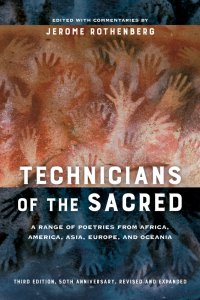
Now, Technicians is being issued in a third edition, fifty years after the first. On this auspicious occasion, Jerome Rothenberg offers some words on the reissue and its timeliness, given the rise of ethnonationalisms, on the one hand, and the on-going extinctions of languages, their poetries, and speakers and singers, on the other. Linked is a talk on the new edition and ethnopoetics given recently at the The Faculty of Arts, The University of Melbourne.
Ignore at the peril to your own poetic spirit.
(Too) little has changed in a generation…
Filed under: The Brouillon | Tags: Gary Snyder, wealth inequality
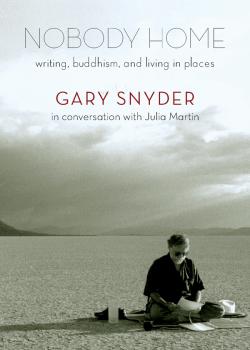
Leave a comment In a book of interviews and correspondence between Julia Martin and Gary Snyder, I read the following in a letter from Snyder dated 28 August 1987 (!):
…the wealth in America is at the top, and there are vast numbers of very poor people, not all of them black or brown by any means. The US is not economically top country, some of those northern European places like Sweden and West Germany are higher. Even Japan, these days. Homeless visible in the streets of every city & some of the larger towns; real rural poverty, numbers of school dropouts that are never pursued, if kids quit schools these days the schools forget them—lousy schools in any case. Most of the US has a kind of hard-bitten disorderly anti-intellectual anti-establishment funk. (136)
Here’s hoping this thirty years of plus ça change is only an eclipse in historical time of more humane, progressive tendencies.
I’ve long said, Gary Snyder is one of the sanest sentient beings on the planet. To read more, you can order the book from the publisher by clicking on the cover…
Poems online now easily accessible
A little editorial labour at ye olde website here now makes all my poems online easily accessible, for interested parties: here.
The Dawson College Shooting ten years on
Filed under: The Brouillon | Tags: Dawson College, Dawson School Shooting
Comments (1) Ten years ago I had just left Montreal’s Dawson College where I teach English on my way to pick up a book I’d ordered around the corner when I heard the shooting‘s opening salvo strafe the entrance I’d just left.
On the tenth anniversary of the shooting (I won’t probe the logic of the anniversary-as-such, here) I repost this reminiscence and reflection that was solicited by the University of Regina’s alumni magazine Degrees and published in the Spring 2007 issue. The photograph at the post’s end is of Dawson’s Peace Garden, planted “as a living testament” to that day, its wounded, and sad, single mortality.
Asked about my experience of what I have come to call “9/13”, I always tell the same story. I’d just left by the same door the shooter was to walk through and hadn’t gotten more than ten metres when I heard what sounded like a string of firecrackers. I turned, ready to give someone a lesson about setting off fireworks in front of the school. Students scattered in every direction. One lay on his back on the street near the curb, his friend crouching over him, one hand on his stomach, her cell phone in the other, screaming for an ambulance. A tall lanky fellow all in black slouched toward the door with what to me looked like an Uzi. A police cruiser pulled up, doors flung open, cops already halfway out, guns in hand. I’d heard gunshots do sound like firecrackers, but before I knew whether I was seeing a joke or a student film project or the real thing, the shooter—and police—were already in the school.
What to do? I wasn’t so much disoriented as unoriented. What was clear was there was nothing I could do, so, as strange as it seems in retrospect, I continued the way I was going, to pick up a book I’d ordered from around the corner. Around that corner, another two police stood over another youth, cuffed, face down on the asphalt. Had a drug deal or bank job gone wrong and one of the suspects fled into Dawson? I walked on. Seeing my office mate and some friends through the window of an Indian restaurant, I went in and told them I thought there’d been a shooting at Dawson, gave them my tentative explanation, then carried on to get my book.
I went back to Dawson to see how things turned out. A crowd of students, many I recognized and some I spoke to, milled about, uncertain, bemused, shocked. Many teary-eyed, frantically tried to call friends or parents on their cell-phones, the sheer number of their calls jamming the network. There were rumours of another shooter in Place Alexis Nihon, the mall across the street. My theory seemed confirmed. I talked with teachers and administrators, trying, like everyone, to figure out what exactly was going on. Marked and unmarked police cruisers and emergency vehicles roared by. A police or news helicopter chattered overhead.
I wasn’t to get “the full story” until I got home, turned on the television and checked the internet. Not two hours after I’d heard those first shots I came home to emails and phone messages from friends and relatives as far away as Europe. Though a witness, I had, like anybody else, to access the news media to find out what had happened. At the speed of light the entire planet knew something had happened at Dawson College in Montreal, and only an on-going buzz of speculation after that.
The next day, Thursday, when what had basically happened had been determined—one student killed, twenty wounded (three who had studied with me)—I was briefly interviewed by a talk radio show in Saskatchewan. One question stands out. I was asked how I felt as I witnessed the event, “did everything start to go in slow-motion?”. No, because I wasn’t watching TV or a movie: there were no special effects, no jump-cuts, no soundtrack. I didn’t know what I was seeing. Unless one has had first-hand experience of this kind of violence, one lacks the context to even perceive the event for what it is. Though we “witness” countless hours of violence on the news, on television and cinema, the stereotypical depictions we absorb are not “the real thing”, which, surprisingly, is impressive for its underwhelming banality. One of the wounded was so distanced from the event that he stood on a balcony overlooking the scene and took half a dozen shots with this cell phone while the shooter fired back.
Seven days, to the minute, after the first shots were fired, in a widely-reported rite, the students took back their school. All their actions—the memorials inside the school, their returning when and how they did—all seemed, mostly, to express a healthy resentment toward this murderous intrusion by an absolute outsider. 9/13 was in this and every respect uncanny, “out of our ken”, outside our acquaintance and beyond our grasp. Despite the on-going police and journalistic investigation, it remains so, and should.
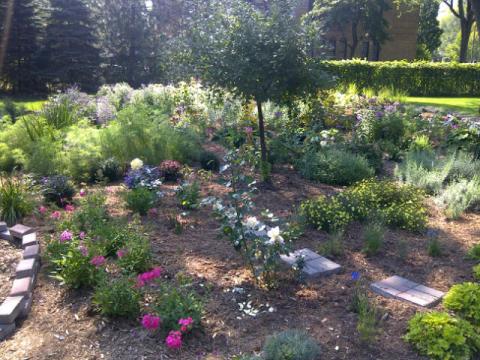
Photo: Shawn Apel/CBC
Listening for the Heartbeat of Being
Filed under: The Brouillon | Tags: poetics, poetry, poetry criticism, Robert Bringhurst
Leave a comment 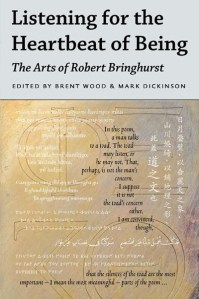 McGill-Queen’s University Press has just issued a collection of criticism on the work of Robert Bringhurst, Listening for the Heartbeat of Being: The Arts of Robert Bringhurst, edited by Brent Wood of the University of Toronto and Mark Dickinson of OCAD University.
I therefore seems timely to repost a link to a short essay on Robert Bringhurst’s poetry, which can be read here.
On Translation: an Interview with Peter Dale Scott in the latest Paideuma
Filed under: The Brouillon | Tags: Paideuma, Peter Dale Scott, poetry, poetry translation
Leave a comment 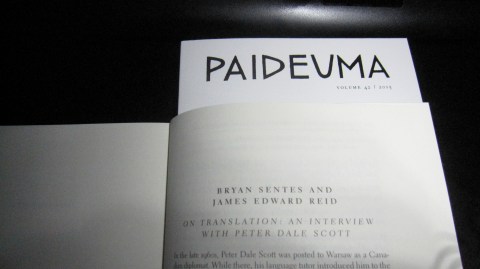 Just received my contributor’s copies of Paideuma 42 containing, among many things, an interview with Peter Dale Scott concerning his many translations—of Milosz, Vergil, Aldhelm, Bede, Alcuin, Petrarch, Dante, Baudelaire, Hoelderlin, Stefan George, Mayakovsky, Mandelstam, Li Bai, Wang Wei, Du Fu, and Su Dongpo!—conducted by James Edward Reid. I suggested we pursue the topic, supplied a number of the questions, and contributed editorially to the final version. Much thanks to Peter Dale Scott for indulging our investigation into this dimension of his poetical work, and to James Edward Reid for doing the heavy lifting!
Peter Dale Scott: Three poems
The Journal for Poetics Research has just put up three new poems from Peter Dale Scott.
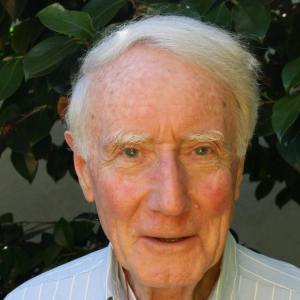 The poet shares these with these words:
As a rule I don’t bother these days about publishing my poetry in periodicals, even e-journals.But these three poems are important to me: the third, about Mario Savio and the Free Speech Movement at Berkeley, tries to capture in verse what I think was, and could again be, a more successful strategy of political protest than those we have seen recently in America.
Read them, here.
Rehoning the old stories
Filed under: The Brouillon | Tags: ethnopoetics, poetry, Robert Bringhurst
Leave a comment Robert Bringhurst’s important contribution to Turtle Island’s literary heritage, A Story as Sharp as a Knife: The Classical Haida Mythtellers and Their World, is being reissued by The Folio Society in the UK in a gorgeous, illustrated edition.
My earlier essay on his poetry can be found here.
Action Books: subscribe!
It’s not often I’ll push a small publisher, but Action Books is surely one of the wildest, liveliest, and most international poetry publishers I know of in the Anglophone world. I’ll be sharing a review of last year’s Wild Grass on the Riverbank by Hiromi Itō soon, but in the meantime, here’s co-editor and -publisher Joyelle McSweeney on what makes Action Books worth supporting:
Why should you support Action Books? We are an international press dedicated to totally deranging the norms by which American (literary, state, police, capitalist, sexist, ableist) culture keeps people down and keeps us from hearing and helping each other. Our list is diverse by ethnicity, nationality, gender, and class, and we work like hell to inspire our readers, authors, designers and translators to do and make radical things.
Check them out, here.
Marianne Dashwood and the Nobel Prize Committee, or how historical comparisons are ahistorical
Filed under: The Brouillon | Tags: Jeremy Noel-Tod, literary criticism, poetry criticism, Seamus Heaney, William Cowper
Leave a comment 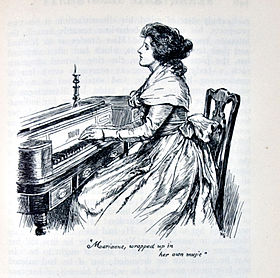 The Véhicule Press Blog has posted a short extract from Jeremy Noel-Tod’s upcoming book of criticism The Whitsun Wedding Video: A Journey into British Poetry that’s woven a snarling thread on Facebook where it was shared. It’s a thread I don’t want to get caught up in, as what concerns me, the extract’s main rhetorical ploy, comparing William Cowper’s reputation to Seamus Heaney’s, has so far gone unreflected, and to remark the ironic ahistoricism of Noel-Tod’s gesture requires more space than a Facebook comment thread.
Noel-Tod’s point is that, because Cowper and Heaney are both “rural, reflective” poets who ironise “poetry’s grand manner with conversational self-consciousness and modest domesticity,” it is imaginable that just as Cowper’s reputation has waned, so might Heaney’s. Noel-Tod seems to present as evidence of Cowper’s status, either naively or tongue-in-cheek, the passionate enthusiasm of Jane Austen’s character from Sense and Sensibility (1811), Marianne Dashwood, almost “driven wild” by Cowper’s “beautiful lines.”
Noel-Tod’s historical comparison is risibly insensitive to history. It is two very different things to be a “rural, reflective” poet in early Nineteenth Century England and in modern Northern Ireland, as the relation between country and city and the nature of that country-side itself undergo radical changes over the course of the hundred-and-fifty years the comparison elides. It is equally two different poetic gestures to ironise the grand manner of England’s Augustan poets and to write in the aftermath of Yeats, whose cold, hard late poetry had already brought to earth the self-confessed Romanticism of his early verse. Finally, to imagine that a poet’s “reputation” in 1811 is comparable to a poet’s “reputation” in 2015 is to overlook among many, many changes the crisis of High Art thematized by literary Modernism. The problem with Noel-Tod’s comparison is that it seems to assume that history, temporal distance and the difference in context this distance registers, doesn’t exist: his “Authors are in Eternity.”
The converse to Noel-Tod’s abstraction are those schools of criticism that would explain an author’s reputation in purely sociological or ideological terms, an approach that is no more true to its object than Noel-Tod’s. Marx, famously, raised the question of how art from historically and socially distant cultures, e.g. Greek tragedy, can still possess undeniable aesthetic power. Neither appeals to some transcendent human condition nor the workings of ideology satisfactorily extract us from Marx’s quandary or the claims that art can make on us. What is interesting is precisely this curious power of art in and over time, a question of perhaps more value and promise than that of “reputation.”

 Poeta Doctus