Synchronicity-invoked Dangerous Supplement
Filed under: poems | Tags: As on a holiday, poems, poetry, poetry criticism, poetry recordings
 Leave a Comment
 By “meaningful coincidence,” the day I downloaded and taught myself the software I needed to make the raw Zoom footage of the launch for my latest chapbook at least a little more presentable, a Canadian poet-critic shared he’d just published an essay on “‘counterfactual’ poetry anthologies, ” a topic essayed by one of the poems from that chapbook‘s Toronto Suite: “Literary Life in the Capital””

“As on a holiday” launch, for your poetry viewing pleasure…
Filed under: poems | Tags: As on a holiday, Cactus Press, poems, poetry, poetry readings, poetry recordings
Comments (2) The March 24, 2021 launch of my latest chapbook is now up online: if you missed the event, you can catch it here.
As on a holiday: teaser #3
Filed under: poems | Tags: As on a holiday, poems, poetry, poetry recordings
Comments (1) 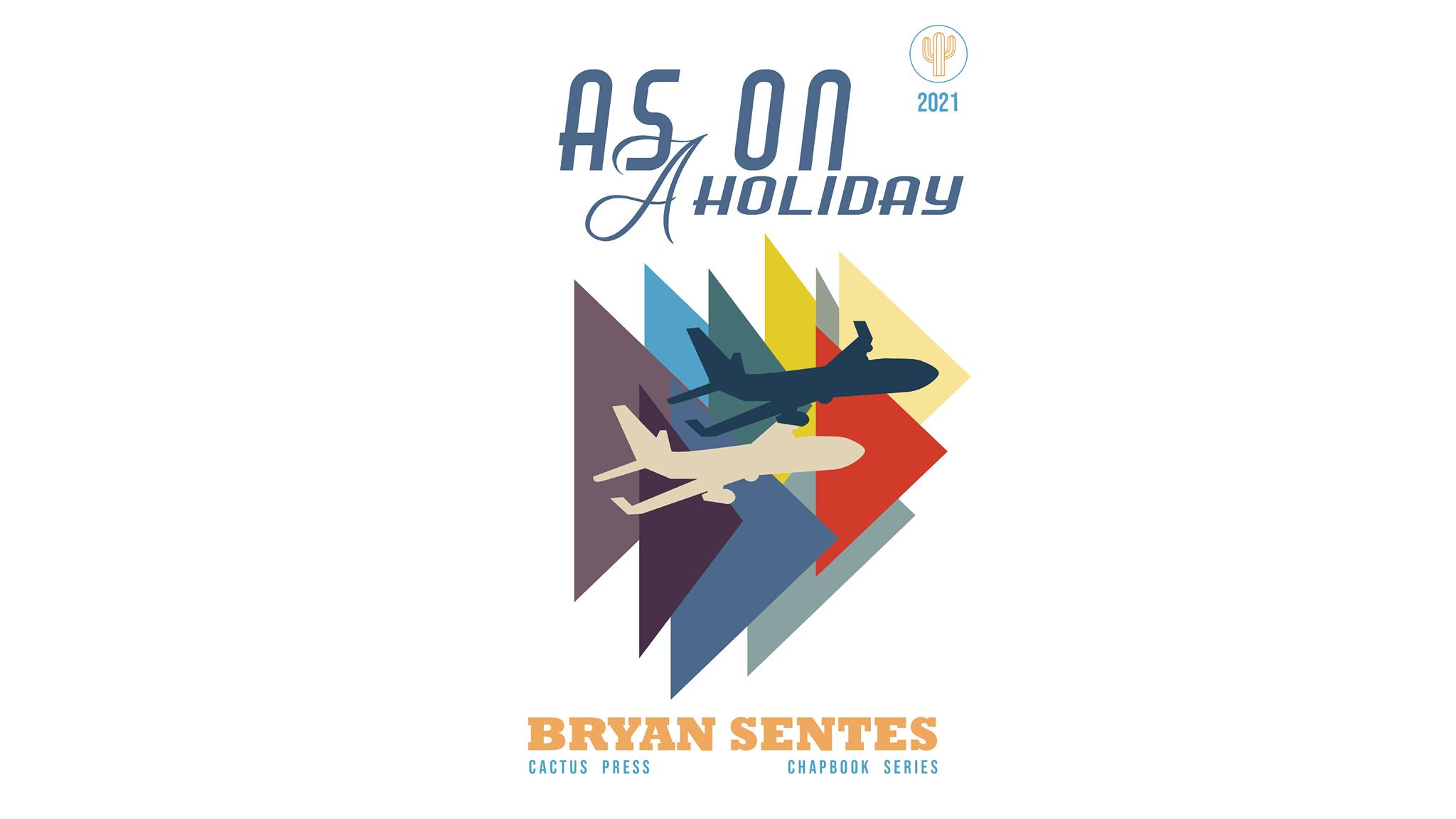
My latest chapbook, As on a holiday, launches Wednesday 24 March.
It’s a challenging book to present orally/aurally, as the poems are all very short. The reader, too, therefore, is faced with the question of exactly how to connect all these short poems. In the tradition of postmodern poetry, such as that of Homer, Dante, and Cervantes, the collection includes a poem that suggests an approach, the first of Farnad Songbook, read here:
Looking forward to seeing you all at the launch!
As on a holiday: Teaser #2
Filed under: poems | Tags: As on a holiday, poems, poetry, poetry recordings
Leave a Comment The launch of my new chapbook, As on a holiday, is getting closer. Today, I offer as preview (pre-hear?) two poems from the section “Made in Germany”.
Everything you need to tune in you should find here.
As on a holiday: Teaser #1
Filed under: poems | Tags: As on a holiday, poems, poetry, poetry recordings
Leave a Comment 
I launch my chapbook As on a holiday (Cactus Press) in just over a week. Between now and then I’ll be posting short readings from the book to pique your interest if not whet your appetite.
The first is part of the “London intermezzo” from the section “Made in Germany”.
The FB Event page for the Zooom launch Wednesday 24 March is here.
“Does Anybody Buy Books Today?”
Filed under: poems | Tags: gentrification, poems, poetry, poetry recordings, S.W. Welch Books
Leave a Comment “Developers” are changing the face and character of cities all over the globe, no less in Montreal, Canada.
The city’s Plateau / Mile End neighbourhood has been undergoing gentrification for years, but a recent flashpoint has been the threatened eviction of a longstanding used bookstore, S. W. Welch. The landlord’s jacking the rent caused such an uproar that locals organized a “read-in” in support.
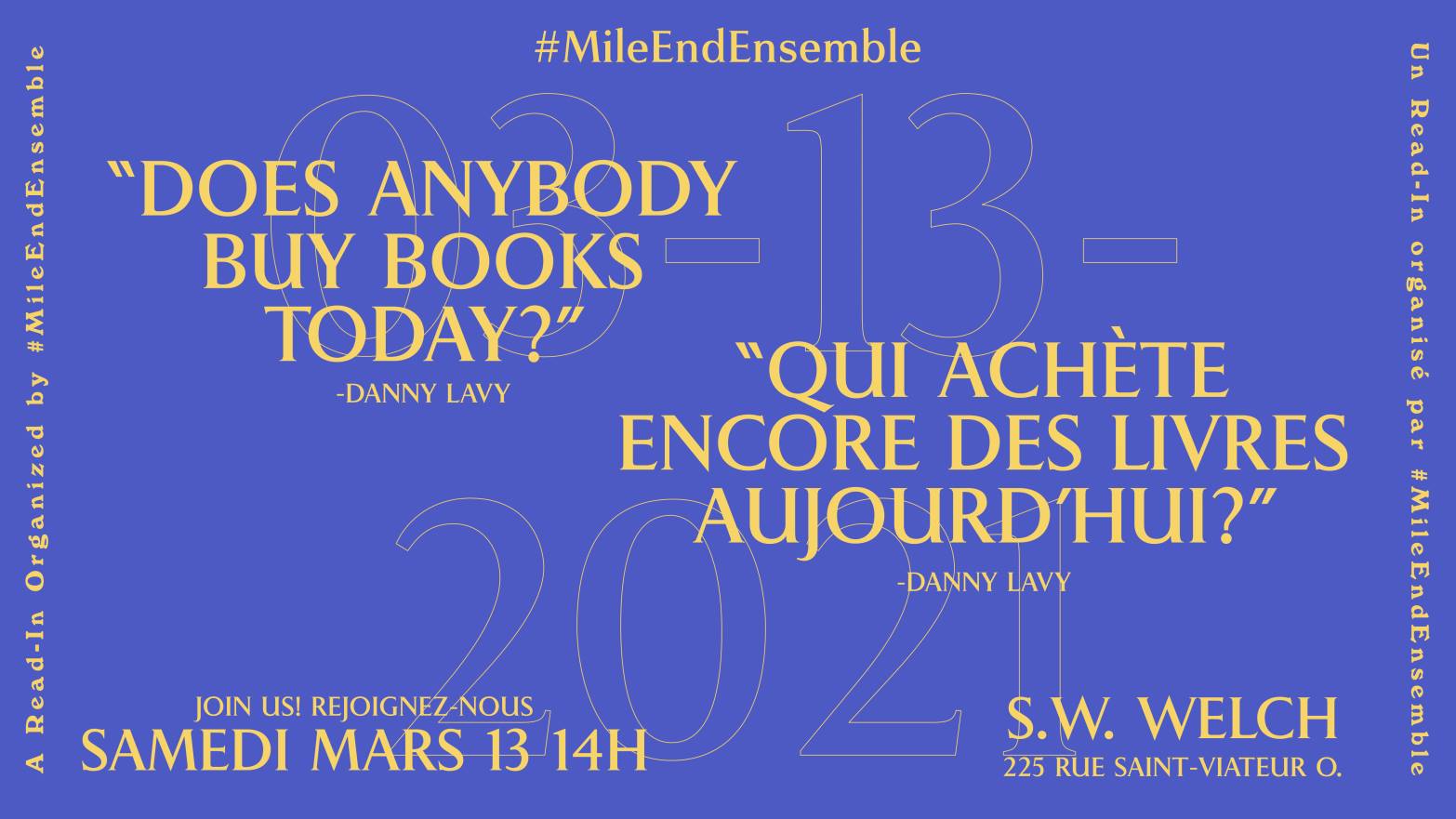
The story was widely covered in local media, including a number of telephone interviews with one of the landlords, Danny Lavy, quoted in the poster, above. Lavy’s words struck me as so representative of a certain mindset (like those that inspired Basil Bunting’s “What the Chairman Told Tom”) I quickly cobbled them together into a poem of my own.
You can hear the poem, here:
(You can read another poem about the changes in Mile End, here.)
New Chapbook: As on a holiday…
Filed under: The Brouillon | Tags: As on a holiday, Cactus Press, Canadian poetry, poetry
Leave a Comment 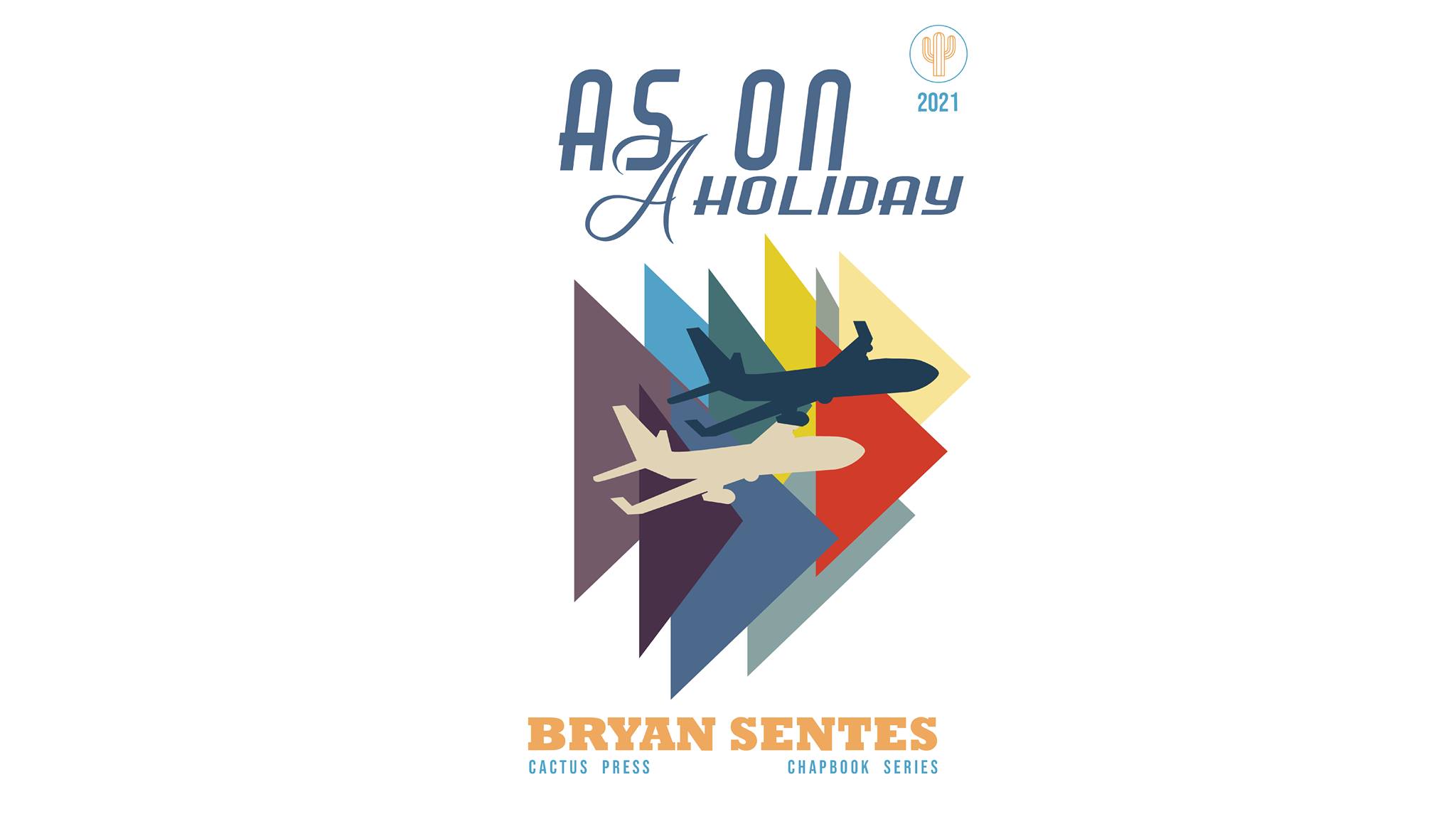
I launch my latest chapbook, As on a holiday, with Montreal’s Cactus Press 24 March 2021 20h00 ET. The chapbook collates four short sequences composed during and about trips to Germany (2012), Slovakia (2014), Toronto (2017), and Saskatchewan (2018).
You can access the Zoom link at the Facebook Event page, here.
You can read an earlier version of one of the poems from the Toronto suite, here.
The indefatigable rob mcclennan has published a wi(l)de-ranging interview with the press’ three editors, here.
I’ve invested this year’s Public Lending Rights cheque in a new microphone, so the sound quality of the launch is sure to be top notch! Copies of the limited-edition chapbook are available in print and electronic formats through the publisher, linked above.
Save the date!
A Sideways Glance at Don McKay’s Angular Unconformity
Filed under: notices and reviews | Tags: Angular Unconformity, Canadian poetry, Canadian Primal, Don McKay, Mark Dickinson, poetry reviews, Robert Bringhurst
Leave a Comment Mark Dickinson’s Canadian Primal: Poets, Places, and the Music of Meaning, a groundbreaking study of the lives and work of Dennis Lee, Don McKay, Robert Bringhurst, Jan Zwicky, and Tim Lilburn has been open in my hands since landing there only a few days ago. Having just finished the chapter on Don McKay, I’m reminded I wrote a short notice of McKay’s collected poems  when it appeared in 2014 for a very good website, now defunct. Because it is a sharp, short review, I share it here, now, so it might remain on record. (The curious can read a more sweeping essay on the oeuvre of Robert Bringhurst, here).
“Hard to say this awkwardly / enough”: a review of Don McKay’s Angular Unconformity Collected Poems 1970-2014
Angular Unconformity is hardly amenable to a short review, collecting as it does ten volumes of poetry, supplemented by a sheaf of new work, more than 500 pages, a lifetime of poetic production. Moreover, any reader acquainted with contemporary Canadian anglophone poetry can’t be unacquainted with Don McKay, a two-time winner of the Governor General’s award for Night Field (1991) and Another Gravity (2000) and the Griffin Poetry Prize for Strike/Slip (2006). He is accordingly admired and targeted for these accomplishments and for his influence as an editor and teacher.
Nevertheless, one can characterize the stylistic development of McKay’s poetry with relative ease. The poetics of the first two volumes collected here, Long Sault (1975) and Lependu (1978), are influenced not so much by Purdy or Ted Hughes (as one critic would mysteriously have it) but by the New American Poetry, specifically Olson’s Projective Verse and The Maximus Poems or William Carlos Williams’ Paterson, especially where Long Sault becomes personified in (at least) the book’s fourth section. Lependu torques up the conceit of place and person, in this case London, Ontario and Lependu, in a more focussed, dense, and documentary fashion, but one that is self-aware enough to play fast and loose with its sources for its own artistic ends.
However, with Birding, or desire (1983) McKay finds his groove. In the book’s opening poem “Field Marks” (93) one finds what might be a description of much of McKay’s work from this point on: “…a bird book full of / lavish illustrations with a text of metaphor” (7-8). While in “Adagio for a Fallen Sparrow” (125) in the same volume the poet points to his “shelf / with Keats and Shelley and The Birds of Canada” (21-22). In these lines McKay presciently parodies the reputation this and following volumes will earn him, that of the Nature (i.e. Romantic) poet whose main thematic vehicle is Canada’s birds. Like any parody, however, this one possesses a perverse truth, for a primary objective of McKay’s poetry is one shared with Novalis and Wordsworth, to render the familiar strange, to percieve the things of the world as if for the first time. As McKay writes in the essay “Baler Twine” from Vis à Vis (2001): “in such defamiliarization…we encounter the momentary circumvention of the mind’s categories to glimpse some thing’s autonomy—its rawness, its duende, its alien being” (21). This “circumvention of the mind’s categories” is simultaneously an eschewal of the mind’s drive to dominate via knowing, a refusal of what McKay terms, following Levinas, “the primordial grasp” in favour of a “poetic attention” wherein the poem reaches for “things sensuously through the caress” (23).
The poems caress their objects with two hands: on the one, a fluctuation of lexicon and tone, while, on the other, a protean metaphorization. The poems mix so-called High and Low culture, “lascivious as Beardsley, sweet as Shirley Temple”, the vernacular and the discourses of geology, philosophy, and (of course) ornithology, English and French, gravity and humour. McKay’s artistic drive to refresh perception by means of poetic redescription shares something with the “rosy-fingered dawn.” But his style differs from epic simile or Metaphysical conceit or even that more recent predilection for what John Crowe Ransom termed “texture” (theme developed by a consistent pattern of trope and scheme). McKay’s metaphors are more impulsive and local, often working strictly within the context of the line more than the stanza or entire poem. A map in The Muskwa Assemblage (2008) is “skewed to the diagonal….as though some formerly symmetrical design had been invaded by irresistable divinity, some Dionysus headed northwest”; the reader of the map “might have been a crime scene investigator”, the geograpy variegated “[a]s though deep form, like a medicine dream, were forcing its way up from the mantle” (480).
Readers, then, must negotiate a constantly changing linguistic landscape bent on “the circumvention of the mind’s categories”. These demands aren’t the product of a high-handed virtuousity but the humility that underwrites McKay’s species of “poetic attention” whose restless articulations stammer to admit it’s all too “[h]ard to say this awkwardly / enough” (“February Willows” 3-4, in Sanding Down this Rocking Chair on a Windy Night (1987), p. 191). McKay’s art works against a certain eloquence, against consistency, knowledge, mastery. The first two books possess more a vector of compositional means than the focussed, polished exploitation of a given set of techniques. The constant shifts in vocabulary, tone, and trope, the bad jokes, all serve to puncture the authority of the poet who must work both with and against his poetic fate, inheritor of the Romantic prophetic or vatic mode that humbles itself to take up a poetry of attention anxious to exploit every linguistic resource not for the sake of Art but perception.
Hölderliniae
Filed under: poems | Tags: Hölderlin, Hölderliniae, Nathaniel Tarn, poems, poetry
Comments (1) 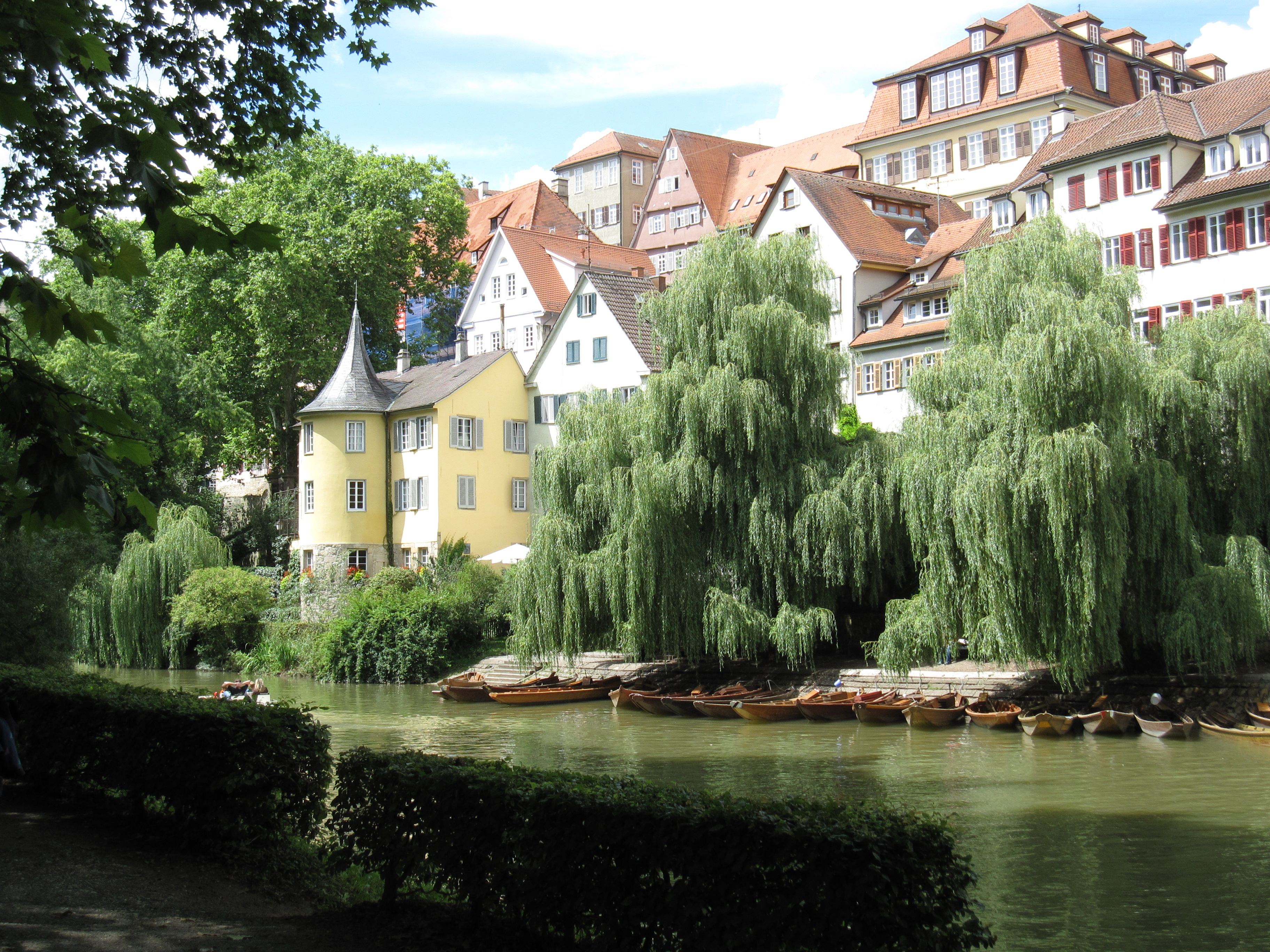
Yesterday, thanks to Cæsura, I got wind of Nathaniel Tarn’s forthcoming collection, The Hölderliniae, a book of poems wherein, “via affairs of love and polity, Tarn speaks through Hölderlin, and Hölderlin speaks through Tarn.”
I received this news with a mix of excited interest and rueful disappointment. On the one hand, like so very many, I hold Hölderlin’s poetry in very high esteem, not least because of its relation to the enduring pertinence of Jena Romanticism, so you can bet a copy of Tarn’s new book will be in my hands warm, if not hot, off the press. On the other, drafts of my own palimpsestic engagements with Hölderlin’s poems, specifically “Heidelberg” and “The Neckar”, now seemed somehow pre-empted.
Of course, Tarn is hardly the only poet to mix things up with Hölderlin this way. In 2018, The Song Cave issued Jonathan Larson’s translation of Friederike Mayröcker’s Scardanelli, and a friend brought to my attention Endre Kukorelly’s H.Ö.L.D.E.R.L.I.N. (1999).
But, then, it occurred to me I had composed poems I could include in this company. Like Mayröcker, my poems allude to Hölderlin by the nom de plume he himself adopted during his (so-called) madness. The first, from Grand Gnostic Central, “Holy Crow Channels Scardanelli” “condenses” some of Hölderlin’s late poetry. The second (graciously published by Dispatches from the Poetry Wars), “Ein Zeichen sind wir…” (We are a sign…) plays off these famous words from a draft of Hölderlin’s “Mnemosyne” and gives a twist to some of the themes common to Hölderlin’s poetry in general.
Time to get back to work on my own Hölderliniae. “I’m told you’re disappointed I have yet / as Scardanelli would write to sing / of Heidelberg…”
Holy Crow Channels Scardanelli
for Moritz Gaede
When from the sky bright bliss itself
Calms and quiets the afternoon through
The pleasant world I’ve made my friend
I am no more, I live no more gladly
Life’s lines various harmonies rich
With peace as who today men brightly halo
Is known, which depth of the spirited succeeds
Of a man say I, if he is good
Daedalus’s spirit and the wood’s is yours
The said, that the earth herself turns from
And perfection is without complaint
When unseen and now past are pictures
So shines nature with her splendour from the earth
“Ein Zeichen sind wir”
Like preScardanelli Scardanelli would put it
The Thunderer himself just a heartbeat cut
The current crashing my chronocide, and twice
Since noon the same software CTD’d in concurrence.
Amuse-bouche: Sunday 6 December 2020
Filed under: Amuse-bouche | Tags: contemplative ecology, contemplative studies, Douglas E Christie, Gerard Manley Hopkins, mindfulness, poetics
Leave a Comment This week: some thoughts on the untimely timeliness of Gerard Manley Hopkins…
Douglas E. Christie, early on in his The Blue Sapphire of the Mind, contrasts John Muir on a sugar pine with Ronald Reagan on the redwood. For Muir, the tree before him is “an inexhaustible study and source of pleasure” noting how “at the age of fifty to one hundred years it begins to acquire individuality, so that no two are alike in their prime or old age. Every tree calls for special admiration.” On the other hand, running to be governor of California, Ronald Reagan (in)famously observed, “If you’ve seen one redwood, you’ve seen them all.”
However much Reagan’s words express an entire culture, what Christie’s juxtaposition brought to my mind was, first, Gerard Manley Hopkins’ notion of “inscape”, that which individuates each thing as the unique, singular thing it is, what Muir perceived in the mature sugar pine and what Reagan and his ilk are insensitive to. Hopkins’ sensitivity to the singularity of individuals expressed itself in a number of ecopoems avant le lettre. One thinks of his lament for a felled grove, “Binsey Poplars”, or the more profound, radical grappling with the destruction of the natural world, “God’s Grandeur”, a poem I’ve long had by heart. Hopkins’ sensibility in this regard breathes the same spirit as what inspires Christie’s attempt to find common ground between contemplative traditions, primarily those of antique and medieval Christianity, and contemporary ecological thought and concerns.
Of course, Hopkins’ poetry is not only precocious in its concerns, but in its formal innovations. On the one hand, he was motivated by the etymological fascinations with the then-new discipline of philology to dig into the roots of the English language and the prosody and potentials of the soil from which it sprang to develop his own markedly singular style, characterized by its alliteration, “sprung rhythm”, and coinages. His poetic oeuvre is rife with examples, one dazzling as it dense being “That Nature is a Heraclitean Fire and of the comfort of the Resurrection”. Such sensitivity to language as poetry’s material ground and the invention that it motivates makes Hopkins a precursor of that poetics that finds its most extreme expression in the coinages of Celan, for instance, or the metrical inventions of, surprisingly, William Carlos Williams in his searching out the “variable foot” proper to the American vulgar tongue. Little wonder Jerome Rothenberg includes Hopkins in the opening selections of his assemblage Poems for the Millennium, volume one.
Finally, it strikes me that Hopkins is also ahead of his time in possessing and presenting a sense of what today goes by the more general rubric of “mindfulness” (something Williams, too, expresses as early as 1921 in his poem “Thursday”). The meditative, contemplative mindset is most emphatically attentive, as Hopkins was, to the individual (rather than then type) and the material (as something in-itself rather than merely as for-use, the way his language stands forth rather than retreating into meek transparency). It does, however, also, culture empathy, kindness, and self-compassion of the kind Hopkins ventures to offer himself in one his “dark sonnets” “My own heart let me more have pity on…”.
Hopkins was one of the first poets I was exposed to in school that turned me on to poetry. It’s good to be reminded of how enduring and inexhaustibly rich his work continues to prove to be.


