Archive for the ‘Canadian poetry’ Tag
Hell’s Printing House: As on a Holiday (2021)
Filed under: Hell's Printing House | Tags: Canadian poetry, poetry, poetry chapbooks, poetry recordings, travel poetry
 Leave a comment
Aside from the pages of little magazines and those of certain, indulgent anthologies, by poems really first made their way in the world in the form of chapbooks. I hadn’t yet published a full-length trade edition, when I went on a “European tour” in 1996, reading in Munich (twice), Heidelberg, and Amsterdam, two self-published chapbooks, Gloze (1995) and On the Phantom Air Ship Mystery (1995), my calling cards.
Joachim Utz, the sponsor of my reading at Heidelberg University’s Anglistiches Seminar, observed that my chapbooks reminded him of William Blake’s. This new category of post takes its inspiration from his remark. “Hell’s Printing House” will showcase my chapbooks, describing them, detailing their contents, linking poems that have already been published at Poeta Doctus, and presenting a new recording of one of their poems.
It is hoped these posts fill the lacunae between full-length collections, assuring those (apparently) few (and valued) readers who follow my production with interest that I am hard at work, going my own direction, at my own pace, trusting those intrigued might be charmed enough to tarry along….
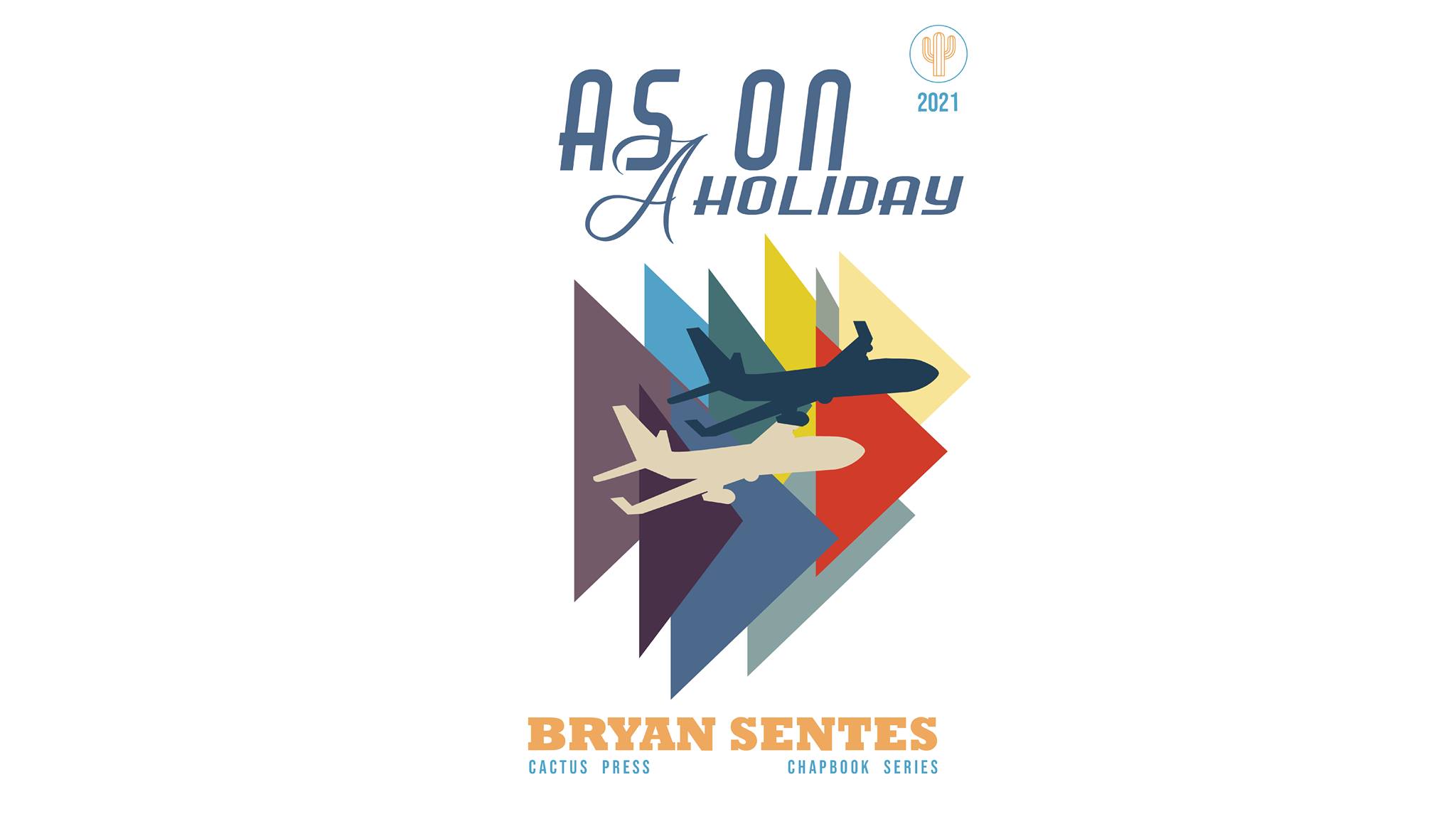
It’s appropriate that this final (for the time being) installment of Hell’s Printing House, like the first, should be of a book published not by myself.
I’m uncertain, now, if the editors at Cactus Press solicited a chapbook or merely opened the door to my submitting. At any rate, I found myself sorting through that big pile of unpublished poems for a selection that might, in some manner, cohere. As I’ve been fortunate enough to be both gainfully employed and to be married to a woman born in Germany, I’ve often found myself visiting various locales in North America and Europe, so collating the poems and sequences often written on these jaunts proposed itself.
The chapbook’s title alludes to a poem of Hölderlin’s “Wie wenn am Feiertage…” The book opens with an epigraph from the the Old English Widsith or Traveller’s Song: “Swa scriþende : gesceapum hweorfað / gleomen gumena : geond grunda fela” (Wandering like this, driven by chance, / minstrels travel through many lands). The book’s contents are:
- “SONOT: Lakeside Estate”
- “Made in Germany” un carnet de voyage
- Farnad Songbook
- Toronto Suite
- Qu’Appelle Valley Elegies
Though not even two-dozen pages of very short poems, those poems are often dense with reference and allusion (as if the title and epigraph didn’t already make that clear…). Readers of a certain education or reading, in the opening cantos of Qu’Appelle Valley Elegies might detect nods to Rilke (as remarked, below), Petrarch, Eliot, and Yeats, whose “Wild Swans at Coole” is echoed in the sequence’s second canto, “White Pelicans on Pasqua.” The chapbook poems’ brevity is quite intentionally balanced at times by just such a depth of what all-too-often is clumsily termed “intertextuality.” Nevertheless, more generally, the truncated expression is governed by a strict, metonymic economy.
The collection is book-ended by poems inspired by stays at my best friend’s home on the shores of Pasqua Lake, Saskatchewan. My times there have been so herrlich, that I’ve felt at times like Rilke staying in Duino Castle, hence the title of the book’s closing sequence. The second sequence recounts a trip overseas made in 2012, the year student demonstrations—the Maple Spring—filled Quebec streets. Farnad Songbook is a sequence composed during a summer stay at another friend’s European digs. And Toronto Suite was likewise composed during a long weekend getaway to the cultural capital of Canada (or, at least, its centre of power…).
Many excerpts from As on a Holiday can be read and heard on Poeta Doctus: from “Made in Germany,” “Waiting on a train…” and “http:// arctic-news.blogspot.de…” (both of which you can hear, here), and “London intermezzo;” the opening poem from Farnad Songbook (recorded, here); from Toronto Suite, “In the Royal York’s Library Bar…,” “Toronto Spring 2018 Getaway Takeaways,” and “Literary Life in the Capital” (recorded, here).
To mark the chapbook’s launch, I read its entirety, here.
Hell’s Printing House: Blank Song & other poems (2017)
Filed under: Hell's Printing House | Tags: Canadian poetry, cancer poetry, poetry, poetry chapbooks, poetry recordings
Leave a comment Aside from the pages of little magazines and those of certain, indulgent anthologies, by poems really first made their way in the world in the form of chapbooks. I hadn’t yet published a full-length trade edition, when I went on a “European tour” in 1996, reading in Munich (twice), Heidelberg, and Amsterdam, two self-published chapbooks, Gloze (1995) and On the Phantom Air Ship Mystery (1995), my calling cards.
Joachim Utz, the sponsor of my reading at Heidelberg University’s Anglistiches Seminar, observed that my chapbooks reminded him of William Blake’s. This new category of post takes its inspiration from his remark. “Hell’s Printing House” will showcase my chapbooks, describing them, detailing their contents, linking poems that have already been published at Poeta Doctus, and presenting a new recording of one of their poems.
It is hoped these posts fill the lacunae between full-length collections, assuring those (apparently) few (and valued) readers who follow my production with interest that I am hard at work, going my own direction, at my own pace, trusting those intrigued might be charmed enough to tarry along….
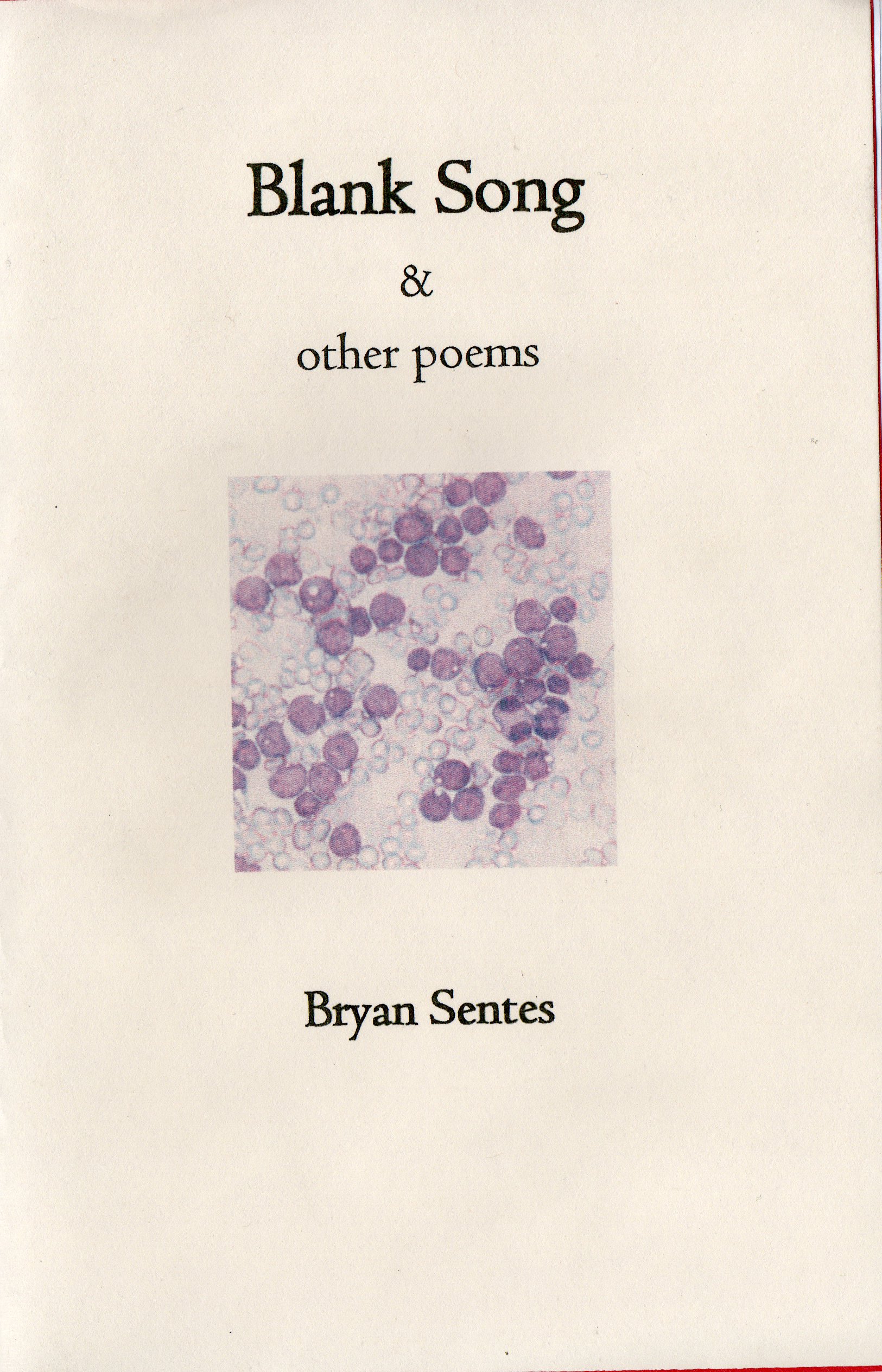
June 13, 2013 I was diagnosed with Chronic Lymphocytic Leukemia and in May, 2016 started a six month chemotherapy regimen. Some (very few) poems resulted. The late, great Ian Ferrier, a Montreal-based poet and impresario, kindly invited me to read at his Words and Voices series in November, 2017 and, for the occasion, I collated a sequence about my cancer experience to that point, Blank Song, along with five other poems. In February, 2023, The Typescript published three poems from that sequence.
The title puns on the French sang blanc, “white blood,” a reference to ‘leukemia’, the name given my blood malady (from Greek leukos “clear, white” and haima “blood”). (A native French speaker tells me the French puns, further, on ‘semblant‘). But “blank song” also nods to a stylistic development, a tendency (apparently) to the plain spoken; understated, litotic or laconic; metonymic rather than metaphoric. Despite this eschewal of present-day, poetic fashion with its tendency to certain manners of surface complexity, there remains an undercurrent of allusion and other manners of linguistic and rhetorical complexity.
The (very short) sequence “Blank Song / sang blanc” spans an initial reflection on my predicament on American Independence Day, 2013 through my undergoing chemotherapy three years later, six poems in all: “Day after I’m told,” “I’m fifty-two…,” “Instead of saying…,” “No point…,” “The Chemical Brothers,” and “Independence Day 2013.” The other, miscellaneous poems are
- “What does it mean…”
- “She admits she has no sense of humour…”
- “Chez La Chronique“
- “My Brother the Doctor Visits After Too Long,” and
- “Life can change so quickly”
I post the the sequence Blank Song / sang blanc, followed by a reading.
Next month: As on a Holiday (2021).
Hell’s Printing House: In Canus Major (2009)
Filed under: Hell's Printing House, The Brouillon | Tags: Canadian poetry, poetry, poetry chapbooks, poetry recordings
Leave a comment Aside from the pages of little magazines and those of certain, indulgent anthologies, by poems really first made their way in the world in the form of chapbooks. I hadn’t yet published a full-length trade edition, when I went on a “European tour” in 1996, reading in Munich (twice), Heidelberg, and Amsterdam, two self-published chapbooks, Gloze (1995) and On the Phantom Air Ship Mystery (1995), my calling cards.
Joachim Utz, the sponsor of my reading at Heidelberg University’s Anglistiches Seminar, observed that my chapbooks reminded him of William Blake’s. This new category of post takes its inspiration from his remark. “Hell’s Printing House” will showcase my chapbooks, describing them, detailing their contents, linking poems that have already been published at Poeta Doctus, and presenting a new recording of one of their poems.
It is hoped these posts fill the lacunae between full-length collections, assuring those (apparently) few (and valued) readers who follow my production with interest that I am hard at work, going my own direction, at my own pace, trusting those intrigued might be charmed enough to tarry along….
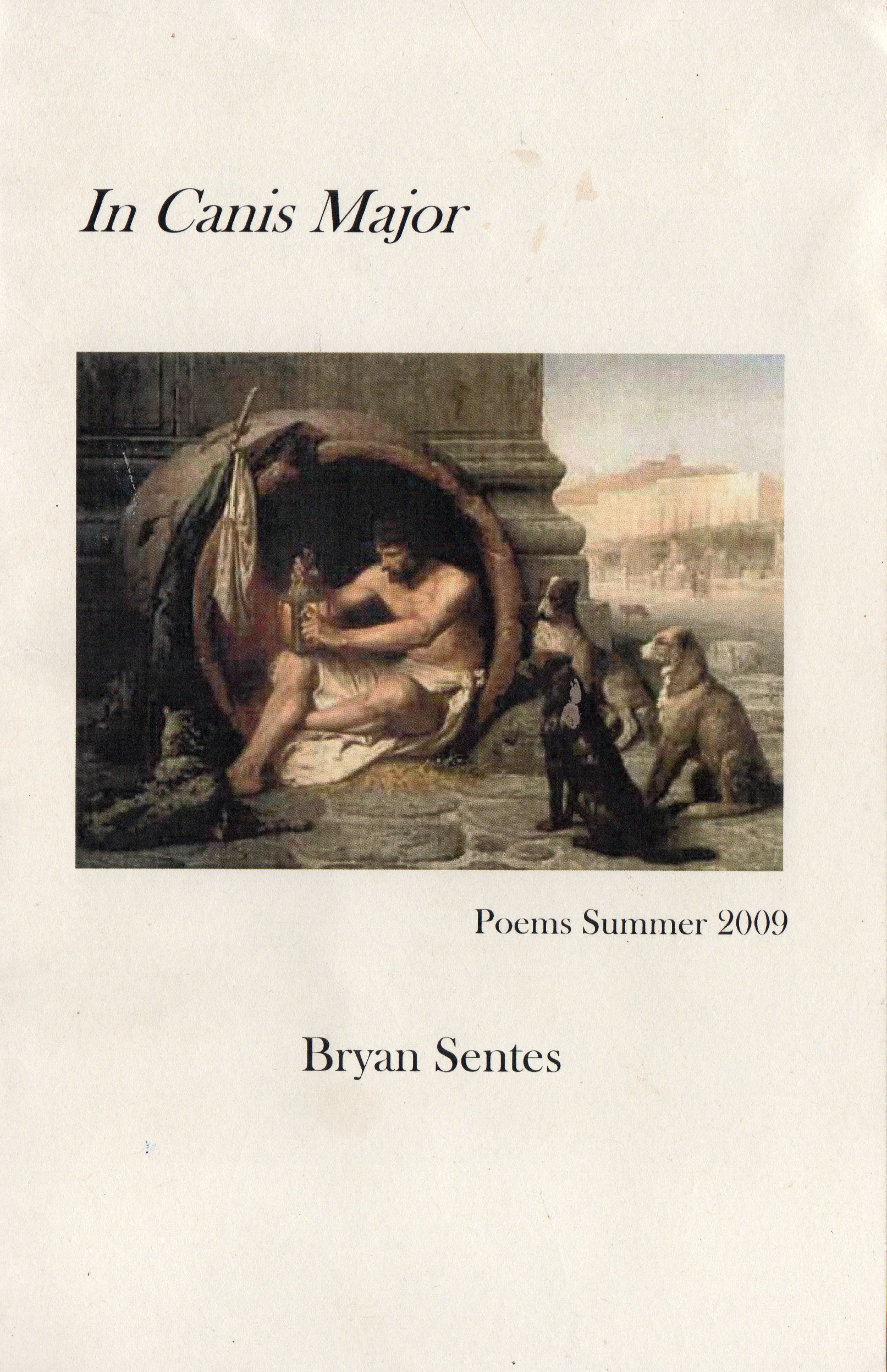
As usual, the two short poems and two sequences this chapbook collects were collated for a poetry reading the summer of the year in the subtitle.
They were collated according to their shared influence, under the sign of the Dog, which is acknowledged in the title’s resonances. One the one hand (paw?), the title refers to the constellation; on another, it suggests that the poems are composed in the key of the Dog. As well, the “title track” is titled “Dog Days.” The “dog” here is Diogenes the Cynic (pictured on the cover), whose given name rimes with ‘dog’ (“dog-genes”) and whose title is derived from the Greek kynikos, literally “dog-like,” from kyōn (genitive kynos), ‘dog’. The original Cynics were termed so because of their shameless behaviour, including urinating, defecating, masturbating, and copulating in public. (Interested parties are urged to consult The Cynics: The Cynic Movement in Antiquity and Its Legacy, eds. Branham and Goulet-Cazé, the volume which informs the take on Cynicism at work, here).
The poems/sequences collected are
- “Welcome Home”
- “Intimations of Mortality”
- “Moundt Royall one circuit”
- “It’s not that you’re young and pretty…”
- “I want to know…”
- “Re: De Rerum Natura IV: 1052-1287”
These last three poems are the sequence remarked above, “Dog Days,” now subtitled “after Corvus Sanctus the Cynic (fl. 64 BCE),” a subtitle intended to underline the poems’ stemming from the traditions of both Cynicism and classical Latin poetry, especially that of Catullus and Juvenal, both known for their forthright, unapologetic bawdiness.
I read this sequence, here.
Next month: Blank Song and other poems (2017?):
Hell’s Printing House: Melathalassemia: Tristia from March End Prill (2009)
Filed under: Hell's Printing House | Tags: Arkánum, Canadian poetry, March End Prill, melancholy poems, poetry, poetry chapbooks, poetry recordings
Leave a comment Aside from the pages of little magazines and those of certain, indulgent anthologies, by poems really first made their way in the world in the form of chapbooks. I hadn’t yet published a full-length trade edition, when I went on a “European tour” in 1996, reading in Munich (twice), Heidelberg, and Amsterdam, two self-published chapbooks, Gloze (1995) and On the Phantom Air Ship Mystery (1995), my calling cards.
Joachim Utz, the sponsor of my reading at Heidelberg University’s Anglistiches Seminar, observed that my chapbooks reminded him of William Blake’s. This new category of post takes its inspiration from his remark. “Hell’s Printing House” will showcase my chapbooks, describing them, detailing their contents, linking poems that have already been published at Poeta Doctus, and presenting a new recording of one of their poems.
It is hoped these posts fill the lacunae between full-length collections, assuring those (apparently) few (and valued) readers who follow my production with interest that I am hard at work, going my own direction, at my own pace, trusting those intrigued might be charmed enough to tarry along….
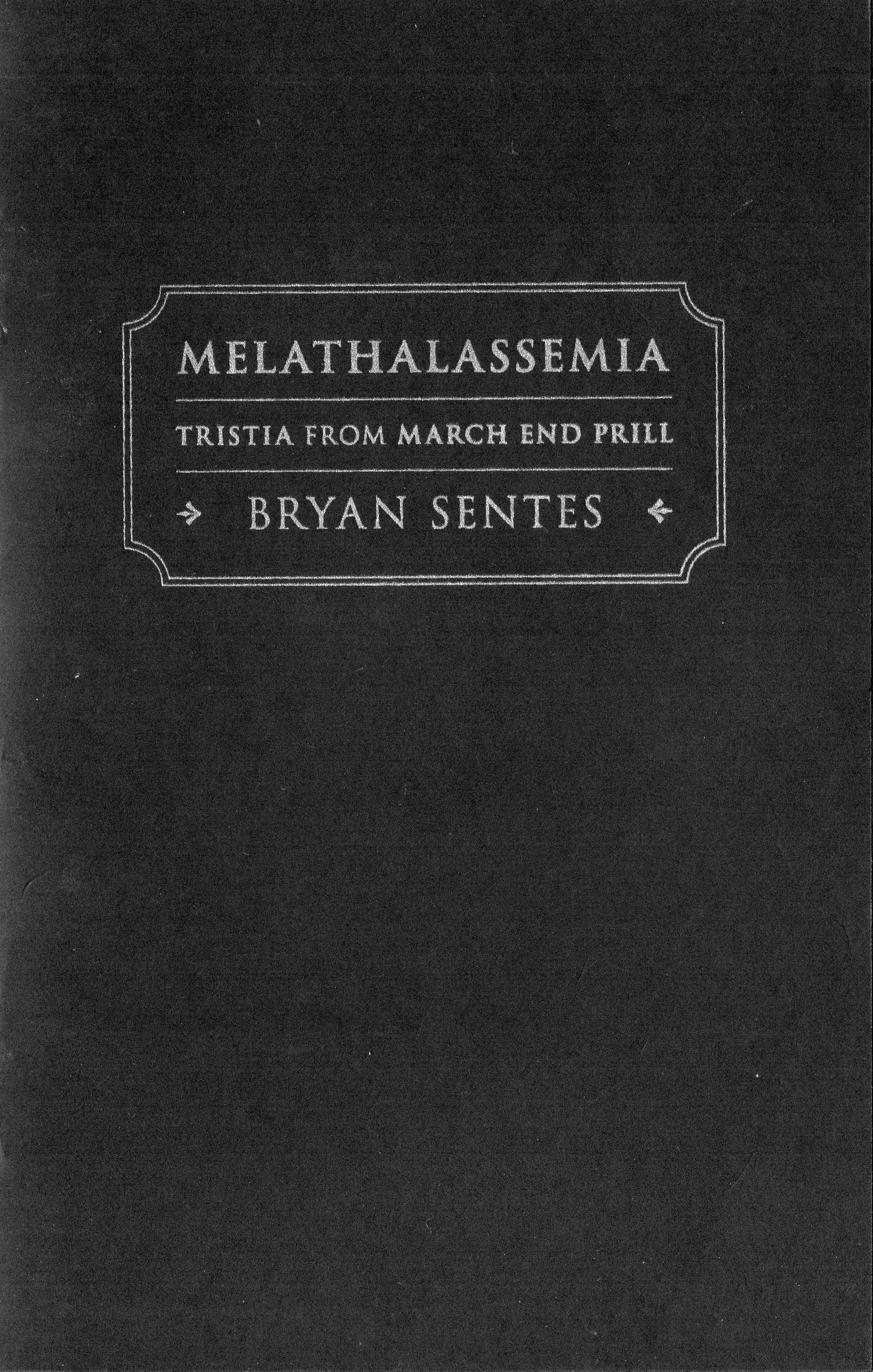
Melathalassemia is another of those chapbooks binding poems for a performance. I forget now who kindly invited me to read, though I do seem to recall it was winter. Perhaps the season prompted my collecting the sections from March End Prill that concerned melancholy (supplemented by two miscellaneous poems on the same theme, “Corpomancy” and “Hymn”).
The title is a coinage, intending to signify, roughly, “Black Sea meanings,” invoking the “black blood” of melancholia and Ovid’s exile in Tomi, underlined by the subtitle’s naming these poems “tristia.” I was especially fortunate to have this chapbook designed my Maurice Roy.
None of these poems have been shared here at Poeta Doctus. Melathalassemia gathers nine poems from March End Prill along with the two mentioned above. The poems from March End Prill are
- “A Cut to Bear Night Thought”
- “Black milk…”
- “Born…”
- “Soul inanimate…”
- “Black blood…”
- “Anatomize…”
- “Aren’t there any cookies…”
- “dustmice taken…”
- “imagine snorkeling…”
“Hymn” (one of the two poems not from March End Prill) is taken from a text composed daily over one lunar cycle sometime before 1999. When I shared it with some members of the Hungarian-language Arkánum group, one remarked of this particular text, “That could be a hymn!” hence the title. His recognition of the text’s being at all poetic I take as sufficient blessing to share, here. I read this poem (presently filed away in a folder titled “Carmina Nongrata” on my computer), below.
Next month: In Canis Major (Summer 2009).
Hell’s Printing House: Symposia Scholia (2006)
Filed under: Hell's Printing House | Tags: Canadian poetry, Gwendolyn MacEwan Poetry Prize, Hans-Georg Gadamer, poetry, poetry chapbooks, poetry recordings, symphilosophy, the Romantic fragment
Leave a comment Aside from the pages of little magazines and those of certain, indulgent anthologies, by poems really first made their way in the world in the form of chapbooks. I hadn’t yet published a full-length trade edition, when I went on a “European tour” in 1996, reading in Munich (twice), Heidelberg, and Amsterdam, two self-published chapbooks, Gloze (1995) and On the Phantom Air Ship Mystery (1995), my calling cards.
Joachim Utz, the sponsor of my reading at Heidelberg University’s Anglistiches Seminar, observed that my chapbooks reminded him of William Blake’s. This new category of post takes its inspiration from his remark. “Hell’s Printing House” will showcase my chapbooks, describing them, detailing their contents, linking poems that have already been published at Poeta Doctus, and presenting a new recording of one of their poems.
It is hoped these posts fill the lacunae between full-length collections, assuring those (apparently) few (and valued) readers who follow my production with interest that I am hard at work, going my own direction, at my own pace, trusting those intrigued might be charmed enough to tarry along….
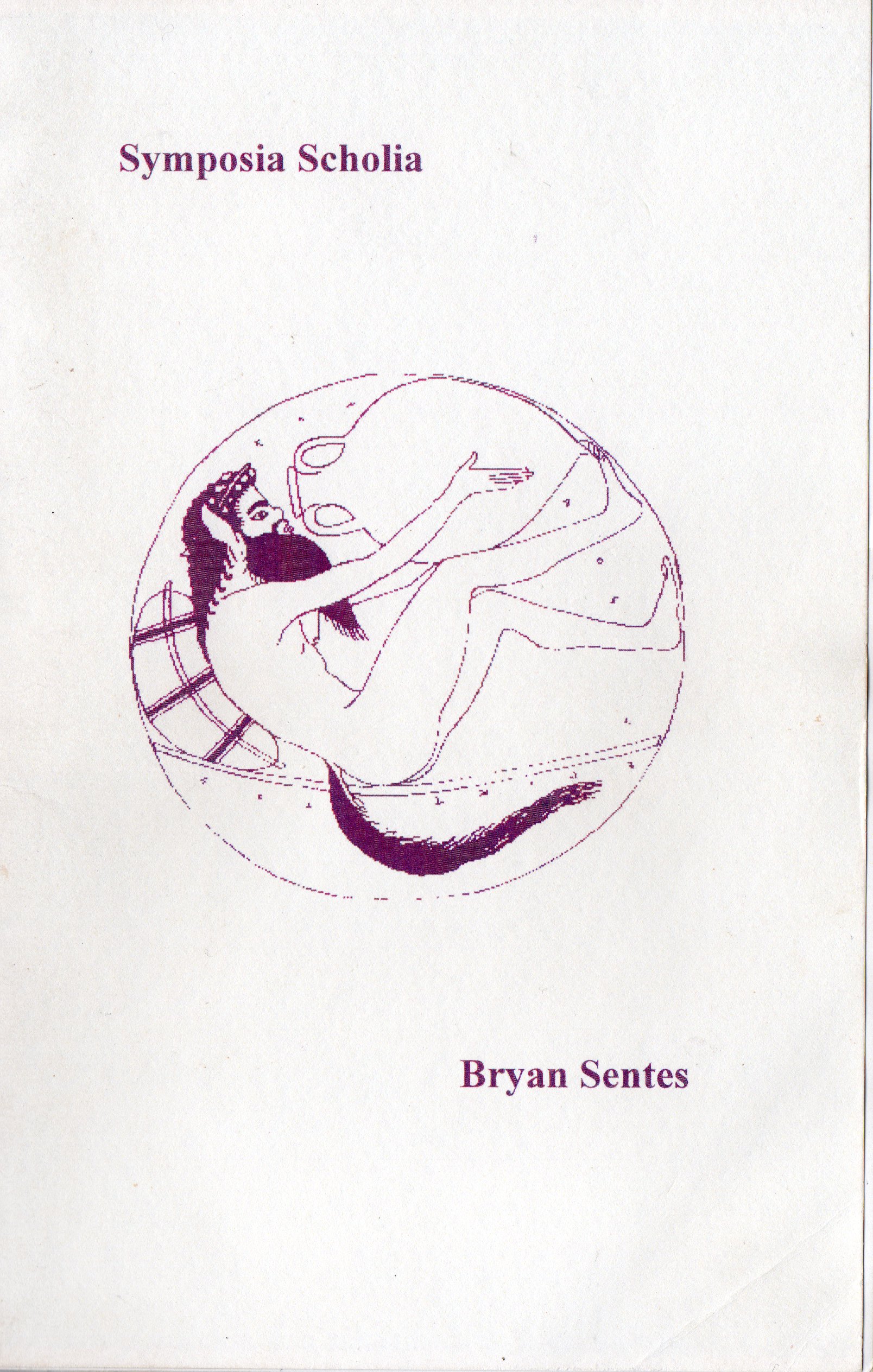
It’s seemed to me for some time now that very little anglophone poetry surpasses the compositional innovation of The Wasteland. That is certainly true of much of my own poetry, which is often, thoughtlessly, pegged as “experimental.” Being a reader of Ezra Pound as long as I’ve been a poet, little surprise, then, that I might mine the ideogrammic vein Pound first prospected, writing poems that are fragmented and polyphonic (in a manner, however much more minor, of The Wasteland). One inflection of this method appears in Ladonian Magnitudes, “Elenium.”
The parts of the poem collated as Symposia Scholia are composed in the same way, collaging striking scraps of conversation torn from good times spent with friends. The poem’s title invokes this inspiration, ‘symposia’ the plural of ‘symposium’, drinking party, and ‘scholia’ the equally antique Greek for “drinking song.” That the interlocutors were often learned is further implied by the modern connotation of ‘symposium’ and the rime of ‘scholia’ with ‘school’, ‘scholar’, and ‘scholarly’.
The poem bound in the chapbook has the following parts:
I. Madrigal
III. The third who talks beside us
IV. The Séance: a Rawdive Fugue
V. Rose Hill
That the poem appears, thus, incomplete is intentional (the same is true for the sequence Táncház), an incompleteness intended, in part, to mirror the reader’s own feeling of failing to get a firm interpretive grip on the poem’s parts, highlighting the way that any object, linguistic or otherwise, must finally elude a complete, final, “absolute” knowledge.
However much the poem fails to escape the gravity well of The Wasteland, I would point to even older influences. The form here rimes, in its own way, with the practice of the Jena Romantics in their collations of fragments published in The Athenaum. There, the collective effort wherein the individual contributors remained anonymous was intended to enact a symphilosophy. Nor should the theme of Plato’s dialogue The Symposium, eros, be thought irrelevant. And these rimes with symphilosophy and Platonic dialogue all fold into the contemporary concern with thinking-as-conversation so magisterially explored by the late Hans-Georg Gadamer (to whom a poem is dedicated in the latest poetry manuscript making-the-rounds…).
Symposia Scholia was short listed for the 2019 Gwendolyn MacEwan Poetry Prize.
Below, a version of the poem’s final section, “Rose Hill,” followed by a reading of it.
Next month: Melathalassemia: Tristia from March End Prill (2009).
Hell’s Printing House: Táncház: Hungarian Dance House Festivals V, VII, X, XI, XII (2005)
Filed under: Hell's Printing House | Tags: aleatoric poetry, Canadian poetry, Joseph M Conte, poetry, poetry chapbooks, poetry recordings
Comments (1) Aside from the pages of little magazines and those of certain, indulgent anthologies, by poems really first made their way in the world in the form of chapbooks. I hadn’t yet published a full-length trade edition, when I went on a “European tour” in 1996, reading in Munich (twice), Heidelberg, and Amsterdam, two self-published chapbooks, Gloze (1995) and On the Phantom Air Ship Mystery (1995), my calling cards.
Joachim Utz, the sponsor of my reading at Heidelberg University’s Anglistiches Seminar, observed that my chapbooks reminded him of William Blake’s. This new category of post takes its inspiration from his remark. “Hell’s Printing House” will showcase my chapbooks, describing them, detailing their contents, linking poems that have already been published at Poeta Doctus, and presenting a new recording of one of their poems.
It is hoped these posts fill the lacunae between full-length collections, assuring those (apparently) few (and valued) readers who follow my production with interest that I am hard at work, going my own direction, at my own pace, trusting those intrigued might be charmed enough to tarry along….
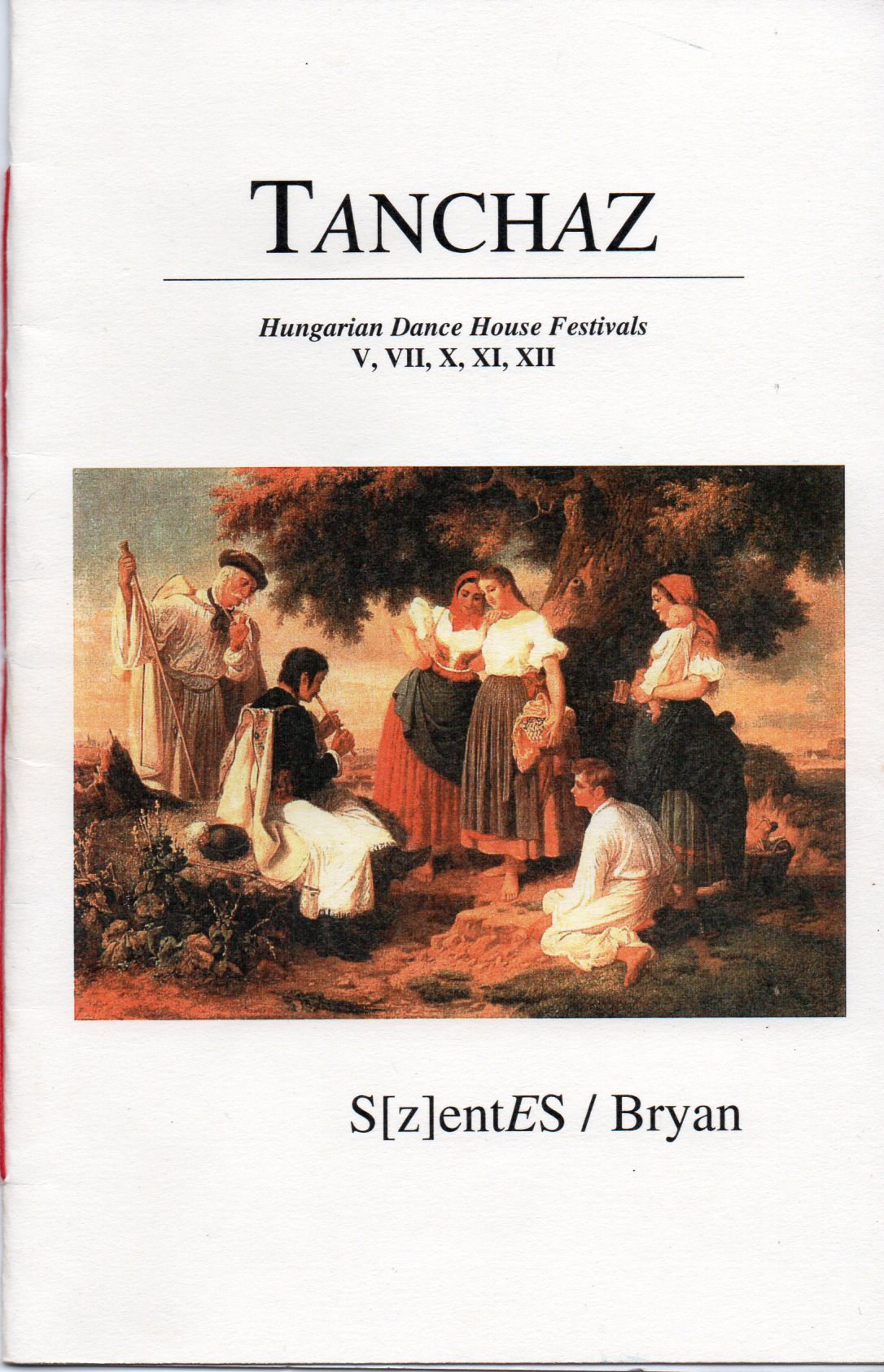
I cannot recall now what prompted me to pick up Joseph M. Conte‘s Unending Design: The Forms of Postmodern Poetry (Cornell University Press, 1991) soon after it was published. The price pencilled in on my copy’s flyleaf indicates mine is a used copy. As I remember it, I was motivated by my having heard him deliver a lecture at Concordia University’s Liberal Arts College; however, he seems not to have spoken there until 1997. Nevertheless, perhaps it was the book’s Table of Contents (even more intriguing, today), with its attention to those poets I was interested in at the time, primarily Robert Duncan and John Cage. I can say with greater certainty that it was the book’s fifth chapter, which examined the use of a “generative device” in the work of William Bronk and John Cage, that motivated the composition (no later than March, 1992) of the poems collected here as Táncház.
After composing five “dance house festivals,” I wrote the following “note on composition”:
Starting in the 1980s a new generation of Hungarian folk musicians and dancers began to gather regularly at what came to be annual Dance House (Táncház) festivals. Song and dance titles recorded at some of these festivals are here the melodic lines to which the words in a sheaf of canonical Hungarian poems in translation sent me by a friend then living in Budapest are set. If “every language is a world” then the world in these festivals is one sung by the Hungarian poetic imagination to a tune and in a syntax both as foreign as non-Indo-European Hungarian traditional music and language are to the musics and languages of the rest of Europe.
That is, I formulated a rule whereby the song titles chose and arranged words from that song’s lyrics. That rule is, in part, present in the lines’ capital letters (which one early reader found “irritating”), intended to draw the reader’s attention, first, to the materiality of the language (already foregrounded by the poems’ non-normative syntax), then, to an awareness of a syntax or at least a syntactical rule at work governing what might otherwise (without sufficient effort) seem mere nonsense. Hungarian speakers might discern further resonances…
More, however, is at stake, as I went on to explain, in an appended collage of Ezra Pound, John Cage, the Jena Romantics, and others:
Most arts attain their effects by a fixed element and a variable: poetry is not prose because poetry is in some way formalized. Poetry is republican speech: a speech which is its own law and end unto itself, and in which all parts are free citizens with the right to vote: language speaks: Bacchus’ priest proclaims his feast, woe to infidels!
The words of that final sentence are my own, intended to underline the festive (anarchic) aspect of the language in these poems, what Novalis writing of language-as-such in his “Monologue” termed “närrische“, an adjective related to the noun Narr, referring to the “fool” of Karneval…
At the moment, I can’t remember, exactly, why I issued a chapbook of these poems. Since their composition, I’ve been able to find only one editor, Karl Jirgens, who appreciated them. “Táncház X” appeared in Rampike 17/2. The sequence of five is presently the final part of a manuscript-in-process, tentatively titled Fugue State, which includes a reworked version of X Ore Assays and Seventh Column.
Here, the first “Dance House Festival” composed, X, with an interpretive performance, following.
Next month: Symposia Scholia (2006).
New Poem up at Canadian Literature

Canadian Literature (#256) has very kindly published my poem “By Mullet River” (with commentary!) in its latest issue. You can read that poem, and all the other poems, reviews, and articles, here.
Hell’s Printing House: A Crow’n’ o’ Sough Noughts (2004)
Filed under: Hell's Printing House | Tags: Canadian poetry, Grand Gnostic Central, Landonian Magnitudes, poetry, poetry chapbooks, poetry recordings, sonnet
Leave a comment Aside from the pages of little magazines and those of certain, indulgent anthologies, by poems really first made their way in the world in the form of chapbooks. I hadn’t yet published a full-length trade edition, when I went on a “European tour” in 1996, reading in Munich (twice), Heidelberg, and Amsterdam, two self-published chapbooks, Gloze (1995) and On the Phantom Air Ship Mystery (1995), my calling cards.
Joachim Utz, the sponsor of my reading at Heidelberg University’s Anglistiches Seminar, observed that my chapbooks reminded him of William Blake’s. This new category of post takes its inspiration from his remark. “Hell’s Printing House” will showcase my chapbooks, describing them, detailing their contents, linking poems that have already been published at Poeta Doctus, and presenting a new recording of one of their poems.
It is hoped these posts fill the lacunae between full-length collections, assuring those (apparently) few (and valued) readers who follow my production with interest that I am hard at work, going my own direction, at my own pace, trusting those intrigued might be charmed enough to tarry along….
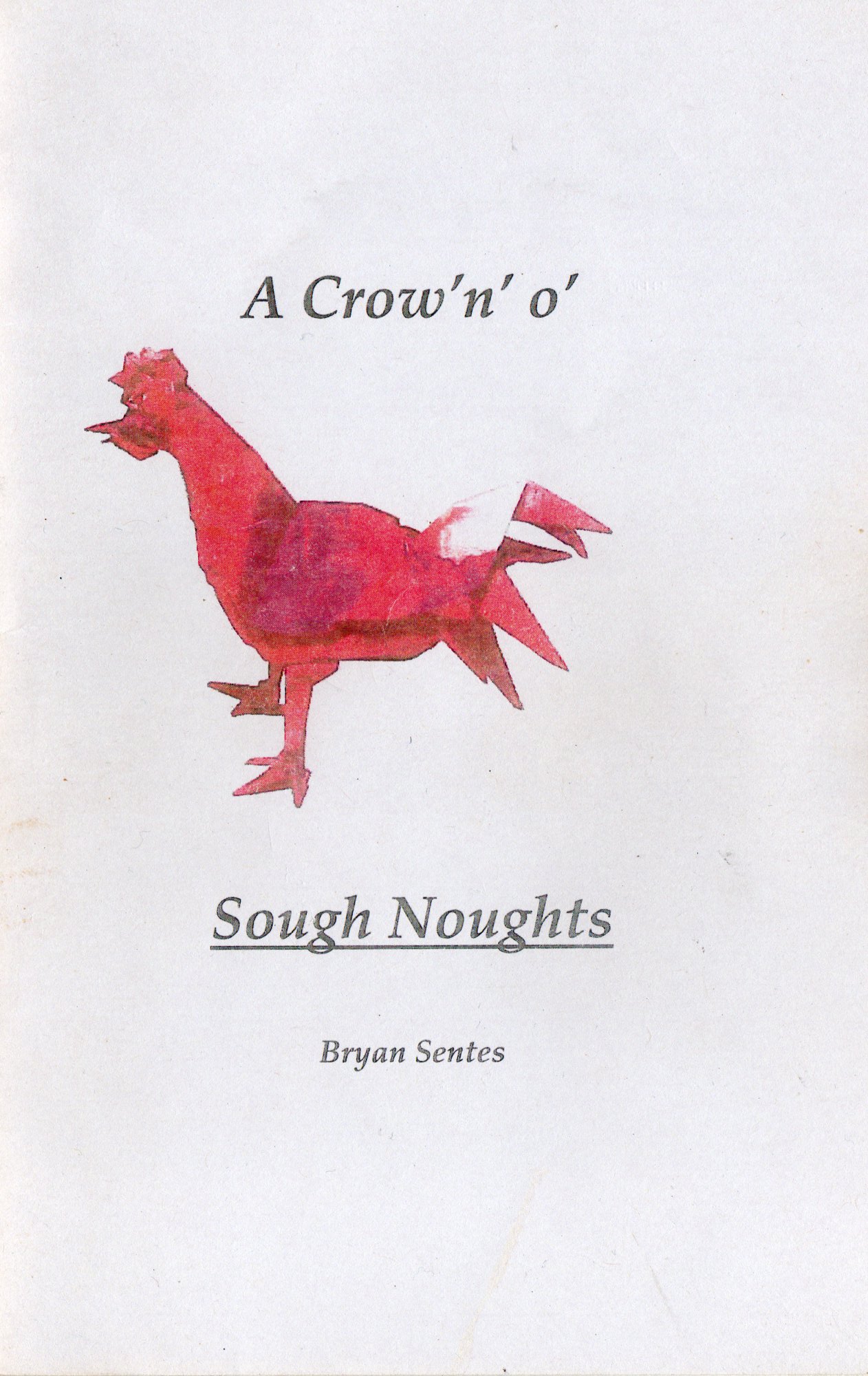
It was July 1991 I sat down one morning in a more relaxed compositional mood and wrote the following poem.
It was only after I had written these lines that I remarked there were fourteen. This unconscious compositional chance was fortuitious, for, as I’ve previously remarked, the sonnet sequence was all the rage in Canadian anglophone poetry circles at the time. Recently, I’d read, too, Charles Bernstein on Ted Berrigan’s sonnets along with the sonnets themselves, and I remembered having read much else about the history of the form, all of which was brought into focus by William Carlos Williams’: “all sonnets say the same thing.” What this vortex suggested to me was a nonintentional, chance-governed satirical practice: I wouldn’t set out to write “sonnets” or poems of fourteen lines (which many of the “sonnets” written at that time amounted to) but, rather, when I by chance wrote a poem of fourteen lines, I’d dub it a “sonot,” “soughknot,” or “soughnought” (‘sough’: the high or low long sound that something such as the wind or sea makes as it moves”)…
Over time, these sonots accrued. Some appear in the chapbooks to date, two are collected in Grand Gnostic Central (DC Books, 1998), and two dozen (as soughknots) in Ladonian Magnitudes (DC Books, 2006). I don’t know how many more I have written since. In the publishing lull following Ladonian Magnitudes, that fashion for sonnet sequences unabated, I was moved to gather twenty-five soughnoughts in a chapbook under the punny title A Crow’n’ o’ Sough Noughts. The collection is prefaced by a short epigraph: “A place to stand / A corner to loiter // To listen to the small / Sounds around.” Those not unacquainted with the etymologies of ‘sonnet’ will understand. On a visit to Ottawa at the time, I gifted a copy of the chapbook to one of Canada’s most prolific poet/reviewers, on whom, sadly, the joke—of both the epigraph and the collection as a whole—was lost, a too common reception…
Below, the table of contents. An asterisk marks those soughnoughts collected in Grand Gnostic Central, two, those in Ladonian Magnitudes. Those already shared here at Poeta Doctus are, of course, linked.
- “A piss…”**
- “Church bells ring loud…”**
- “Clear nights I look up…”**
- “Come out of the cave…”**
- “Comn home th’other afternoon…”**
- “As I delighted with the enjoyments of torment…”
- “Every afternoon I lie on the couch…”
- “Grave as Spring is green…”**
- “I HATE POETRY”**
- “I know the ‘aurora borealis’…”*
- “20:02 20.02.2002” (“Inside / dark out…’)**
- “I watched…”**
- “Master of many styles…”**
- “My brother the dr called today…”**
- “Gloze”*
- “20:02 20.02.2002″ (Not a right word…”)**
- “Lizard Song”**
- “Colleague Didactics”**
- “if you wanted to put yrself thru phd torture – mcgill or suny?”**
- “The great works…”*
- “The Kings and Queen of Qawwali chants”**
- “An Apology to François Hubert”**
- “When every hand is styled”**
- “With…”
- “‘you can pick up yr share…'”**
There are a number of these soughnoughts I’m moved to share: “Master of many styles…,” a favourite of Rui Chafes, an eminent sculptor from Portugal I met at the Villa Waldberta in Summer 1997, or “if you wanted to put yrself thru phd torture – mcgill or suny?” my friend the Munich-based novelist and publisher Georg Oswald lauded for its modernity, but one, published in Grand Gnostic Central, has proven to be “a fan favourite,” “I know the aurora borealis…,” which you can read, and hear, below:
Next month: Tanchaz!
Hell’s Printing House: For a Few Golden Ears (2004)
Filed under: Hell's Printing House | Tags: Canadian poetry, poetry, poetry chapbooks, poetry recordings
Comments (1) Aside from the pages of little magazines and those of certain, indulgent anthologies, by poems really first made their way in the world in the form of chapbooks. I hadn’t yet published a full-length trade edition, when I went on a “European tour” in 1996, reading in Munich (twice), Heidelberg, and Amsterdam, two self-published chapbooks, Gloze (1995) and On the Phantom Air Ship Mystery (1995), my calling cards.
Joachim Utz, the sponsor of my reading at Heidelberg University’s Anglistiches Seminar, observed that my chapbooks reminded him of William Blake’s. This new category of post takes its inspiration from his remark. “Hell’s Printing House” will showcase my chapbooks, describing them, detailing their contents, linking poems that have already been published at Poeta Doctus, and presenting a new recording of one of their poems.
It is hoped these posts fill the lacunae between full-length collections, assuring those (apparently) few (and valued) readers who follow my production with interest that I am hard at work, going my own direction, at my own pace, trusting those intrigued might be charmed enough to tarry along….
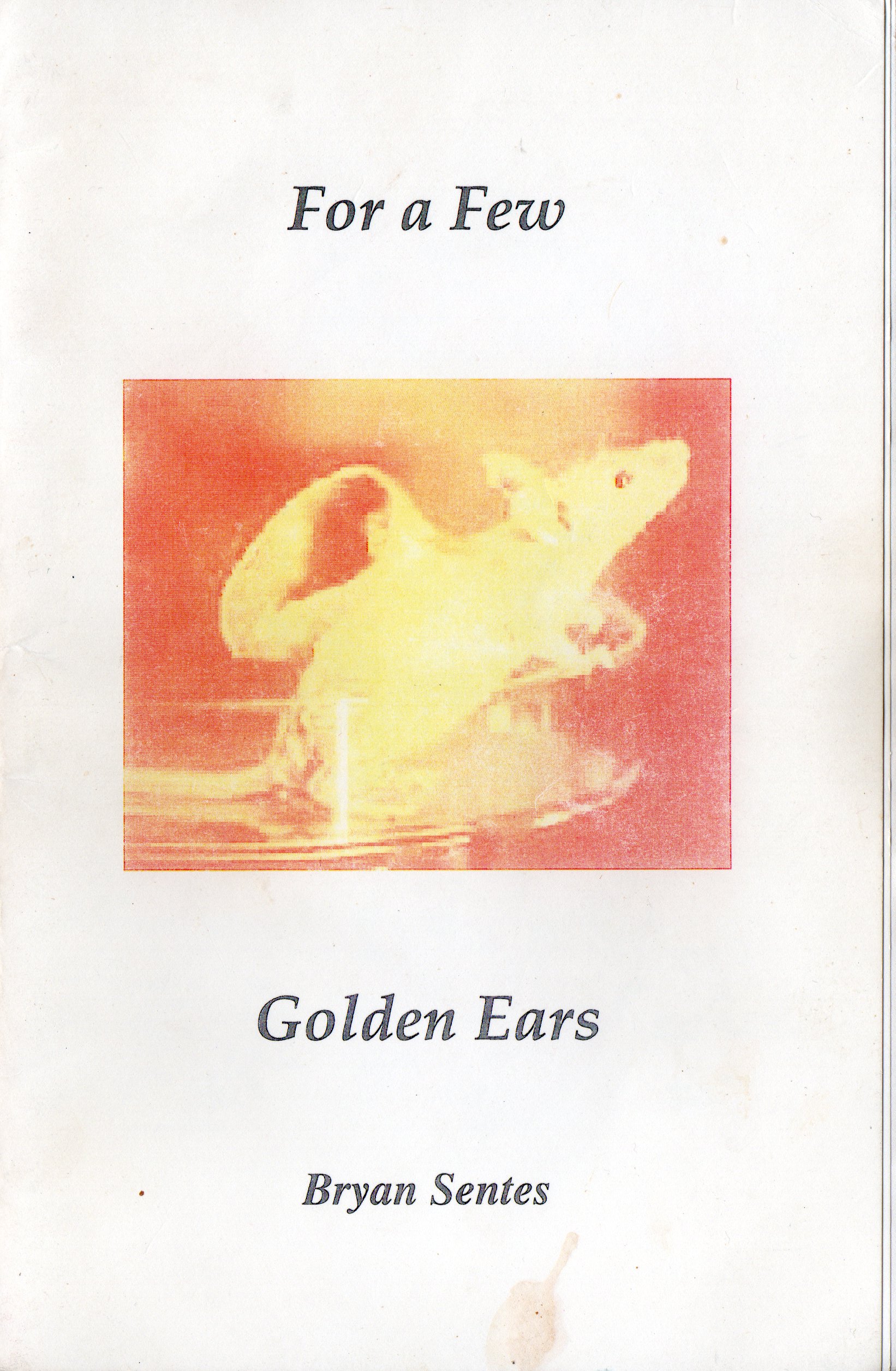
I had published my first trade edition Grand Gnostic Central and other poems in 1998, and I was feeling the growing lag between that publication and what would be next, Ladonian Magnitudes (2006). At the same time, it was becoming increasingly impressed upon me not only how relatively small was the audience for poetry, but how much smaller the circle of my own readers seemed. Taking heart from Allen Ginsberg’s having composed Howl for his “own soul’s ear and a few other golden ears” (a sentiment echoed by Cseslaw Milosz, “I was convinced that we write for perhaps about twenty or thirty individuals, for our fellow poets”), I gathered fifteen poems, published and unpublished, explicitly dedicated to or otherwise written for those lovers, collaborators, friends, and acquaintances in that small circle.
The collection opens with what I have variously called ‘sonots’, ‘soughknots’,or ‘soughnoughts’ in parody of the many books of sonnets being published by anglophone Canadian poets at the time. For a Few Golden Ears gathers, as well, “condensations” (poems composed by making couplets of the first and last lines of another poem’s stanzas), collage acrostics, “quotation” poems stitching together lines overheard, “cubist” poems playing out all the definitions of the words in the poem’s title, letter poems and poems from letters, long-lined rhapsodic poems, curt images, and a manner of abuse poem. All but five of these were to be included in Ladonian Magnitudes (those orphan poems are indicated by ‘*’ below). Those golden ears were and are found on the heads of Rainer Christ, Laszlo Gefin, Ty Hochban, François Hubert, Daniel O’Leary, Georg Oswald, George Slobodzian, Zsolt Sörés, Andrea Strudensky, and my wife, Petra—and, of course, anybody else with “golden ears” to hear!
Contents
- An Apology to François Hubert*
- In the Rialto Before Prospero’s Books*
- See Garden
- Decay Pattern
- C B Hsien Hue on Woman*
- Of Poundysseus
- From a Letter
- Das München Mädchen
- Dream Notes (Bochum, 20 May 1997)
- Reasons Why
- Elenium
- A Visitor from Jerry-Land
- Poésies*
- Epistle to Zsolti: Sunday 25 January 2003
- “For years you’ve been…”*
- Pisces
Yeats observes that “We make out of the quarrel with others, rhetoric, but of the quarrel with ourselves, poetry.” “A Visitor from Jerry-Land,” however much an argument with its interlocutor, is, I argue, very much poetry:
Though I’ve shared “Reasons Why” before, I post it here again with a new recording, as it is probably the one poem of mine I wish had a wider hearing, especially in my home province of Saskatchewan. The poem is a kind of apologia. In the course of a conversation with my old teacher poet friend Laszlo Gefin, he pointed an accusative finger at me and exclaimed with a mixture of surprise and disapprobation that I was “some kinda universal welfare Tommy Douglasite!” The ensuing poem seeks—as much for myself as my accuser—to explain why.
Next month: A Crow’n’ ‘o Sough Noughts (2004).
chouette Number One, Spring 2024 is live!
Filed under: The Brouillon | Tags: Canadian poetry, Carla Frey, chouette, literary periodicals
Leave a comment 
chouette, a new, online literary periodical based in Montreal has published its first number. It includes, among much else, two poems of mine, “Simulacra” and “A lot of poets…” along with a poem by a student of mine, Carla Frey. You can read chouette, Number One, here.
As well, I’ve recorded “A lot of poets…” for your listening pleasure, hearable, here.

 Poeta Doctus