Archive for the ‘Canadian poetry’ Tag
A short interview with Griffin-nominee, David Bradford
Filed under: The Brouillon | Tags: Canadian poetry, David Bradford, Dream of No One but Myself, Griffin Poetry Prize 2022
 Leave a comment
Griffin Trustee Ian Williams interviews (my) ex-student and poet-friend David Bradford about his Griffin-nominated first book Dream of No One but Myself. The conversation ranges over the book’s matter, some of its compositional gestures, and the title, and includes a short reading at the end.
Here’s looking ahead to the announcement of this year’s winners on Wednesday, 15 June!
David Bradford’s Dream of No One but Myself nominated for a Griffin!
Filed under: The Brouillon | Tags: Canadian poetry, David Bradford, Griffin Poetry Prize, poetry
Leave a comment 
This year’s Canadian nominees for the Griffin Poetry Prize include friend and ex-student David Bradford‘s first book Dream of No One but Myself.
Bradford’s is one of a number I’ve been trying to get around to writing about here at Poeta Doctus. Now, I guess, there’s even more reason. Do yourself a favour, click on the title above, and get yourself a copy, so you can better appreciate that review/notice when it finally gets written and posted, or, better, support a poet whose words call out for close attention.
Open Book sure likes David Bradford’s Dream of No One but Myself
Filed under: The Brouillon | Tags: Canadian poetry, David Bradford, Dream of No One but Myself, poetry
Leave a comment 
Open Book shares a short interview with David Bradford about his “hotly anticipated debut poetry collection”, Dream of No One but Myself, “a work of stunning creativity and self awareness”.
Personally, I find such promotional copy a little embarrassing, as its hyperbole can’t help but unmask it as promotional copy, emptying it of any of the gravity that would anchor its persuasiveness.
That being said, Bradford’s book is provocative, both thematically (as a “lyric examination of his experience growing up in a racially [and linguistically!] diverse family”) and formally (with respect to the modes of composition deployed to develop and present that matter). Indeed, Bradford’s work would be afforded higher praise by a scrupulous reading of these dimensions, whose study would be a substantial appreciation (free from matters of mere preference—what I like or don’t) of Bradford’s unquestionably accomplished first book.
You can read the interview linked above, or another I conducted with him some time back, here. Of course, the best course of action is to click on the book’s cover, above, check out the sample of poems from the book, and buy a copy!
The thing is to praise
Filed under: The Brouillon | Tags: Cactus Press, Canadian poetry, domesdaynotebook, Frog Hollow Press, James Dunnigan, poetry, poetry criticism, The Stained Glass Sequence, Wine and Fire
Leave a comment 
A while back, I ventured a few words on James Dunnigan’s The Stained Glass Sequence. As chance would have it, another set of notes, appreciative of the chapbook’s virtues, has turned up, which can be read, here. The anonymous reviewer (who seems to hail from Ireland) shares my appreciation for the sequence’s reflexive dimension:
Stained glass itself is like a decoration hung on perception, one that refracts the light and shadow of the reality behind, transforming it into a more ornate version. Poet James Dunnigan leverages that quality as the foundational conceit for The Stained Glass Sequence, a chapbook plunged in reflection on another primordial creative force: language. But it’s not for the sake of an academic lesson so much as a means to show how poetry transfigures society into civilization.
High, and well-deserved, praise.
Readers whose interest has been piqued can follow up on The Stained Glass Sequence by getting a hold of Dunnigan’s markedly uncanny and no less accomplished follow-up, Wine and Fire (Cactus Press, 2020), whose launch can be viewed, here.
Now the only question is which acquisitions editor will be canny enough to grab the manuscript of Dunnigan’s first, full-length collection…
New Chapbook: As on a holiday…
Filed under: The Brouillon | Tags: As on a holiday, Cactus Press, Canadian poetry, poetry
Leave a comment 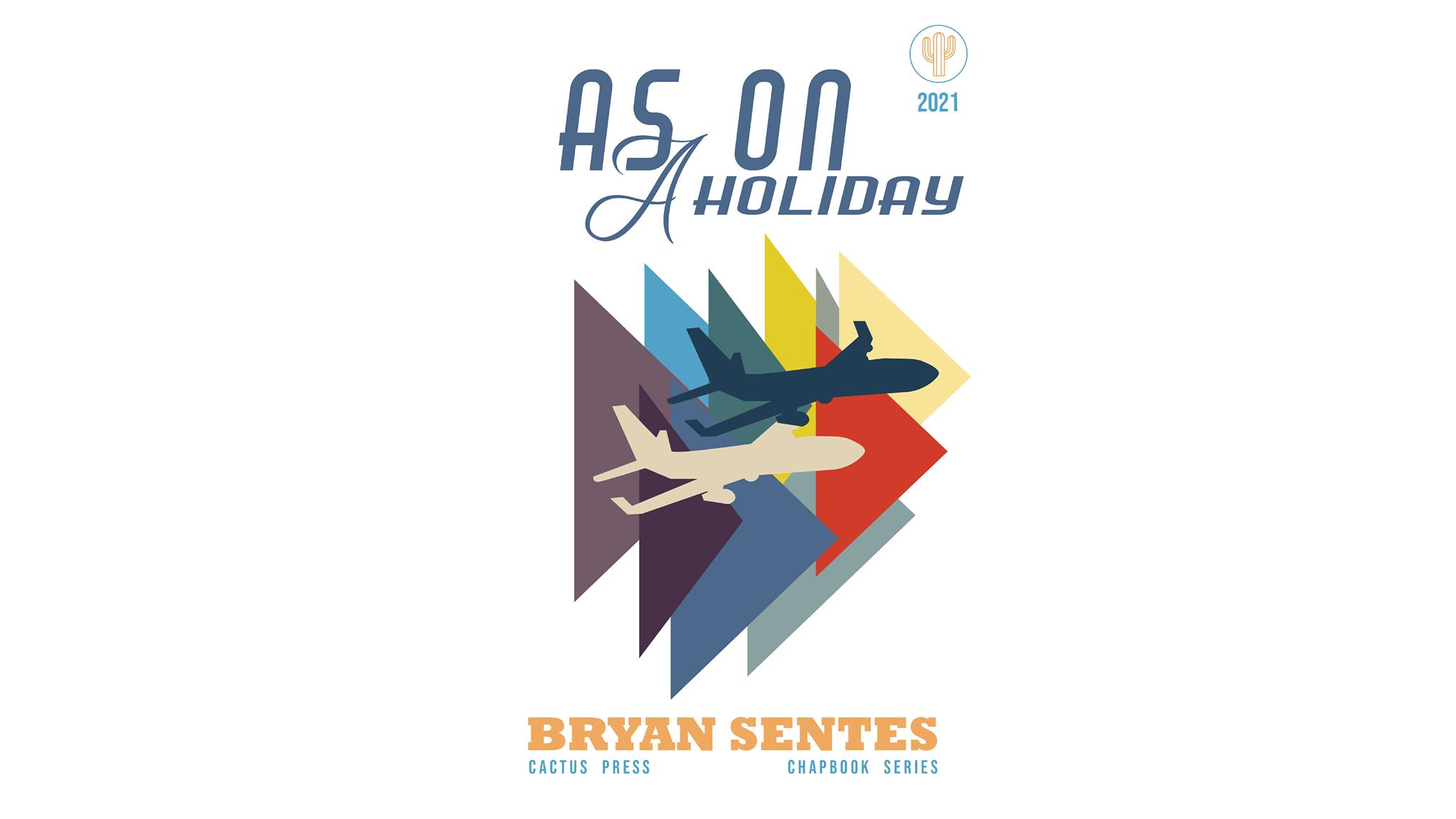
I launch my latest chapbook, As on a holiday, with Montreal’s Cactus Press 24 March 2021 20h00 ET. The chapbook collates four short sequences composed during and about trips to Germany (2012), Slovakia (2014), Toronto (2017), and Saskatchewan (2018).
You can access the Zoom link at the Facebook Event page, here.
You can read an earlier version of one of the poems from the Toronto suite, here.
The indefatigable rob mcclennan has published a wi(l)de-ranging interview with the press’ three editors, here.
I’ve invested this year’s Public Lending Rights cheque in a new microphone, so the sound quality of the launch is sure to be top notch! Copies of the limited-edition chapbook are available in print and electronic formats through the publisher, linked above.
Save the date!
A Sideways Glance at Don McKay’s Angular Unconformity
Filed under: notices and reviews | Tags: Angular Unconformity, Canadian poetry, Canadian Primal, Don McKay, Mark Dickinson, poetry reviews, Robert Bringhurst
Leave a comment Mark Dickinson’s Canadian Primal: Poets, Places, and the Music of Meaning, a groundbreaking study of the lives and work of Dennis Lee, Don McKay, Robert Bringhurst, Jan Zwicky, and Tim Lilburn has been open in my hands since landing there only a few days ago. Having just finished the chapter on Don McKay, I’m reminded I wrote a short notice of McKay’s collected poems  when it appeared in 2014 for a very good website, now defunct. Because it is a sharp, short review, I share it here, now, so it might remain on record. (The curious can read a more sweeping essay on the oeuvre of Robert Bringhurst, here).
“Hard to say this awkwardly / enough”: a review of Don McKay’s Angular Unconformity Collected Poems 1970-2014
Angular Unconformity is hardly amenable to a short review, collecting as it does ten volumes of poetry, supplemented by a sheaf of new work, more than 500 pages, a lifetime of poetic production. Moreover, any reader acquainted with contemporary Canadian anglophone poetry can’t be unacquainted with Don McKay, a two-time winner of the Governor General’s award for Night Field (1991) and Another Gravity (2000) and the Griffin Poetry Prize for Strike/Slip (2006). He is accordingly admired and targeted for these accomplishments and for his influence as an editor and teacher.
Nevertheless, one can characterize the stylistic development of McKay’s poetry with relative ease. The poetics of the first two volumes collected here, Long Sault (1975) and Lependu (1978), are influenced not so much by Purdy or Ted Hughes (as one critic would mysteriously have it) but by the New American Poetry, specifically Olson’s Projective Verse and The Maximus Poems or William Carlos Williams’ Paterson, especially where Long Sault becomes personified in (at least) the book’s fourth section. Lependu torques up the conceit of place and person, in this case London, Ontario and Lependu, in a more focussed, dense, and documentary fashion, but one that is self-aware enough to play fast and loose with its sources for its own artistic ends.
However, with Birding, or desire (1983) McKay finds his groove. In the book’s opening poem “Field Marks” (93) one finds what might be a description of much of McKay’s work from this point on: “…a bird book full of / lavish illustrations with a text of metaphor” (7-8). While in “Adagio for a Fallen Sparrow” (125) in the same volume the poet points to his “shelf / with Keats and Shelley and The Birds of Canada” (21-22). In these lines McKay presciently parodies the reputation this and following volumes will earn him, that of the Nature (i.e. Romantic) poet whose main thematic vehicle is Canada’s birds. Like any parody, however, this one possesses a perverse truth, for a primary objective of McKay’s poetry is one shared with Novalis and Wordsworth, to render the familiar strange, to percieve the things of the world as if for the first time. As McKay writes in the essay “Baler Twine” from Vis à Vis (2001): “in such defamiliarization…we encounter the momentary circumvention of the mind’s categories to glimpse some thing’s autonomy—its rawness, its duende, its alien being” (21). This “circumvention of the mind’s categories” is simultaneously an eschewal of the mind’s drive to dominate via knowing, a refusal of what McKay terms, following Levinas, “the primordial grasp” in favour of a “poetic attention” wherein the poem reaches for “things sensuously through the caress” (23).
The poems caress their objects with two hands: on the one, a fluctuation of lexicon and tone, while, on the other, a protean metaphorization. The poems mix so-called High and Low culture, “lascivious as Beardsley, sweet as Shirley Temple”, the vernacular and the discourses of geology, philosophy, and (of course) ornithology, English and French, gravity and humour. McKay’s artistic drive to refresh perception by means of poetic redescription shares something with the “rosy-fingered dawn.” But his style differs from epic simile or Metaphysical conceit or even that more recent predilection for what John Crowe Ransom termed “texture” (theme developed by a consistent pattern of trope and scheme). McKay’s metaphors are more impulsive and local, often working strictly within the context of the line more than the stanza or entire poem. A map in The Muskwa Assemblage (2008) is “skewed to the diagonal….as though some formerly symmetrical design had been invaded by irresistable divinity, some Dionysus headed northwest”; the reader of the map “might have been a crime scene investigator”, the geograpy variegated “[a]s though deep form, like a medicine dream, were forcing its way up from the mantle” (480).
Readers, then, must negotiate a constantly changing linguistic landscape bent on “the circumvention of the mind’s categories”. These demands aren’t the product of a high-handed virtuousity but the humility that underwrites McKay’s species of “poetic attention” whose restless articulations stammer to admit it’s all too “[h]ard to say this awkwardly / enough” (“February Willows” 3-4, in Sanding Down this Rocking Chair on a Windy Night (1987), p. 191). McKay’s art works against a certain eloquence, against consistency, knowledge, mastery. The first two books possess more a vector of compositional means than the focussed, polished exploitation of a given set of techniques. The constant shifts in vocabulary, tone, and trope, the bad jokes, all serve to puncture the authority of the poet who must work both with and against his poetic fate, inheritor of the Romantic prophetic or vatic mode that humbles itself to take up a poetry of attention anxious to exploit every linguistic resource not for the sake of Art but perception.
James Dunnigan’s Wine and Fire now available as an e-book
Filed under: The Brouillon | Tags: Cactus Press, Canadian poetry, James Dunnigan, poetry, Wine and Fire
Leave a comment James Dunnigan is one of the most exciting young new poets I know writing today, a claim I make rarely.
Now, his chapbook Wine and Fire is available as an e-book for $5.00 Canadian, less than the cost of a pumpkin spice latte and a hell of lot sweeter and more nutritious!
You can see and hear Dunnigan read, below, and get your e-copy of Wine and Fire, here.
A nod to Louis Dudek
Filed under: The Brouillon | Tags: Canadian poetry, Louis Dudek, St Jax Cathedral
Leave a comment  One striking difference between, say, France or Germany and Canada is how the respective countries honour their cultural traditions. I remember seeing in Tübingen a plaque on a bookstore commemorating the one night Goethe slept upstairs, and, on Quebec’s Gaspé Peninsula, the house where André Bréton resided during World War Two is indicated by a memorial from the French government, while the struggle to preserve poet Al Purdy’s A-frame is still fresh in my memory. Happily, we do have a counterexample to such willed amnesia, the Writers’ Chapel in Saint Jax Cathedral in Montreal, that features plaques for such canonical figures as F. R. Scott and Mavis Gallant and where, this evening, poet, critic, and scholar Louis Dudek will be honoured with a plaque of his own.
Bruce Whiteman provides a gracious portrait of Dudek on the occasion of Dudek’s death in 2001. I, too, had a chance to hear him read one snowy, weekend afternoon, and he was gracious enough to seek me out for a meeting when I published a polemical article on the reigning poetic aesthetics in Canadian anglophone poetry the year of his death. As it’s unlikely I’ll be able to attend the ceremony in his honour as I hoped and planned, at least I can post this notice here, now, and direct interested readers to a poem of mine that engages Dudek’s late poetry, “Reading Dudek’s The Caged Tiger“.
“…voices / …heard / …as revelations”
Filed under: Poetry, Praise and Polemics | Tags: Canadian poetry, Peter Dale Scott, Postsecularism
Comments (1) Interested parties can read a talk I gave at the Spirituality in Contemporary Canadian  and Québécois Literature Panel at the annual meeting of the Association for Canadian and Quebec Literatures, Regina, Saskatchewan, 27 May 2018.
The Day Sid Marty Didn’t Kill Andrew Suknaski
Filed under: The Brouillon | Tags: Andy Suknaski, Canadian poetry, poetry
Leave a comment This Labour Day seems a critical mass of synchronicities: yesterday, John Ashbery’s death was announced; the final two episodes of David Lynch’s Twin Peaks: The Return were broadcast; and this morning a memorial to Canada’s (Saskatchewan’s?) Andrew Suknaski appeared. Even more, the anecdote it concerns took place at exactly the same time I was writing my first poems under the tutelage of John Newlove, “then writer-in-residence” at the Regina Public Library, who was kind enough to introduce me to Andy.
All this seems to urge a wider dissemination of Sid Marty’s article, which you can read by clicking on the portrait of Andy, below.


