Archive for the ‘poetry’ Tag
“Ahi, quanto a dir qual era è cosa dura…”: a note on the postmodern Dante
Filed under: Praise and Polemics | Tags: Dante, poetry, poetry criticism, The Divine Comedy
 Leave a comment
 Any visitor curious enough to view the reading that launched March End Prill might have 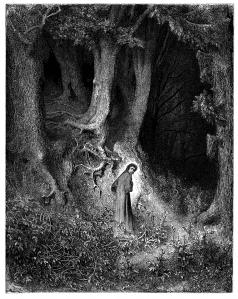 been in equal parts mystified and amused by my describing Cervantes and Homer as “avant garde, reflexive, or postmodern”. If so, then they’d be equally quizzical of my describing Dante as postmodern.
I’ve made it a ritual to read through Dante’s Commedia every Easter Week “in real time”, The Inferno Good Friday and Holy Saturday, The Purgatorio Easter Sunday through to Wednesday, and The Paradiso as I will, as, having left the earth, terrestrial time no longer applies to the Pilgrim Dante or, in this case, his reader.
One of the things that makes Dante’s epic a classic is that even returning to it annually in this way, even the most familiar passages give up hitherto unnoticed features and meanings. Such was my experience this year, rereading the opening lines of The Inferno:
Nel mezzo del cammin di nostra vita
mi ritrovai per una selva oscura,
ché la diritta via era smarrita.
Ahi quanto a dir qual era è cosa dura
esta selva selvaggia e aspra e forte
che nel pensier rinova la paura!
Tant’ è amara che poco è più morte;
ma per trattar del ben ch’i’ vi trovai,
dirò de l’altre cose ch’i’ v’ho scorte.
Midway in the journey of our life
I came to myself in a dark wood,
for the straight way was lost.
Ah, how hard it is to tell
the nature of that wood, savage, dense and harsh —
the very thought of it renews my fear!
It is so bitter death is hardly more so.
But to set forth the good I found
I will recount the other things I saw.
A simpler, more literal rendering of line four would be “Ah, how to say what was is a hard thing…”.
Arguably the most immediate way to take this line is that the Pilgrim-Poet Dante, recounting his experience relives the fear he felt lost in that wild wood (delightfully, in the Italian, esta selva selvaggia), which causes a moment of reflection wherein he (reflexively) writes, not about the wood or his fear, but about his writing about the wood and his fear. That is, “it is difficult to write about so fearful an experience, because writing about it requires I in a way relive that fear”.
But, of course, the persona of the Pilgrim is a mask worn by the poet Dante. Considered from this angle, the poet is writing about writing his poem. This admission of the challenge of the epic task the poet has set for himself and the demands that this project place upon the poet’s talent is a pattern that recurs throughout the Commedia, most immediately and movingly in the next canto, where the Pilgrim questions his worthiness to follow Virgil through Hell and Purgatory and receives so tremendously a moving, eloquent pep talk in reply that, in all sincerity, it never fails to move me to tears. However much such an admission of humility is a rhetorical ornament common in Latin literature, it is no less moving, such is Dante’s genius. It is as if, then, the poet were admitting, “Ah, how hard it is to write this epic poem in this noble style I invented just for this purpose.”
The rich complexity of this line, however, is hardly exhausted in this near cliché example of the “postmodern” text’s referring to itself in however a sly, metapoetic manner. A quick glance back at the English translation of this line and its tercet reveals a curious pattern: as the tercet progresses the translation becomes more literal. The Italian grammar of the line is, or so I have it on relatively good authority, somewhat counter intuitive to an English speaker, for ‘qual‘ that I translate as ‘what’ is a word that can function as either a relative pronoun or an interrogative, closer to English ‘which’. Moreover, the line conjugates the copula in both the past and present tenses: “era è“, “was is”. Why various English versions of the line depart from the Italian as the syntactic demands of the remainder of the tercet demand is understandable. But it strikes me, perhaps only because of my depending on English translations and a casual commentary on the Italian grammar, that the line, describing difficulty, is, itself, linguistically difficult, a stylistic device that recurs in The Inferno. Here, then, the artistic awareness of the poet extends into the very syntax of his language.
Nevertheless, there is no small irony in the progression of the tercet. On the one hand, the Pilgrim-Poet admits to the emotional and poetic difficulty of presenting what he wants to present, but that “hard thing” (cosa dura) is, in a sense, dispensed rather too easily with three conjoined adjectives selvaggia e aspra e forte, savage and dense and harsh, followed by the simple, frank admission that remembering it renews his fear. For something so dura, hard, it is performed with a strikingly easy fluency. On the other hand, though, it could be that the remainder of the canto that deals with the Pilgrim’s encounter with its famous three beasts, the Leopard, Lion, and Wolf, and his being forced by them into darkness and despair is just that “hard thing” whose memory so frightens him (and fear is an important theme in these two cantos and throughout the Inferno), or it might be the Pilgrim-Poet rushes over that memory to pass through it and leave it behind to get to that more heartening good his being lost and finding his way through Hell and Purgatory to Paradise provides.
That Dante’s poem should display such deft and complex linguistic self-consciousness, a metapoetic dimension literary scholars have pegged as characteristic of postmodern literature, really shouldn’t be a surprise, for the work of literature that is at the same time about itself and literature was first theorized and intentionally explored over two centuries ago by the German Early Romantics, die Frühromantiker, in their journal The Athenaeum (1798-1800) and in their criticism, letters, poems and novels. Indeed, the three characteristically “modern” writers for the Jena romantics were Goethe, Shakespeare, and Dante.
Concerning the Muses and Sophia
Filed under: The Brouillon | Tags: Carla Harryman, Chantal Neveu, Jan Zwicky, Katy Bohinc, Mina Pam Dick, philosophy, poetry
Leave a comment  The irony of my posting on Jerome Rothenberg, Ezra Pound, Louis Dudek, and myself—all men—on International Women’s Day yesterday was hardly lost on me, but then the inspiration for what appears here has always been serendipitous. Today, then, it seems only all the more à propos my daily mail from Harriet should draw my attention to Carla Harryman’s engagement with German philosopher Ernst Bloch.
I’ve always been caught up in that dizzying, fateful relation between poetry and philosophy. I wrote my first poems at the same time I was devouring, if hardly digesting, Camus, Sartre, Kierkegaard, and Wittgenstein.
Because I sat on a bench in Victoria Park one spring Saturday morning reading Kiekegaard and Pound’s ABC of Reading and Selected Poems understanding nothing
Because lying out on the sunny lawn fifteen I read “Not how the world is is the mystical but that it is” and understood
Because John Newlove the Regina Public Library’s writer-in-residence gave me his Fatman and reading it in the shade on the white picnic table on the patio in our backyard thought “I can do that!” and wrote my first three poems
My undergraduate years were devoted to philosophy, and my graduate, to poetry; my MA creative thesis (In the Way of Knowledge) was an exploration of various ways thought inspired song and language incarnated thought, a field of writing I was to later find out has been central to a vital strain of German thought since the days of the Athenaeum (1798-1800).
Between then and now, my attention couldn’t help but be caught by what I came to call Canada’s Philosophische Quartett (a German television philosophical talk show hosted by Peter Sloterdijk first broadcast in 2002), a loose group of poets who took up the relation between thinking and singing as an explicit theme: Robert Bringhurst, Tim Lilburn, Don McKay, (sometimes) Dennis Cooley, and Jan Zwicky, herself a professional philosopher, whose Wittgenstein Elegies (1986) I read as I prepared my MA thesis.
In recent years, all the overt poetic engagements with philosophy that have come to my attention have been by women. Mina Pam Dick (aka Hildebrand Pam Dick, Nico Pam Dick, et al.) holds, among other degrees, an MA in Philosophy; her first book, Delinquent (2009), engages Kierkegaard, Benjamin, and Wittgenstein through various personae and rhetorics, imitation, parody, and dialogue. Chantal Neveu’s A Spectacular Influence (trans. 2015) draws on the preSocratics, Nietzsche, and Spinoza to compose sparse meditations on incarnation, while Katy Bohinc‘s Dear Alain (2014) “demonstrates how Love, Math, Politics and Poetry are conditions on Philosophy, sexual metaphors intended, and poetry is everything.”
All these, and, doubtless, Harryman’s latest, and all those others I have been unaware of hitherto, surely call for more detailed consideration and appreciation than the mere passing mention I give here. Given world and enough and time, each shall receive due consideration, here!
In Good Company
Filed under: The Brouillon | Tags: Ezra Pound, Jerome Rothenberg, Louis Dudek, poems, poetry, Romanticism
Comments (1)  Jerome Rothenberg posted today some poems from his “Pound Project”, a set of sixteen-line poems that riff off lines of Pound’s. Rothenberg writes Pound is “a strong poetry influence for many of us ([him]self [& myself] included)”. And the poetic at work in his series echoes that at work in a sequence of poems I wrote in response to (Ezraversity graduate) Louis Dudek’s penultimate book of poems.
Rothenberg has been an important influence and/or poeticultural coworker for me, too: his Technicians of the Sacred strongly orients my own understanding of what poetry has and can be, and his Poems for the Millenium assemblages, especially Volume III, Romantic and Postromantic poetry, resonate with my own present concerns. It’s good to be in such spiritual, poetic company, however physically distant.
Vallum’s poem of the week: David Bradford’s “Cute Bear”
 “Cute Bear” is Vallum‘s poem of the week by long-ago ex-student and poet contemporary David Bradford, readable and hearable, here.
Back to the Skunkworks!
Filed under: poems | Tags: Carl Jung, flying saucers, mythology, poetry, ufology, UFOs
Leave a comment Just last week, a friend recently publicized a chapbook of mine composed and published 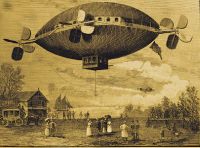 over twenty years ago, and the response, livelier than any to any of my work in recent memory, encourages me to return to the work that chapbook began.
I shouldn’t be surprised, in a way. This poem was the center-piece of the performances I gave during a tour of Germany in 1996, and then, too, the response was gratifying: one audience member excitedly came up to me to say he would buy everything I would publish, and a friend I made during that tour, the German novelist Georg Oswald, approved with pleasure the approach I took to the material. And a few years later this sequence was well-received by Terry Matheson, a professor of English who has applied narratology to alien abduction reports and who was kind enough to even teach the poem below in one of his classes.
 So, for interested parties, I append one of the first poems from this project, the last poem of my first trade edition, Grand Gnostic Central and other poems. and return to back-engineering this “modern myth of things seen in the sky”.
Flying Saucers
Tuesday three in the afternoon 24 June 1947
Kenneth Arnold of Boise, rescue pilot, businessman, deputy sheriff and federal marshal, U.S. Forest Serviceman
At 9,000 feet crystal-clear conditions
Alone in his Callair between Chehalis and Yakima
An hour’s detour searching for a lost transport
Out of the blue a flash like just before a midair crash
Made him look left north of Mount Rainier
To see at ninety degrees
Nine seeming jet planes in a V pointed south
The echelon vaguely bobbing and weaving
Flashing reflections
Twenty-four miles off
Against Rainier’s snows, tailless—
Flying nearly forty miles
Between Mounts Rainier and Adams
Three times the speed of sound
The first crossed the ridge bridging the mountains
As the last came over its north crest five miles back
Nine crescents needing to be
Half a mile long to be seen
Flying that fast that far away
So smooth mirroring sunlight
Like speedboats on rough water
Wavering in formation
Like the tail of a Chinese kite
Wings tipping flashing blue white
Each like a saucer skipped over water
For the Record: “Reading Dudek’s The Caged Tiger”
Filed under: poems | Tags: innovative poetry, intertextuality, Louis Dudek, poetic form, poetry
Comments (2) One of the ironic aspects of the digitization of cultural artefacts and the blissfully ignorant acceptance if not celebration of this process is, apart from those documents excluded from the process in the first place, the inevitable decay of links and websites and the consequent disappearance of the works they hosted. Such was the case with the poem below.
When Louis Dudek’s penultimate volume of poetry The Caged Tiger was published, I read 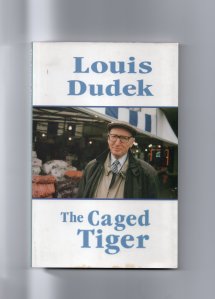 it with some irritation and sought a way to express it other than in a review. The compositional answer was to write poems that intervened in the original, engaging in a kind of dialogue; the relation of the new poem to the original is underlined in [28], below. The words in bold are Dudek’s; the numbers in [] are the page numbers of his original book.
The novelty or singularity of this formal maneuver to contemporaneous and subsequent compositional practice I leave to the determination of the learning of the reader; the poem was written the year of the publication of Dudek’s volume, 1997.
Reading Dudek’s The Caged Tiger
[10]
The transcendental then is merely the unknown
—No: how what’s known is—
inside out: no silhouette
no eidos no idea:
The transcendental’s how you know
you’re facing the mirror
…
Aside from yourself
the world
things
How it all happened
to come
together
‘s beyond you
…
Neither this nor any mystery’s gnawed
The mystic’s “the tight-lipped”
Tongue’s quiver locked up
[3]
Art is a dead god’s tongue
whose words
we still like the sound of
“the music of the spheres”
night’s white noise
the whole spectrum
of electromagnetic radiation
visible and audible
only to the radio-telescopes’
timpani tipped to listen
idle humming
“I-am-I”’s sound poem
[8]
Time’s transcendental
A watch
[15]
As one of those
in downy feathers
mouth open
happened on
spring mornings
[39]
in the cage too tight to lie in
a small pot nobody empties
wire mesh hardly a reach up
nights icy rain
days the sun throbs
the face in the cool mud
[28]
The bass beat faster than a raver’s heart at daybreak
shudders the whole body in the spot and strobelit dark
College boys and girls in their personal fashion statements
each writhe alone in cigarette smoke fog and pheremones
[99]
The old are removed
to their graves
and the young come up
to fill their places
i.e., as a “[f]ine bod”y
closed in a dipping casket
Old Heracleitus
renewed every sun
Tha stance toward Reality
Filed under: poems, The Brouillon | Tags: Charles Olson, metaphysics, poetry
Leave a comment A week back I shared an unpublished poem “Unreal, that is, to the real itself…” and in the week since by a kind of weird serendipity I’ve been engaged in a dialogue concerning evolutionary psychology, reductive physicalism, by extension materialism and transcendentalism, so on and so forth, all of which tie into the question of the Real and what can be known of it.
I’ve made my polemical stance in this regard known in an ironic manner in the poem 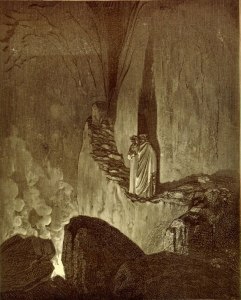 “Get Real” (it is a poem after all; how can it not be ironic?) so in light of the past week’s ink spilled (what is the on-line, digital version of this expression?) on the matter, I share here the prefatory poem to my second trade edition, Ladonian Magnitudes ‘topos tropos typos” (a confession’. The opening words are Charles Olson’s.
“for nine years
“three words constantly
“forced me down
“or kept me
“in or possibly
“steadied me…
topos tropos typos” (a confession
there is a freedom to be learned
a tradition earned
every wave of particular
not men or women, some
generation, not a sapling
scored around the oak’s core
but decision
not to attend what’s passed
for the new, not to accept the world
as given), &
stopped my reflection
stepped
the light
red
antistrophe
more vivid
that night
than the rain
wet street
(“E’en thus along the gulf moves every flame,
“A sinner so enfolded close in each
“That none exhibits token of the thief
O
read
the archetext!
“…where lives the virtue of poetry…”
Filed under: poems | Tags: Charles Olson, Chris Banks, Grand Gnostic Central, Ladonian Magnitudes, Novalis, poetry, poetry criticism
Comments (2) Yesterday, Canada’s Chris Banks baldly posed the question to his Facebook friends “What is authentic poetry?”. I (mis)remembered, after my own initial contributions to winding or snarling the ensuing thread, I had written a poem that addressed at least “the virtue of all authentic thinking” (and I’m hardly the first to imagine or suggest that poetry can be a kind of thinking). I post that poem, below.
It was written at the same time as the poem that opens Ladonian Magnitudes, “topos tropos typos’ (a confession”, itself composed before even my first trade edition, Grand Gnostic Central. It’s title is a quotation from Charles Olson. Whether it is possessed of any qualities that might be construed as “authentic” I leave to the judgement of the reader. For my part, I cite again, as I did first in yesterday’s thread, Novalis, from his Fragments and Studies 1799-1800, #671: “Schwer schon ist zu entscheiden, doch einzig mögliche Entscheidung, ob etwas Poesie sei oder nicht”: It’s already difficult to decide, but it’s the only decision possible, whether something is poetry or not.
“Unreal, that is, to the real itself”
where lives the virtue of poetry
and all thinking free
of the tyranny of the real
in perceiving the real
flow, elementally
fluid, hence watery
form forms
breath
seen in Winter
as slippery
hard and cold
as ice to the head
cracked
as the sea, unfathomable
God as Melville says
pondering
from the masthead
a shriek above
the water
a shriek
above the water
the same
‘Thanks’, plural of ‘thank’
Filed under: poems | Tags: gratitude, haiku, poetry, Thanksgiving
Comments (3)  In part because it’s American Thanksgiving and in part as preface to my launching a new chapbook this Sunday, I post here a sequence of faux haikus originally shared over a number of days on my Facebook author’s page in 2016 that each mark (or, more philosophically, “trace”) a moment or spot-in-time of gratitude.
Thanks
Walk to work over Park Mont
Royale: birdsong &
melt burble in stereo.
#
Ekphrastic “tiny heroes
hunting flying grass-
hair butts” from an ex-student.
Facebook messenger giggle
threads nearly daily
with ex-student writer friend.
#
Not my fault but likely got
a student expelled
& yet I still feel regret.
Is it the Waldmeister garb?
Everyone asks me
directions on the Mountain!
Suffocating poetry
festival panel:
Happy, two friends to sit with.
#
An invitation to watch
a friend’s family eat
chicken, vegetables for all.
“He thinks everything he says
is a pearl”—a brown
pearl, a soft brown oblong pearl.
[This gratitude haiku is
in breach of Facebook’s
Terms and Conditions of Use]
#
A session on the Holy
Mountain, the Living
Room, Eichendorff Anlage.
The Extending the Table
cookbook my sister
gave us years back used daily.
Everything for tomorrow’s
Basic Raw Vegan
Protein Overnight Oats on hand.
#
A damp, cool, April Monday
morning; walk signal
turns as I step to the curb;
green buds heart high on
pussy willow; chickadee
trio met on Mont
Royale for palmseed breakfast;
lithe black Lab mongrel
mindless joy hunting squirrel,
redpink tongue aflap;
retiree, I imagine,
crouches down before
March End Prill, camera balanced
to film the melt stream.
#
Feeding the Mountain
chickadees again this time
four & lower down.
Fritz Lang on meeting Goebbels
& high-tailing it
out of Germany on YouTube.
Realizing a friend’s “today’s good”
status updates are
his own gratitude haikus.
#
Rainer in Heidelberg e-
mails me RE: a fish
& crow for a new haiku.
I’m here! Chickadees call; in
among roots, under
a bench two tiny Chipping
Sparrows; standing still
roadside a Mallard I could
look in her black eye;
white underwing then bark grey
back of a Cooper’s
Hawk pair; trunks and branches arch
a hall for birdsong;
quack honk pair call overhead
two Canada Geese.
#
Haematite & red
jasper pendant stones gifted
from friends worn daily.
#
Overhead overheard a
sparrow hen’s sighing
invitation to her cock.
Searching for chickadees I
spot a hawk broad wings
spread glide in two slow circles.
The gratitude haiku I
could write every day
about my Bedrock of Love.
#
More to be grateful
for today than seventeen
syllables can say.
#
Kisses waking me
three times last night after three
days cities apart.
Discussing poems
& coming to understand
some matters are style.
#
One martini to
dissolve pedagogical
moronicity.
#
Sunday morning sun warms rain
wet pavement; German
summers rise to memory.
#
Sitting myself free
from an intoxicating
toxic old mentor.
Getting progressives
have fought so much against they
forget what they’re for.
That uncanny first
green of grass & full foliage;
May in Montreal.
#
Scholarly duties
discharged—time to write & read
& think—poetry!
Morning walk to school;
chance meeting with Adrian,
gentle bookseller.
#
Distant Keel scholar
friend reads my latest poems:
“More soon! Herzlich, d.”
Brunette shoulder-length
mop, fair-face toddler; behind-
soother grin, “Bonjour!”
#
Doktor Pfeiler asks to read
“Bochum” at the Ruhr
Uni Anniversary.
#
France outlaws food waste;
Neckar gulls rise & circle
Hölderlin’s tower.
[Dear friend, the pseudo
haiku means thanks for the news
& Celan’s poem!]
I read hash high mice
horny but too stoned to climb on
yawn then lick themselves.
#
Tropical muggy
Montreal summer monsoons
cooling afternoons.
#
Despite knowing better grave
nostalgia wins out;
music of my youth.
#
Day after I’m told
chemo’s on the horizon
Archer season six.
#
The chick says Feed me!
The cock says Fuck me! The hen
says Leave me alone!
Message with Georg
about how The Walking Dead
is a great Western.
Every day Petra’s
home not teaching I ambush
and stroke her soft skin.
#
The naturopath
asks if I was an athlete
in my younger days.
#
The inanities
of my fellow travellers
to Toronto end.
Cloudless skies warmer
than forecast; little Grey Goose;
yellow fields like home.
The wisdom of George
mindful of his feet; Uncle
Andrew’s belly breaths.
#
A baker’s dozen
sparrows flutter dust bath tubs
in reno dirtsand.
#
Three hot tropical
I imagine days; frozen
red grapes to snack on.
#
Rigpa, Amor, learning, Poesie: what more do I need in my life?
#
What I have to say to you friends needs more than a haiku’s syllables
#
Couchlock or sitting full lotus, meditation bench, or straightbacked chair
#
Empty the cache, re
boot, meditate, and get back
down to the real work
New Chapbook: Blank Song / sangue blanc
Filed under: The Brouillon | Tags: chronic lymphocytic leukemia, CLL, poetry
Comments (2) Though it’s been six years since my last trade edition, March End Prill, I haven’t been utterly unproductive.
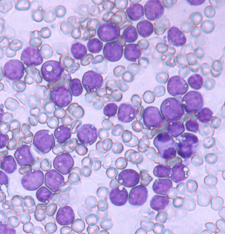 Sunday 26 November I appear with four other performers at Montreal’s Words and Music show where I’ll launch my new chapbook, Blank Song / sangue blanc, that collects recent, miscellaneous poems along with the collection’s title sequence that addresses my recent experience with Chronic Lymphocytic Leukemia.
The show happens 20h30-23h30 at the Casa del Popolo, 4873 Boulevard Saint-Laurent, Montreal, Quebec. Entrance is CAN$6.00.
Copies of Blank Song / sangue blanc, in a limited edition of 26, lettered, signed, and handbound by the author will be available.
The event’s Facebook page is here https://www.facebook.com/events/201784977033640/

 Poeta Doctus