Archive for the ‘poetry’ Tag
Hölderliniae
Filed under: poems | Tags: Hölderlin, Hölderliniae, Nathaniel Tarn, poems, poetry
 Comments (1)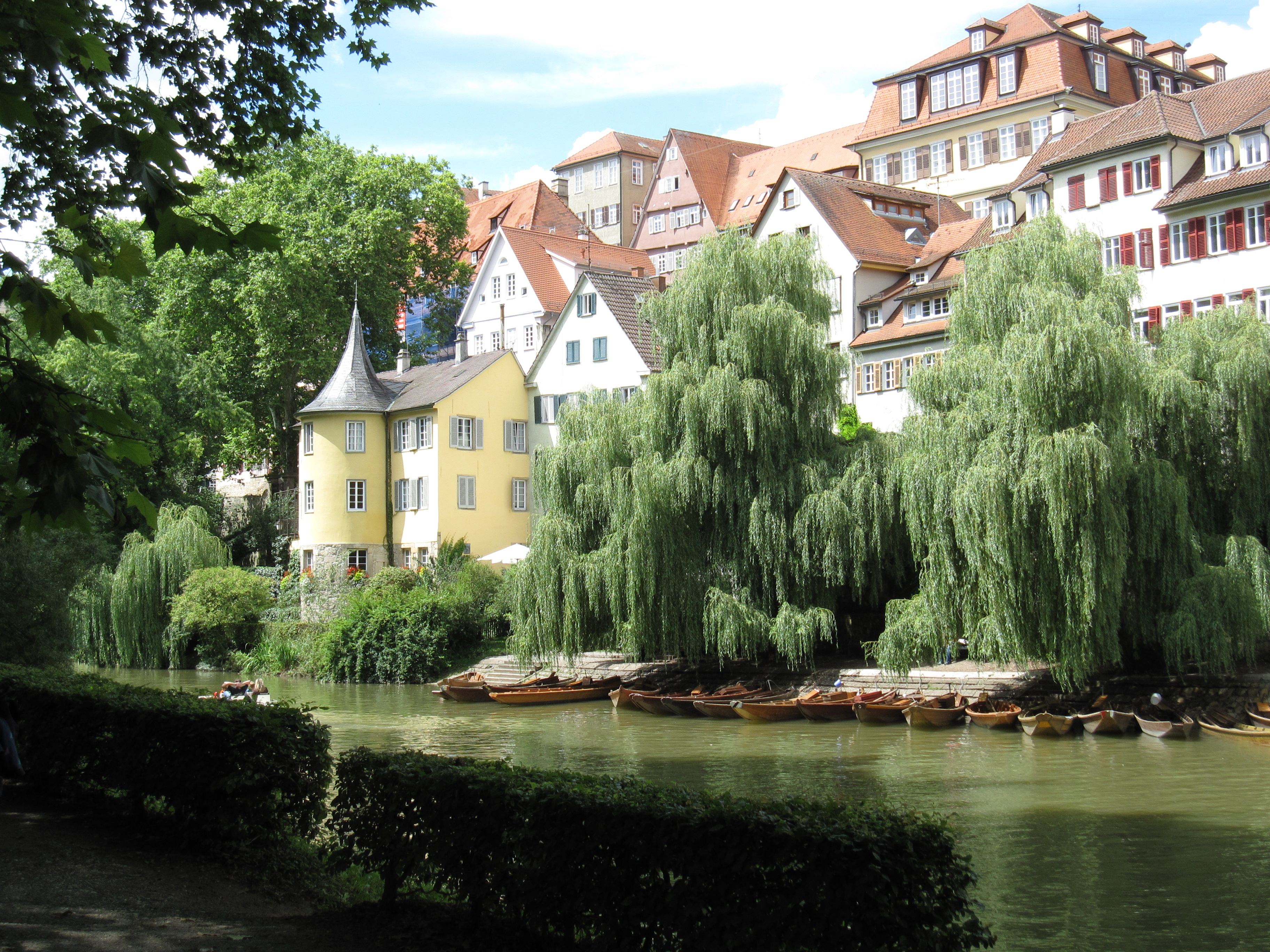
Yesterday, thanks to Cæsura, I got wind of Nathaniel Tarn’s forthcoming collection, The Hölderliniae, a book of poems wherein, “via affairs of love and polity, Tarn speaks through Hölderlin, and Hölderlin speaks through Tarn.”
I received this news with a mix of excited interest and rueful disappointment. On the one hand, like so very many, I hold Hölderlin’s poetry in very high esteem, not least because of its relation to the enduring pertinence of Jena Romanticism, so you can bet a copy of Tarn’s new book will be in my hands warm, if not hot, off the press. On the other, drafts of my own palimpsestic engagements with Hölderlin’s poems, specifically “Heidelberg” and “The Neckar”, now seemed somehow pre-empted.
Of course, Tarn is hardly the only poet to mix things up with Hölderlin this way. In 2018, The Song Cave issued Jonathan Larson’s translation of Friederike Mayröcker’s Scardanelli, and a friend brought to my attention Endre Kukorelly’s H.Ö.L.D.E.R.L.I.N. (1999).
But, then, it occurred to me I had composed poems I could include in this company. Like Mayröcker, my poems allude to Hölderlin by the nom de plume he himself adopted during his (so-called) madness. The first, from Grand Gnostic Central, “Holy Crow Channels Scardanelli” “condenses” some of Hölderlin’s late poetry. The second (graciously published by Dispatches from the Poetry Wars), “Ein Zeichen sind wir…” (We are a sign…) plays off these famous words from a draft of Hölderlin’s “Mnemosyne” and gives a twist to some of the themes common to Hölderlin’s poetry in general.
Time to get back to work on my own Hölderliniae. “I’m told you’re disappointed I have yet / as Scardanelli would write to sing / of Heidelberg…”
Holy Crow Channels Scardanelli
for Moritz Gaede
When from the sky bright bliss itself
Calms and quiets the afternoon through
The pleasant world I’ve made my friend
I am no more, I live no more gladly
Life’s lines various harmonies rich
With peace as who today men brightly halo
Is known, which depth of the spirited succeeds
Of a man say I, if he is good
Daedalus’s spirit and the wood’s is yours
The said, that the earth herself turns from
And perfection is without complaint
When unseen and now past are pictures
So shines nature with her splendour from the earth
“Ein Zeichen sind wir”
Like preScardanelli Scardanelli would put it
The Thunderer himself just a heartbeat cut
The current crashing my chronocide, and twice
Since noon the same software CTD’d in concurrence.
Arachnophobic Arachnophilia
A friend recently shared a factoid from Anne Sverdrup-Thygeson book Extraordinary Insects, that the sum of insect “meat” consumed annually by spiders is higher than the total amount of meat and fish consumed by the human population of Earth. I responded alluding to my deep-seated arachnophobia, probed, here, in a poem from Grand Gnostic Central.
Arachnophobia Prima Facie
“God is the spider in the closet”
Though having an insect’s ratio of legs to body segments is not
And though envenomed like bees wasps and hornets is solitary
A nomadic hunter or sedentary in an architecture species specific
Whose strands are two those adhesive catching any lighting
Others pull like the line on a bob
All have fangs that paralyse no mouth but hollow teeth that suck what they injected digested
Wind carries desiccated exoskeletons away
*
I remember playing in the sandbox
The reek of catshit smooth as clay
Feeling a mosquito on my head
Slapping and looking at its ten long legs
Each twitching
My parents say before I talked
They heard me scream in the sandbox
All there was to scare me
A Daddy Longlegs stumbling in flight
To me
*
Once a glisten from roof to front porch railing
Made me pluck a strand finer than nylon it gave like
Dropping a spider big as my thumb at me
That Summer they had webs in every corner of the back fence
And under eaves and in drainpipes
And I crushed them all Summer with the butt end of a sawed-off hockey stick
They red brown their guts yellow slow white
Our neighbour caught one in his back porch light
The jar misty with web the spider thin beside a yellowing drop days later
I identified it to Mr Froh my biology teacher
As a Brown Recluse a black violin on its abdomen
One of three poisonous species in North America
*
Larger females
Eat the males
On mating
*
After they said Athene
Finding Arakhne’s cloth woven
To show her family’s purple adulteries
And incest perfect rent it enraged
*
Hanged Arakhne a spider turning
James Dunnigan’s Wine and Fire now available as an e-book
Filed under: The Brouillon | Tags: Cactus Press, Canadian poetry, James Dunnigan, poetry, Wine and Fire
Leave a comment James Dunnigan is one of the most exciting young new poets I know writing today, a claim I make rarely.
Now, his chapbook Wine and Fire is available as an e-book for $5.00 Canadian, less than the cost of a pumpkin spice latte and a hell of lot sweeter and more nutritious!
You can see and hear Dunnigan read, below, and get your e-copy of Wine and Fire, here.
Chez Pam Pam: new volume from George Slobodzian
Filed under: notices and reviews | Tags: Cactus Press, Chez Pam Pam, George Slobodzian, poetry, poetry publishing
Leave a comment George Slobodzian, a poet-friend whose work I’ve admired and often lauded from the  start (over thirty years ago, now) finally has a new volume of poems out: a hefty forty-five-page chapbook Chez Pam Pam from Montreal’s Cactus Press.
For now, it’s readable only as an e-book (for all of CAN$5.00). I look forward to holding the physical volume in hand. In the meantime, you can whet your appetite for the real thing with Slobodzian’s poetry, which is, more importantly, the real thing.
“Now who is there to share a joke with?”
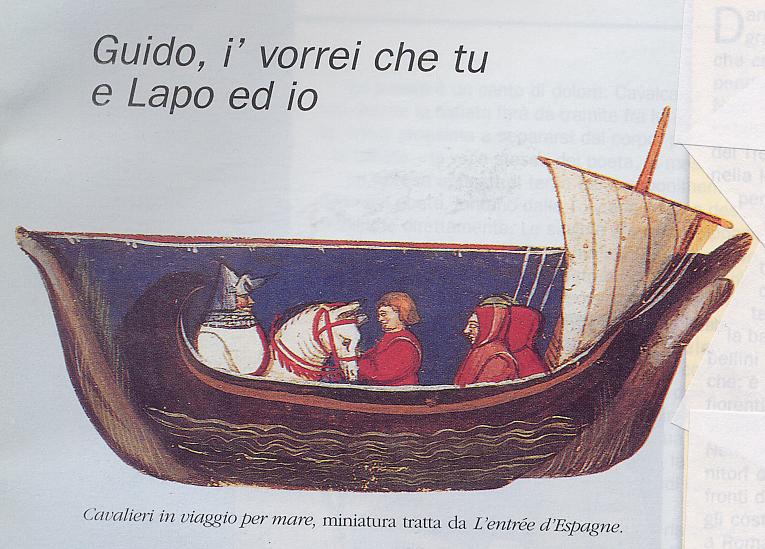
The words in this post’s title are Ezra Pound’s when he heard of T. S. Eliot’s death.
By chance, I was reminded that eleven years ago today, 10 June, a friendship of mine ended, one of that kind mourned by Pound at the loss of his friend.
Understandably, this friend, “Laszlo” in the poem, below, shows up in no small number of my poems, by various names. I share here this one, a joke, for those who might get the formal allusion, memorializing the last time he, I, and the third of our trio, all lived in the same city.
A sonnet is a moment’s &tc.
Laszlo, I wish you, and George, and I
were in that calèche, stalled in traffic,
left, McGill’s gate, Place Ville Marie right,
you flying to love in Holland. Straight out
Upstairs you hailed the passing, empty carriage.
We stopped at a dep George ran in for beer,
our cool québécoise driver declining
a draw or drink. Who can say why
she took the route she did, knowing you‘d
lived here forty years? Just, there we were,
Guiness sixpack shared around, a blue smoke
cloud coughing fit, riding high, our post-
Stammtisch Triangulation Finale
for all rush hour to see, invisible.
Condensation as Recomposition
Filed under: poems | Tags: Ladonian Magnitudes, Max Richter, Peter Gregson, poems, poetics, poetry, procedural poetry, recompositions
Comments (4) Like many these days, I’ve been passing the time enjoying various televisual entertainments, most notably very carefully rationing out my viewing of Paolo Sorrentino‘s The Young Pope and The New Pope. Among these series’ many pleasures is the soundtrack, which introduced me to the British cellist and composer Peter Gregson.
Gregson, along with Max Richter, have both written what they term “recompositions”, Gregson recomposing Bach’s cello suites and Richter Vivaldi’s Four Seasons. Gregson’s and Richter’s reworkings are not without precedent: it’s an old compositional trick to take a phrase or theme from another composer’s music as an element for a new work of one’s own. These recompositions are, however, admittedly more radical and thorough reworkings of the original material.
In my own way, I’ve been writing recompositions for a long while.  One form, inspired by Pound’s found dictum that “dichten = condesare” (roughly, to write poetry is to condense), I termed “condensations”. The simplest compositional procedure, a manner of erasure avant le lettre, was to reduce a given text according to a rule.
The example I share below compresses H.D.’s book Sea Garden into a single poem, rendering each of the volume’s poems as a couplet made of the poem’s first and last line. I retained H.D.’s original capitalization and punctuation as a tacit way of indicating my recomposition was in a no way a unified, straight-ahead lyric poem. The results of this poetic compositional procedure strike me now as being very aesthetically similar to Gregson’s and Richter’s musical recompositions, which is why I share the poem “Sea Garden” from Ladonian Magnitudes, below.
Sea Garden
after H.D.
Rose, harsh rose,
hardened in a leaf?
Are your rocks shelter for ships—
from the splendour of your ragged coast.
The light beats upon me.
among the crevices of the rocks.
What do I care
in the larch-cones and the underbrush.
Your stature is modelled
for their breadth.
Reed,
To cover you with froth.
Whiter
Discords.
Instead of pearls—a wrought clasp—
no bracelet—accept this.
The light passes
and leaf-shadow are lost.
I have had enough.
Wind-tortured place.
Amber husk
as your bright leaf?
The sea called—
The gods wanted you back.
Come, blunt your spear with us,
And drop exhausted at our feet.
You are clear
of your path.
The white violet
frost, a star edges with its fire.
Great, bright portal,
still further on another cliff.
I saw the first pear
I bring you as an offering.
They say there is no hope—
and cherish and shelter us.
Bear me to Dictaeus
and frail-headed poppies.
The night has cut
to perish on the branch.
It is strange that I should want
as the horsemen passed.
You crash over the trees,
a green stone.
Weed, moss-weed,
stained among the salt weeds.
The hard sand breaks,
Shore-grass.
Silver dust
in their purple hearts.
Can we believe—by an effort
their beauty, your life.
A Sonot at Easter: “Come out of the cave…”
Back in the early Nineties of last century (!) when I wrote this poem, the fashion among many Canadian (at least) poets was to write sonnet sequences. By chance, one day, I wrote a poem (“I know the Aurora Borealis” in Grand Gnostic Central) that happened to have fourteen lines. That chance (which to my ear happily rhymes with ‘chants’) occurrence began an ongoing, half-satirical series of accidentally-fourteen-line poems I called variously over the years “soughknots” (literally “air-knots”) and here “sonots” (so not sonnets!).
Its being Easter Sunday brought to mind the opening line and title of another sonot from Ladonian Magnitudes, “Come out of the cave…”, a poem marked by if not marking the emergence of sociality with the warmer days of spring. Of course, now, with the social distancing imposed by Covid-19, getting out into the warmer sunshine is more delayed than it was in 1992, but, then, the poem wanders through art and memory, too, where we can all sojourn until we emerge from this present staid-of-emergency.
“Come out of the cave…”
Come out of the cave
Spring’s first cold night
After an afternoon on the Thing with George
Embryons desséchés and six Gnosiennes, followed by Sonatine bureaucratique and Le Picadilly in the air
This time the third
I think of the natural periodical ecstasy
We call sleep
And consequently dream
Washing and drying the dishes
After the red cabbage, letcho, and potatoes sour-style
Everything put away in place for tomorrow
I pour the hot milk into the yoghurt jars
Remembering measuring solutions in Chemistry
Certain of the results
For the love of Dante
Filed under: poems | Tags: Dante, poems, poetry, poetry recordings
Comments (2) Every Easter I read through Dante’s Divine Comedy, and when I’m teaching, the Inferno holds centre spot in a course I try to give every Winter term, “Go to Hell!”.

That love for Dante and the Commedia makes its way into my poetry, too. A reader sensitized to this fact will fill a big basket of easter eggs reading through my books, published and unpublished.
Rarely, my love for his work is expressed outright, like in this short poem, “The book I can’t read closed beside me…”, that you can hear, here:
Of course, you’ll get even greater pleasure reading through the Commedia outloud over Easter week: the Inferno, Good Friday through to Easter Sunday morning; the Purgatory, from Easter Sunday to Easter Wednesday; then begin the Paradiso Easter Thursday and ascend at your leisure!
You can hear the Commedia in Italian and English translation, at the Princeton Dante Project, here.
Concerning the late Ernesto Cardenal, the Communist Hypothesis, and related matters…
Filed under: Ecology, The Brouillon | Tags: ecosocialism, Ernesto Cardenal, Herbert Marcuse, Liberation Theology, poetics, poetry, Saint Francis of Assisi, the Communist Hypothesis
Comments (2) Social media (in this case, Facebook) for everything disturbingly evil about it can provide gist for no little cogitation.
The Nicaraguan poet Ernesto Cardenal died Sunday 1 March 2020 at 95. His work (which  I first read in that brick of an anthology Poems for the Millennium, Volume II (UCP, 1998)) is exemplary for me, because of its development of an “objectist” sensibility (a poetry of bald statement shorn of metaphor or ornament) wedded to a (religiously!) profound social sensibility that extends to all living creatures.
Understandably, when I learned of his passing (on Facebook), I shared the news with my vast friends list of 374. Things got interesting, however, when I followed a link to the news of his death at one of my favourite poetry sites, Dispatches from the Poetry Wars, which quoted a passage from The New York Times obituary it had shared, which passage I shared in turn:
“Christ led me to Marx,” Father Cardenal said in an interview in 1984. “I don’t think the pope understands Marxism. For me, the four gospels are all equally communist. I’m a Marxist who believes in God, follows Christ, and is a revolutionary for the sake of his kingdom.”
The identification of socialist tendencies in Christianity (unsurprising for those not unacquainted with Liberation Theology, the German Peasant Rebellions during the Reformation, or radical social movements from around the time of the English Civil War, let alone jokes about a certain socialist Jew…) and the very evocation of “communism” elicited rapid responses happy to affirm Cardenal’s artistic gifts but quick to condemn (as “nuts” in the first case and in the second as an example of “some crazy idea of ‘sharing’ that millennials, with a social media-fed knowledge of history, may lean towards”) his embracing what French philosopher Alain Badiou and others have called The Communist Hypothesis.
Now as interesting as it would be to take up the twin topics of Liberation Theology or the Communist Hypothesis (regarding the latter, a good read is this article by the inimitable Slavoj Zizek from 2009) what’s more curious is how those critical of Cardenal’s politics can at the same time respect his poetry whose nearly every line is imbued with his own “communist” perspective. On the one hand, I am the first to maintain a distinction can be made and maintained between a poet’s poetry and their politics, even when that politics rears an ugly head in the work; an even earlier and more important influence on my poetry is the figure of Ezra Pound, a poet who famously went very “wrong / thinking of rightness”. But in Pound’s Cantos, for instance, the author’s “fascism” (arguably as idiosyncratic as Cardenal’s Christian Marxism) and suburban anti-semitism appear only sporadically, while Cardenal’s socialist sympathies are ambient throughout.
Ironically, the critical commenters, above, react to neither the specific synthesis of Christ and Marx and the related, resulting “communism” nor Cardenal’s poetry, for the former finds its sustained and complex articulation in the latter. Cardenal’s “liberation theology” is an ecosocialism avant le lettre, concerned not only with class struggle and the metabolic rift that underwrites it, but with the relations, oppression and liberation of all organisms and the environment that sustains them. Cardenal’s sensibility opposes to the Abrahamic legacy that believes God bestowed dominion over the earth and its creatures to Man a vision more akin to the animistic, Hindu, or Buddhist, or, in the Christian tradition, to that of Saint Francis of Assisi, for whom all Creation forms a family, composed of all the children of God. Likewise, Cardenal’s politics finds echoes and support in the thought of Herbert Marcuse, for whom the liberation of human beings is inextricably bound up with the liberation of nature from human exploitation.
Cardenal, being the poet he was, can speak for himself. As he writes in his poem “New Ecology” (a portion of which in English translation can be read, here):
Not only humans longed for liberation.
All ecology groaned for it also. The revolution
is also one of lakes, rivers, trees, animals.
With him, we can only imagine, long for, and work toward the day when “The armadillos are very happy with this government.”
A (post-secular) poem for Ash Wednesday
Filed under: poems | Tags: Ash Wednesday, poems, poetry, postsecular poetry
Leave a comment However much I was raised Catholic (and really enjoy Paolo Sorrentino’s gorgeous series The Young Pope and The New Pope), the Christian calendar orients me more mythopoetically than devotionally. Nor is the poem below as reverent (however elusively, allusively, and ironically) as Eliot’s canonical one, being more light-hearted and spontaneously post-secular. Nevertheless, I post below an Ash Wednesday poem from March End Prill (Book*hug, 2011).
Lift the flame
Luciferous hissing
blue out the lighter
Light the incenc
uous resins
crackle in the bowl
Father
Son &
Holy Ghost
Each cardinal direction
dawn morning sun
in branches
orientation
sinister
Southern Cross
Antepod
Abendland
Ol’ Rope-a
accidental occident
all that’s left’s
True North
“I believe”
Lichen yellows
Shady bark

 Poeta Doctus