Archive for the ‘Seventh Column’ Tag
“Hell’s Printing House”: Seventh Column (2001)
Filed under: Hell's Printing House | Tags: 2001 Invasion of Afghanistan, Canadian poetry, poetics, poetry chapbooks, poetry recordings, Seventh Column
 Comments (2)
Aside from the pages of little magazines and those of certain, indulgent anthologies, by poems really first made their way in the world in the form of chapbooks. I hadn’t yet published a full-length trade edition, when I went on a “European tour” in 1996, reading in Munich (twice), Heidelberg, and Amsterdam, two self-published chapbooks, Gloze (1995) and On the Phantom Air Ship Mystery (1995), my calling cards.
Joachim Utz, the sponsor of my reading at Heidelberg University’s Anglistiches Seminar, observed that my chapbooks reminded him of William Blake’s. This new category of post takes its inspiration from his remark. “Hell’s Printing House” will showcase my chapbooks, describing them, detailing their contents, linking poems that have already been published at Poeta Doctus, and presenting a new recording of one of their poems.
It is hoped these posts fill the lacunae between full-length collections, assuring those (apparently) few (and valued) readers who follow my production with interest that I am hard at work, going my own direction, at my own pace, trusting those intrigued might be charmed enough to tarry along….
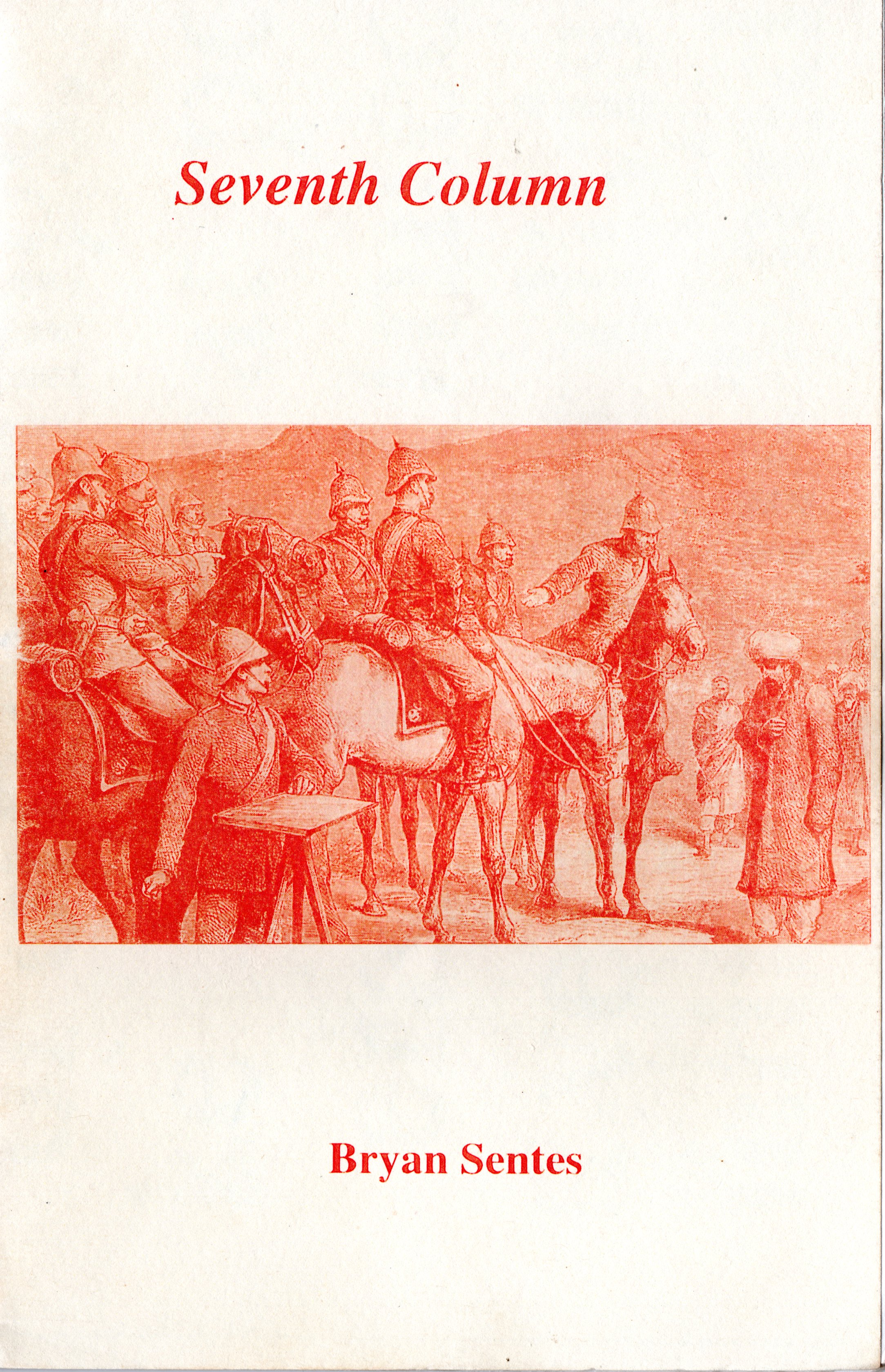
Saturday 22 September 2001 The Globe and Mail published an essay article by John Barber “Wounded and left on Afghanistan’s plains” (F4). Despite its critical stance toward the then-impending invasion of Afghanistan by coalition forces, the terms of its discourse were so pedestrian my frustrated and bored eye wandered across its six columns. The article read thus, against the grain, appeared oracularly clear, and the experience of that reading what I wanted to communicate in the resulting poem. The sense this reading made to me leaves its trace in minor editorialisations (where the text has been stepped on). This vision into the essence of our imagination of Afghanistan is as forbidding as the country itself: a land of glacierous and desert mountains and sandstorms and tire-melting heat that swallows whole armies. “Cut the word lines and the future leaks through.” Here, English speaks this vision: in dead or obscure words, new compounds and coinages. Syntactically, at root (or so Norman O. Brown told John Cage) the arrangement of Alexander’s soldiers in a phalanx (the Great, too, stopped in Afghanistan), the language has been demilitarized.
Soon after I had composed the poem and printed and bound it in chapbook form, The Capilano Review called for submissions for a special issue “grief / war / poetics” that responded to the then-recent 9/11 attacks. It kindly accepted “Seventh Column,” just not the whole thing, so I had to decide how to excerpt a poem that, despite its disruptive, disrupted syntax, was still, arguably, a “whole.” I opted to have TCR print the first eight and last six stanzas to create a manner of sonnet. That excerpt can be read here, a reading of which I share, below.
“Seventh Column” is, to my mind, a high water mark of my poetic practice, the most carefully, rigorously composed of any of my poems. The lineation and punctuation intentionally follow no consistent rule (some lines are end-stopped, others enjambed, some sentences begin with capitals and end with periods, others not…); words are sometimes broken into their syllables, resulting in new coinages or echoes of an older English (whose meanings are footnoted). The language is thus “made new” and impossible to dominate or domesticate by a hermeneutic will-to-meaning lacking sufficient Negative Capability. Indeed, the poem eluded even my own compositional rigor, somehow making itself circular, ending with the suffix ne- and beginning with the root -glected…
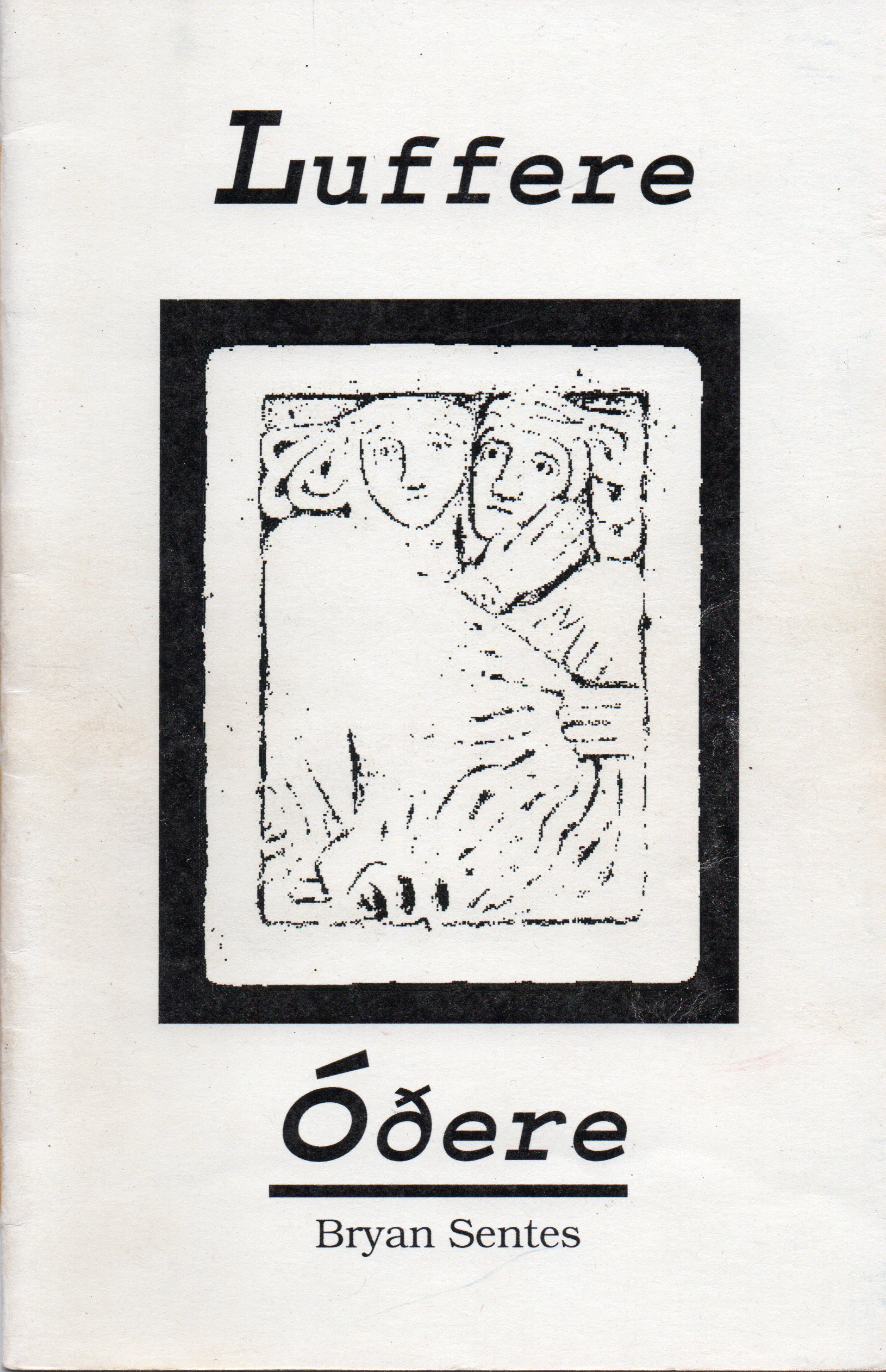
Next month: Luffere & Oþere

 Poeta Doctus