Hell’s Printing House: For a Few Golden Ears (2004)
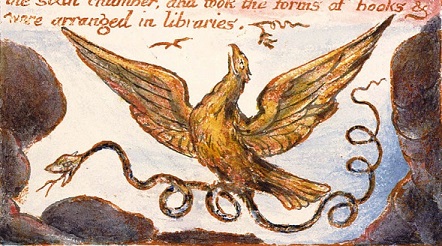
Aside from the pages of little magazines and those of certain, indulgent anthologies, by poems really first made their way in the world in the form of chapbooks. I hadn’t yet published a full-length trade edition, when I went on a “European tour” in 1996, reading in Munich (twice), Heidelberg, and Amsterdam, two self-published chapbooks, Gloze (1995) and On the Phantom Air Ship Mystery (1995), my calling cards.
Joachim Utz, the sponsor of my reading at Heidelberg University’s Anglistiches Seminar, observed that my chapbooks reminded him of William Blake’s. This new category of post takes its inspiration from his remark. “Hell’s Printing House” will showcase my chapbooks, describing them, detailing their contents, linking poems that have already been published at Poeta Doctus, and presenting a new recording of one of their poems.
It is hoped these posts fill the lacunae between full-length collections, assuring those (apparently) few (and valued) readers who follow my production with interest that I am hard at work, going my own direction, at my own pace, trusting those intrigued might be charmed enough to tarry along….
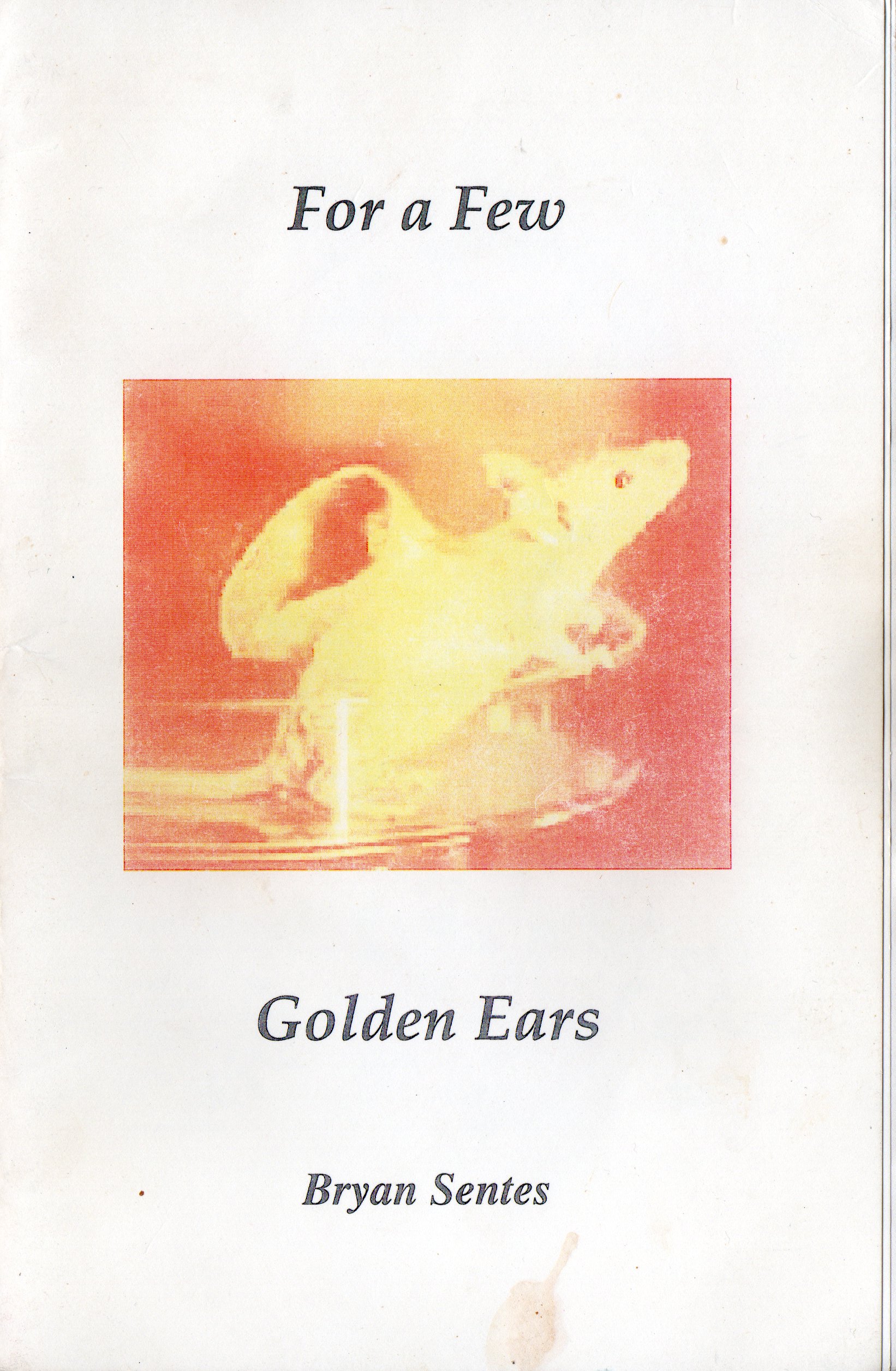
I had published my first trade edition Grand Gnostic Central and other poems in 1998, and I was feeling the growing lag between that publication and what would be next, Ladonian Magnitudes (2006). At the same time, it was becoming increasingly impressed upon me not only how relatively small was the audience for poetry, but how much smaller the circle of my own readers seemed. Taking heart from Allen Ginsberg’s having composed Howl for his “own soul’s ear and a few other golden ears” (a sentiment echoed by Cseslaw Milosz, “I was convinced that we write for perhaps about twenty or thirty individuals, for our fellow poets”), I gathered fifteen poems, published and unpublished, explicitly dedicated to or otherwise written for those lovers, collaborators, friends, and acquaintances in that small circle.
The collection opens with what I have variously called ‘sonots’, ‘soughknots’,or ‘soughnoughts’ in parody of the many books of sonnets being published by anglophone Canadian poets at the time. For a Few Golden Ears gathers, as well, “condensations” (poems composed by making couplets of the first and last lines of another poem’s stanzas), collage acrostics, “quotation” poems stitching together lines overheard, “cubist” poems playing out all the definitions of the words in the poem’s title, letter poems and poems from letters, long-lined rhapsodic poems, curt images, and a manner of abuse poem. All but five of these were to be included in Ladonian Magnitudes (those orphan poems are indicated by ‘*’ below). Those golden ears were and are found on the heads of Rainer Christ, Laszlo Gefin, Ty Hochban, François Hubert, Daniel O’Leary, Georg Oswald, George Slobodzian, Zsolt Sörés, Andrea Strudensky, and my wife, Petra—and, of course, anybody else with “golden ears” to hear!
Contents
- An Apology to François Hubert*
- In the Rialto Before Prospero’s Books*
- See Garden
- Decay Pattern
- C B Hsien Hue on Woman*
- Of Poundysseus
- From a Letter
- Das München Mädchen
- Dream Notes (Bochum, 20 May 1997)
- Reasons Why
- Elenium
- A Visitor from Jerry-Land
- Poésies*
- Epistle to Zsolti: Sunday 25 January 2003
- “For years you’ve been…”*
- Pisces
Yeats observes that “We make out of the quarrel with others, rhetoric, but of the quarrel with ourselves, poetry.” “A Visitor from Jerry-Land,” however much an argument with its interlocutor, is, I argue, very much poetry:
Though I’ve shared “Reasons Why” before, I post it here again with a new recording, as it is probably the one poem of mine I wish had a wider hearing, especially in my home province of Saskatchewan. The poem is a kind of apologia. In the course of a conversation with my old teacher poet friend Laszlo Gefin, he pointed an accusative finger at me and exclaimed with a mixture of surprise and disapprobation that I was “some kinda universal welfare Tommy Douglasite!” The ensuing poem seeks—as much for myself as my accuser—to explain why.
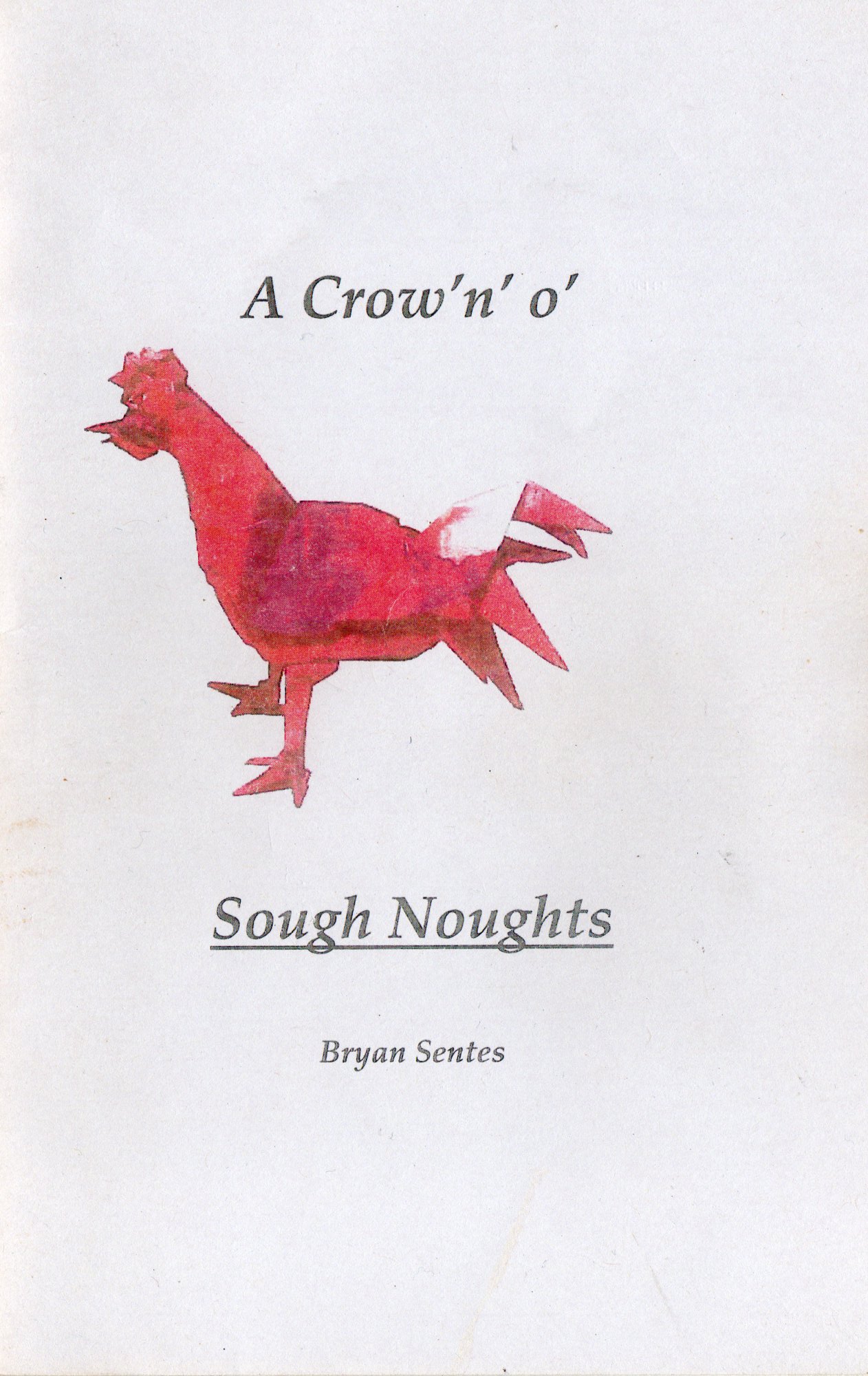
Next month: A Crow’n’ ‘o Sough Noughts (2004).

 Poeta Doctus
[…] that I remarked there were fourteen. This unconscious compositional chance was fortuitious, for, as I’ve previously remarked, the sonnet sequence was all the rage in Canadian anglophone poetry circles at the time. Recently, […]