Archive for the ‘Kemenes Géfin László’ Tag
“Hell’s Printing House”—Budapest Suites (1994)
Filed under: Hell's Printing House | Tags: Canadian poetry, Hungary in poetry, Kemenes Géfin László, Pneuma Poetry Series, poetry, poetry chapbooks, poetry publishing, poetry recordings, William Blake
 Comments (2)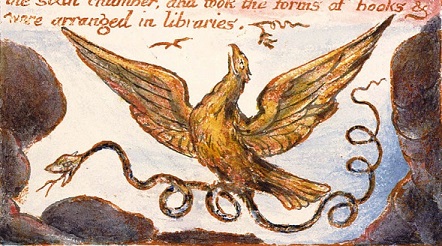
Aside from the pages of little magazines and those of certain, indulgent anthologies, by poems really first made their way in the world in the form of chapbooks. I hadn’t yet published a full-length trade edition, when I went on a “European tour” in 1996, reading in Munich (twice), Heidelberg, and Amsterdam, two self-published chapbooks, Gloze (1995) and On the Phantom Air Ship Mystery (1995), my calling cards.
Joachim Utz, the sponsor of my reading at Heidelberg University’s Anglistiches Seminar, observed that my chapbooks reminded him of William Blake’s. This new category of post takes its inspiration from his remark. “Hell’s Printing House” will showcase my chapbooks, describing them, detailing their contents, linking poems that have already been published at Poeta Doctus, and presenting a new recording of one of their poems.
It is hoped these posts fill the lacunae between full-length collections, assuring those (apparently) few (and valued) readers who follow my production with interest that I am hard at work, going my own direction, at my own pace, trusting those intrigued might be charmed enough to tarry along….
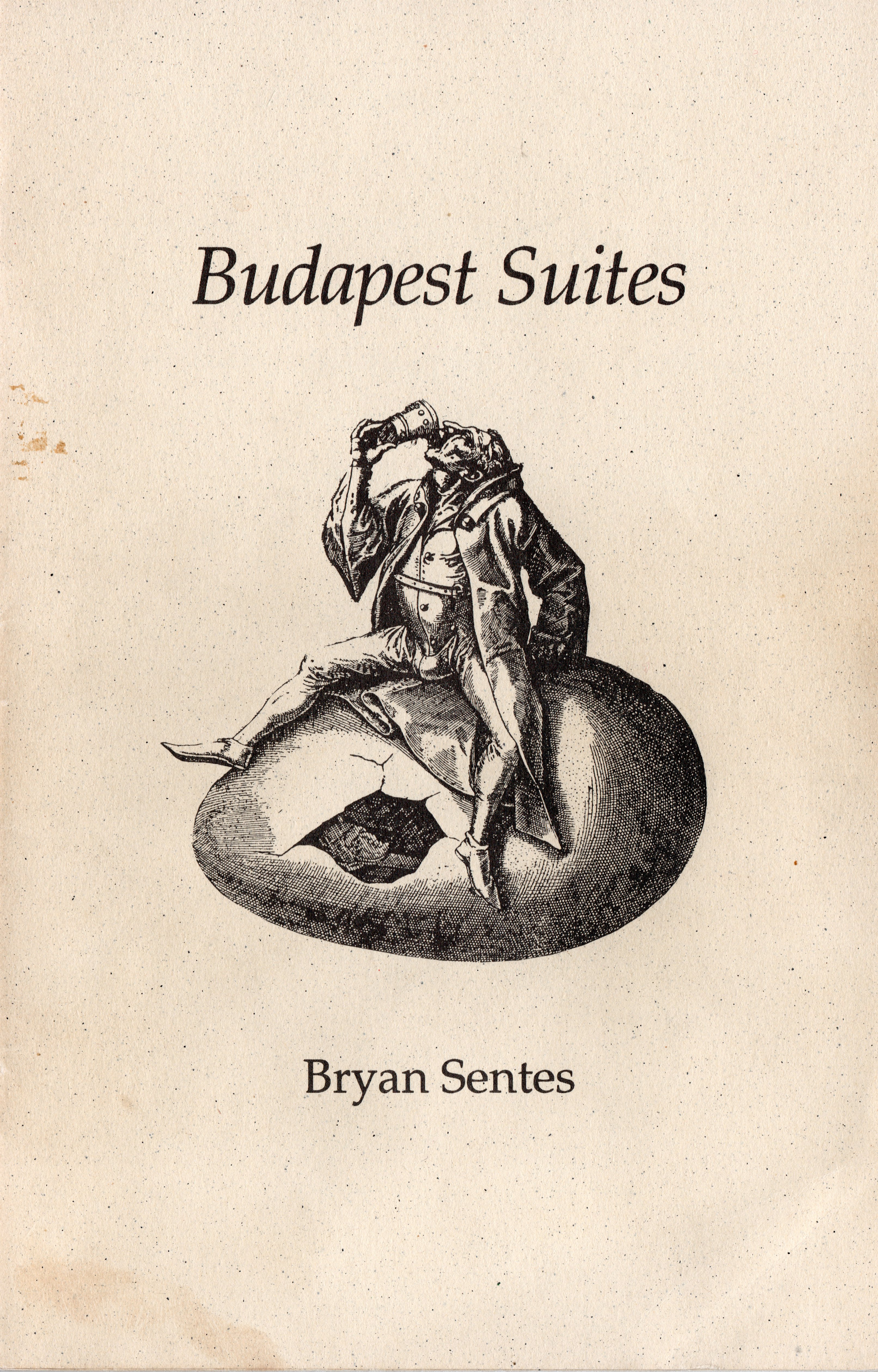
Budapest Suites is the first published version of the titular poetic suite that later appeared, slightly revised, in my first, full-length trade edition, Grand Gnostic Central and other poems (1998). It, along with all books issued in the Pneuma Poetry Series, was designed and printed by my friend Richard Weintrager.
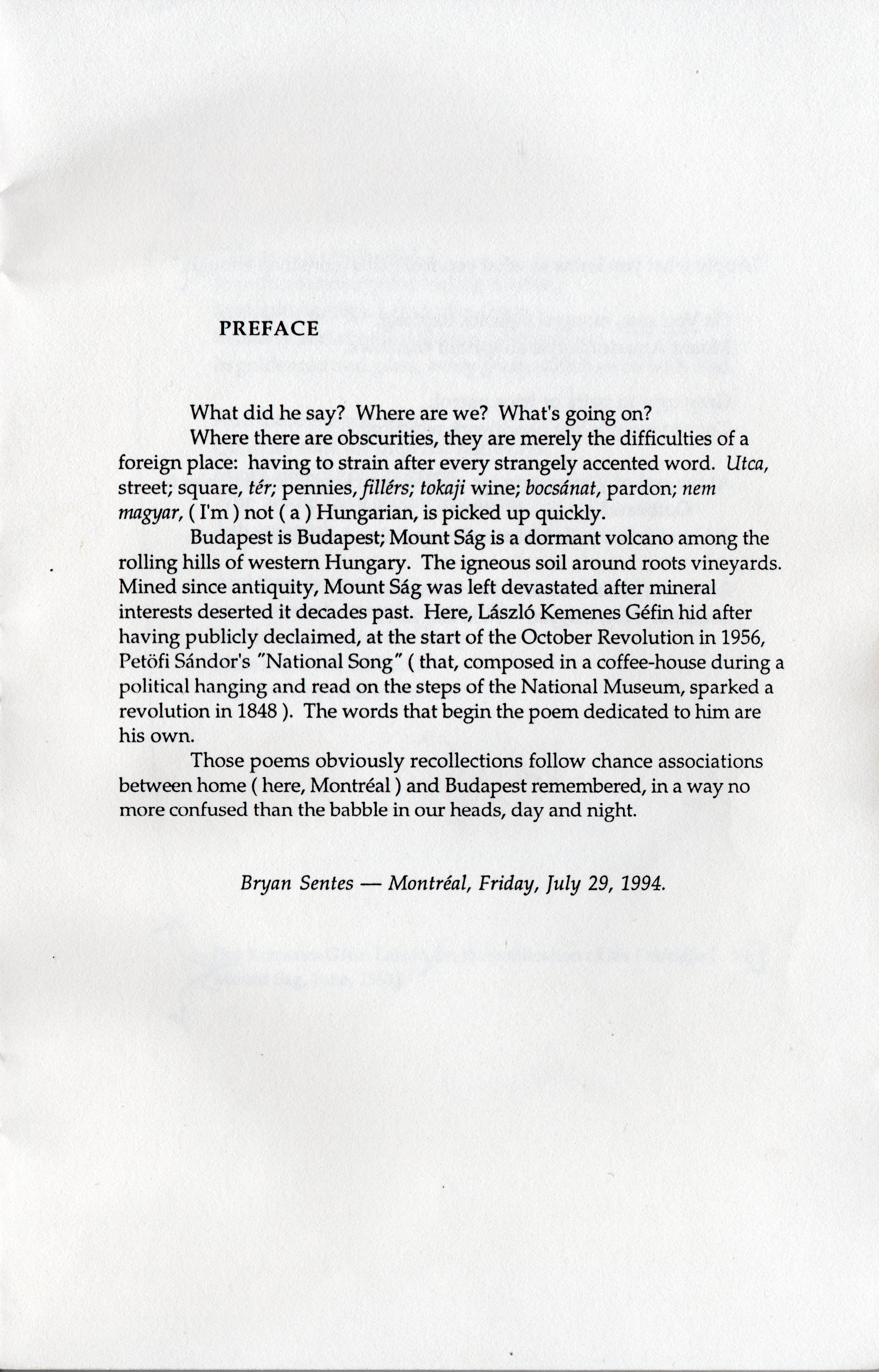
Contents
- “Apply what you know to what you feel that’s more than enough”
- “Mount Ság”
- “That he might…”
- “The chest-high white-haired Swiss woman asked…”
- “I went down to Bibliomanie”
- “Dan and I waltzed hopfrog…”
- “You don’t just follow an impulse do you?”
Budapest Suites collects poems written during and after a 1991 trip to Europe (my first!), whose highpoint was a visit to Budapest and Celldömölk, the hometown of scholar poet friend Kemenes Géfin László, there to be honoured for his literary work and to launch his avant garde epic work Fehérlófia (the son of the white horse). On that occasion, we visited the extinct volcano on the outskirts of town Mount Ság (Sághegy) where Géfin had hidden out during the Hungarian Revolution of 1956 before escaping over the border to Austria. Géfin was struck by the lushness of the locale, so much he was moved to remark, “There is a god here!”, the opening line of the second suite.
In Budapest, I was fortunate enough to make the acquaintance of some American ex-pats, among them, writer Dan Philip Brack (DPB), “Dan” in the opening line of the penultimate suite. Let’s attribute the epigraphs of the first and last suites to him. The fourth suite commemorates a visit to the National Museum. The third suite, as well, was written in situ. The fourth suite was composed after returning to Montreal; its being slightly confusing might be attributable to its being “a mystical poem,” as Hungarian poet Tibor Zalán called it.
The poem recorded below is the third suite. Darius Snieckus, author of the inaugural chapbook in the Pneuma Poetry Series, The Brueghel Desk, was so impressed when he read it, he insisted I not “change a thing!”. His anxieties were not unfounded, as up to and into the writing of the Suites, I had been an obsessive reviser: I still have the notebook with the seventeen (at least) versions of “Mount Ság” worked over that one afternoon, including the Hungarian translation by Zalán and András Sándor, which was read to Géfin on site in honour of the visit.
It was in revising the fourth suite that the most recent, nth version turned out to be identical to the very first. It was then I learned the truth of William Blake’s dictum “First thought best in Art…” From that revelation on, my compositional practice was to write, then carefully study what had been written to understand its spontaneous rightness before cautiously making slight alterations, only in order to bring out the energy of that original impulse all the better. It was Joachim Utz, one my most careful German readers, who noted that the Budapest Suites marked a “breakthrough” in my poetry.
Next month, Gloze (1995)…

This way to Sàghegy…
Filed under: poems, The Brouillon | Tags: Canadian poetry, ecopoetry, Kemenes Géfin László, poetry, poetry recordings
Comments (1) 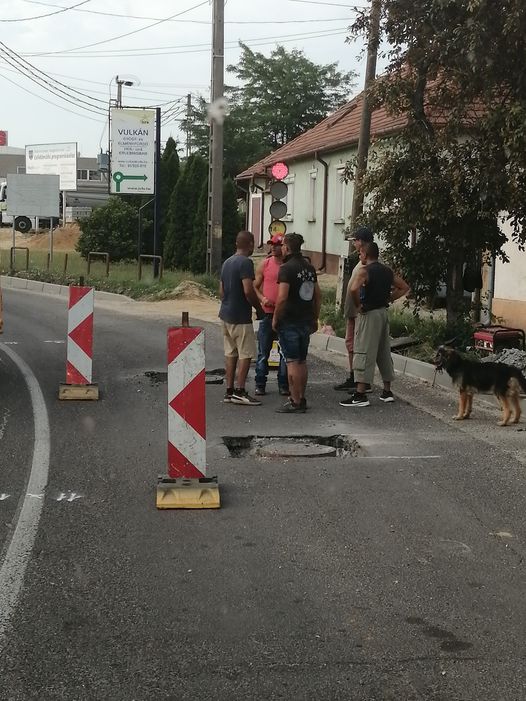
One of the editors here at Poeta Doctus is synchronicity. And, after all, what poetic sensibility isn’t tuned to the rime of meaningful coincidence?
To wit: a friend recently shared a photo from a small town near where he presently lives in Hungary, Celldömölk. Now, it so happens I visited Celldömölk in 1991 to honour the publication of a friend’s avant garde epic work Fehérlófia (the son of the white horse). In the upper right hand corner of the picture, you can see directions to the nearby vulkán, the extinct volcano Mount Ság (Sághegy).
Among other claims to fame, Sághegy is where the epic’s author, Kemenes Géfin László, hid out after participating in the Hungarian Revolution in 1956, before he was able to flee to Austria and eventually to Montreal, Canada, where I was fortunate enough to make his acquaintance. Returning to his home town and the flanks of Sághegy thirty-five years later, Géfin was struck by the lushness of the locale, so much he was moved to remark, “There is a god here!”
To honour the occasion, I sat and furiously composed some forty different iterations (I still have the small, black notebook) of what eventually became the second Budapest Suite. To honour this most recent synchronicity I reproduce Budapest Suites II, below, and share a reading of the poem.
Budapest Suites II
for Laszlo Géfin
“There is a god here!”
In wild strawberry entangling thistles,
In maple saplings, a shroud on loam,
In chestnut and cherry blossoms over tree-line,
In goldenrod and grass, every green stalk, bowed with seed.
And there is a god who
Quarries slate for imperial highways,
Mines iron-ore out of greed,
Who would have Mount Ság again
Ash and rock.
And there is a god
In the seared, scarred, spent, still,
For lichen, poppies and song
Here rise from the bared
And broken rock to the air!
“Now who is there to share a joke with?”

The words in this post’s title are Ezra Pound’s when he heard of T. S. Eliot’s death.
By chance, I was reminded that eleven years ago today, 10 June, a friendship of mine ended, one of that kind mourned by Pound at the loss of his friend.
Understandably, this friend, “Laszlo” in the poem, below, shows up in no small number of my poems, by various names. I share here this one, a joke, for those who might get the formal allusion, memorializing the last time he, I, and the third of our trio, all lived in the same city.
A sonnet is a moment’s &tc.
Laszlo, I wish you, and George, and I
were in that calèche, stalled in traffic,
left, McGill’s gate, Place Ville Marie right,
you flying to love in Holland. Straight out
Upstairs you hailed the passing, empty carriage.
We stopped at a dep George ran in for beer,
our cool québécoise driver declining
a draw or drink. Who can say why
she took the route she did, knowing you‘d
lived here forty years? Just, there we were,
Guiness sixpack shared around, a blue smoke
cloud coughing fit, riding high, our post-
Stammtisch Triangulation Finale
for all rush hour to see, invisible.

 Poeta Doctus