Archive for the ‘poems’ Tag
Avant le deluge…Rising up against that sinking feeling
Filed under: Ecology, poems | Tags: climate change, ecopoetry, global warming, Pacific Island Forum, poems, poetry, Smaller Island States, Tuilaepa Sailele, Tuvalu Declaration
 Leave a comment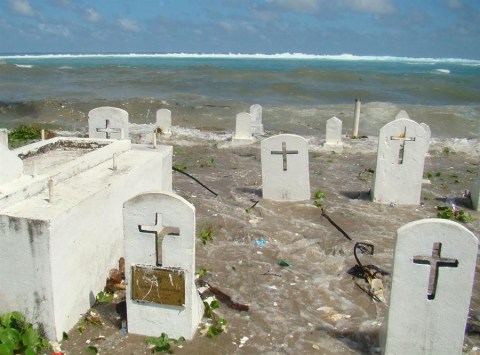
A bitter example of how vested interests (William Burroughs named them “the Nova Mob”) pervert reason, choke compassion, and stymie sane responses to global warming played itself out at this year’s Pacific Island Forum. Australian Prime Minister, Scott Morrison, refused to endorse the Tuvalu Declaration proposed by the Smaller Island States group, “which acknowledges a climate change crisis, encourages countries to revise the emissions reductions targets and calls for a rapid phase out of coal use.”
“I am accountable to the Australian people, that’s who I’m accountable for,” Mr Morrison said.

Tuilaepa Sailelethe
Not a year ago, Tuilaepa Sailelethe prime minister of Samoa, delivered a speech in Sydney, Australia, 30 August 2018, wherein he said that “Any leader … who believes that there is no climate change I think he ought to be taken to mental confinement, he is utter[ly] stupid and I say the same thing for any leader here who says there is no climate change.”
By serendipity (if not synchronicity), the year the world was supposed to end (2012), I composed a chance, fourteen-line poem in harmony with Sailelethe’s sentiments. I’m not sure it’s much of a poem per se, unless a linguistic expression that fuses topical pertinence, heart, and complex irony is enough.
“BE IT RESOLVED…”
BE IT RESOLVED that
whereas public officials
who deny the reality
of Anthropogenic Climate Change
and hinder efforts to mitigate
its destructive effects present
a clear and present danger
to themselves and others,
said public officials should be
removed from office forthwith
and placed under a physician’s care
until such time as their suicidal
and/or homicidal and/or ecocidal
tendencies cease to present.
Corpus Sample: Grappling with the Heraclitean Tao: “At Red River’s Edge” and “Tonight, the world is simple and plain…”
Filed under: poems | Tags: Grand Gnostic Central, Heraclitus, Jean Baudrillard, Mark Fisher, poems, poetry, Tao
Comments (1) Sometimes, whether sincerely or out of hubris, one comes to believe they’ve got a grip on things, and so it seemed, more or less, to me. But, recently, reading Baudrillard’s Symbolic Exchange and Death and an overview of the late Mark Fisher’s life and work, reflecting how, when I was around ten years old, the world was being maneuvered into its (apparent) Neoliberal (dis)order (a view of things probably already belated) and beginning a perceptible acceleration into what has come to be called the Anthropocene, I feel, now, there is nowhere to stand, nowhere at a standstill, that vertigo and fear just under the heart that starts at a sudden drop.
Of course, unknowingly, I’d grappled with these matters before. “At Red River’s Εdge”, the first poem of my first book (Grand Gnostic Central) attempts to resolve, with all the virtues and vices of a youthful work, this nigh metaphysical flow of things (or, as I thought of it at the time, “dissemination”), while the last poem of the book (“Tonight, the world is simple and plain…”), it appears to me now, approaches the same concern, but from a different angle.
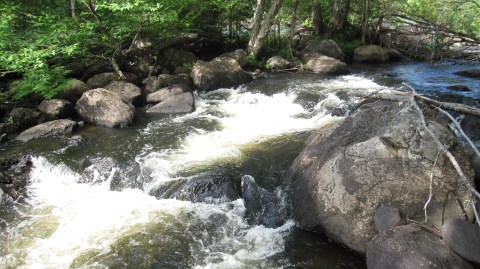
At Red River’s Edge
I shed scales and
blood the slow water
at the river’s edge, the fish
gutted on some warming rock.
A wondering after
origins and wellsprings
rises with my standing
and squinting into the glare
of light broken upstream
at my vision’s limit.
What source spills
up this river?—
numberless puddles brimming
over as rain falls
to fill them, clear
water writhing
over slick dark rock
too hard to carve
a lasting path in,
waves of rainwater
draining in rippling sheets
off flat rock walling
a gleaming highway,
or running in rivulets
charging a careening stream
from a sudden height
in an opening spray of sparks
that scatter against one
mountain’s steep
lower rises. Upward,
glaciers moan and turn
themselves to fluid under
their own weight
for the sake of motion.
Lighter ice and snow
drop, overheavy
overhang, giving
the glitter of crystals
to the lift of winds
and the long swerve of descent
to dew on darting speargrass
leaves or on the grains
of the smallest antmounds
mining the glint
of sand mixed in the topmost soil
of swelling foothills.
Clouds shadow the climb
of rock, condensing
and losing themselves
in the strain
to come to nothing
but clearest light.
Everywhere, countless sources urge
one flow that fills
perfectly any particular
gap in every ground
in its scrambling run
to that ease of gravity
proper to the sea. This river
one route before me
and beyond me on
either side, never ebbing,
only ever changing course
to another. I follow
some black bark carried free
on flashing rises of the current,
sometimes edging a shore, sometimes stilled
in the turning of
a darker random
swirl, but always
spiraling out again
to give with the slow measure
of the ocean’s deepest founding swells
or float on the light
lift of waves
and the chance of the wind
into some child’s quick
excitement in the seadrift.
“Tonight, the world is simple and plain….”
Tonight, the world is simple and plain.
The earth is round and the sky two domes
Enclosing us, excluding nothing.
The stars are all arranged in such a way
As to suggest an endless emptiness
Or heavens full of foreign deities.
And choosing to choose neither we lose
Ourselves, desiring only an end
To this plane enclosed around itself
That keeps us coming to ourselves again.
Corpus Sample: “Hamburger Smalltalk”
Filed under: poems | Tags: poems, poetry, political poetry, race science
Comments (1) While I was trying to imagine a set list for my last reading, I had thought to perform poems that, though written in the early 90s, spoke to today’s world situation. One of these would surely have been the following poem, “Hamburger Smalltalk”, composed in 1991 and later collected in Grand Gnostic Central and other poems.
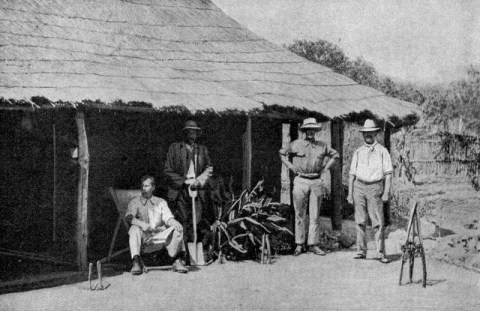
One of the stops during my first visit to Europe was Hamburg, Germany, where we stayed a few days with a couple, friends of my partner at the time. One was widely travelled and had lived some time in Africa. During a very pleasant, evening walk, with our respective partners and the dog, he related the anecdote the poem retells. Accordingly, the poem is spoken in his voice, complete with Germanisms of syntax and expression.
Hamburger Smalltalk
You’ve seen a picture of a cheetah
on a gazelle: its teeth in its neck
bent back, its leg
around the gazelle’s hind leg
to break its back.
Cheetahs are a serious nuisance
for farmers in southwest Africa. Lions
and other cats kill what they need
and leave something
for the jackals and vultures.
A cheetah goes into blood-frenzies—
if you have a herd of sheep
in the morning you’ll find forty
torn apart and maybe seven lambs
carried off.
The farmers know their herds
they watch and know which cows are ready
to calve and if a calf goes missing
they mark the mother
and send her next to the abattoir.
Now you’ll see five cows gang up
on a cheetah to protect the calves
and drive it off.
(He shook his head and chuckled)
The white tribe of Africa.
New on the Video Page: Accent Poetry series 29 July 2019
Filed under: The Brouillon | Tags: Accent poetry series, poems, poetry, poetry readings
Leave a comment New on the Video Page!
Thanks to Devon Gallant for the invite; and a pleasure to have read with that evening’s other featured reader, Derek Webster.
As I have the creative metabolism of a pop star (i.e., roughly a dozen new poems a year), new volumes of work are slow to appear. Four of the seven poems I perform here are therefore “new”.
Play list:
1. Budapest Suites I (from Grand Gnostic Central)
2.”European Decadence in medias res” (from Ladonian Magnitudes)
3. Hamburg & Kassel sections from “Made in Germany”
4. Toronto Suite
5. “By Mullet River”
6. “Flying Saucers” (from Grand Gnostic Central)
7. “A sonnet is a moment’s &c.”
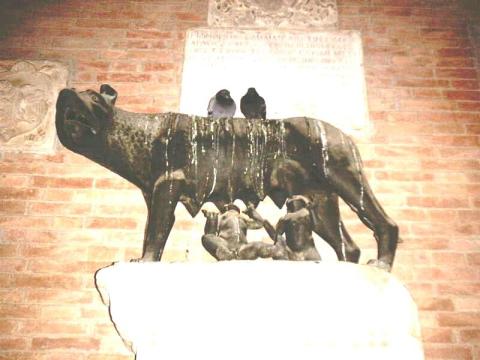
Doom porn: What would Martin Luther do?
Filed under: Ecology, poems | Tags: climate change, doom porn, ecopoetics, ecopoetry, Gerard Manley Hopkins, global warming, poems, poetry
Comments (1) Again, as happens, acquaintances I believe should know better, being educated, intelligent, and reflective, let the doomporn clickbait get the better of their sincere, best intentions and share distressing articles, such as this one about a report by two (2) Australians this spring positing that there is a “‘High Likelihood of Human Civilization Coming to an End’ Starting in 2050”.
Nearly, already, three decades back, a similar despair, coupled with Hopkins’ “God’s Grandeur” I had by heart and the offhand remark by a friend visiting the lush, extinct volcano near his birthplace, inspired a poem in answer (the second of seven Budapest Suites in Grand Gnostic Central).
Budapest Suites II
for Laszlo Gefin
“There is a god here!”
In wild strawberry entangling thistle,
In maple saplings, a shroud on loam,
In chestnut and cherry blossoms over tree-line,
In goldenrod and grass, every green stalk, bowed with seed.
And there is a god who
Quarries slate for imperial highways,
Mines iron-ore out of greed,
Who would have Mount Ság again
Ash and rock.
And there is a god
In the seared, scarred, spent, still,
For lichen, poppies and song
Here rise from the bared
And broken rock to the air!
Just last year, some widely-publicized remarks by Mayer Hillman (“We’re doomed!”) inspired a number of responses, an early version of one I posted here the last time a friend disseminated some other bleak pessimism…
I’m hardly a Bjorn Lomborg playing down the gravity of the situation and the urgent, concerted, radical action it calls for, including the need for no less focussed, lively and creative reflection and critique to articulate a post-anthropocentric, if not post-humanist, biocentric ecosophy. But nor am I a latter-day Jeremiah confusing his insight into the woes and flaws of the present with visions of imminent, righteous catastrophe. (It’s high time I address at greater length this newly-arisen apocalyptic tone in cultural criticism…).
To wit, and not for the last time, I’m sure, I share here two unpublished (…because editors [eye-roll emoji][facepalm emoji]…) sections of the sequence “Made in Germany”, composed in 2012.
Waiting on a train to what was
the East, the summer of the year
the New Age believed the World
would end, wildfires smoke
from Colorado to Croatia,
floodwaters deeper than memory
drown southern Russia and Thailand,
tornadoes plough the Midwest,
hurricanes blow past records
on the Eastern Seaboard.
∞
http:// arctic-news.blogspot.de/p/global-extinction-within-one-human.html?spref=fb (21.07.2012)
Asked what he would do were the world to end
next day, Luther replied, “Plant an apple tree.”

A theme with vista: food
Filed under: poems | Tags: alchemy, food, food poetry, poems, poetry, tuna recipes
Comments (1) An Australian acquaintance I know through our shared admiration for the poetry and political writing of Peter Dale Scott is fast becoming a shadow co-editor for Poeta Doctus. She weekly or so will share poems on-line, one of which has already prompted my sharing one of my own.
Today, she shared Daniel Nyikos’ poem about making Hungarian potato soup. This resonated with me for numerous reasons: food is a persistent theme in my own work, and my father’s family are Hungarian immigrants (my sister holds in her possession my grandmother’s handwritten recipe for potato soup). I share below, therefore, two (!) poems, from Ladonian Magnitudes.
The first, “Marmitako“, is similar to Nyikos’ (though it never made it into the pages of Poetry), about a traditional, Portuguese fish stew. Things have changed since it was written, as to eat tuna, today, is both to dose yourself with mercury and to contribute to the extinction of the fish. The second, “Horizontal Gold Noble Mercury”, concerns mercury, too—explicitly, but in a more rarefied sense—and, consequently, sustenance in a more sophisticated manner. Bon appetit!
Marmitako
They cut the tail section off some
Of the tuna, bonito, and mackerel
They caught, skinned and boned it,
Cleaned it up in buckets, chopped it
Up and threw it in the iron stewpot
On top of the onions, garlic, tomatoes,
And dried red peppers, cleaned and chopped,
Simmering there, oil bubbling through,
Shared loaves and some good red wine,
That Friday of all days still offshore.
Horizontal Gold Noble Mercury
1/2 grapefruit, red or white, sliced banana on bowl muesli w/ 2% milk or 1% yoghurt, brown toast w/ jam or honey on peanutbutter, 1 espresso
Piece sprouted unleavened Manna Bread, 1 espresso
Sandwich, russet apple or pear, 1 espresso
2 nights now, stir fry of Spanish onion, Hungarian pepper, bean sprouts, broccoli, tofu; 1 espresso
4500 mg vitamin C daily until cold is gone
There stands a house under the mountain of the world
Be thou the happy subject of my books, a brave craft
Dash’d all to pieces, my tongue, this air,
Born here of parents born here of parents
The same, hoping to cease not, till death

Budapest on my mind
A friend of mine recently shared Anya Silver’s poem “Doing Laundry in Budapest”, which brought to mind a thematically-related poem of my own, from my first chapbook Budapest Suites (Montreal: Pneuma, 1994) and first trade edition, Grand Gnostic Central and other poems. I share it here for my friend’s, and anyone else’s, pleasure.
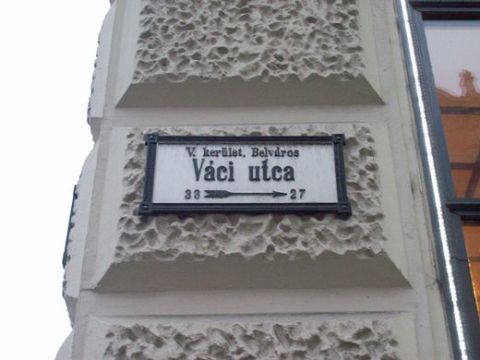
“Apply what you know to what you feel that’s more than enough”
On Váci utca, mongrel pigeons, flapping,
Mount American-style shopfront windows.
Grey cops in pairs or trios patrol;
Country people bag handiwork, whistling.
At the end of Vörösmárty tér, a blind man begs fillérs at tables in Gerbaud—
A blond father yells No! at a Gypsy girl and daughter.
Behind me a woman asks for directions:
Bocsanat. Nem magyar. “Nem Magyar?!”
NOTES:
Váci utca is a famous commercial street in Budapest; Vörösmárty tér is a square at the end of the street; fillérs at the time (1991) were pennies; Gerbaud is a famous café on, I believe, the square; the Hungarian that ends the poem can be translated roughly as “Pardon me. I’m not Hungarian.” “You’re not Hungarian?!”
I am aware that the racial designation of the girl and daughter in line 6 might, today, be read as an epithet; I retain it here as an index of the time of the poem’s composition; its use, innocent at that time, was also prompted by the alliteration with ‘Gerbeaud’….
Jason Kenney rides UCP wave to majority government in Alberta
Filed under: The Brouillon | Tags: Alberta election 2019, Jason Kenney, poems, poetry, political poetry, politics, United Conservative Party of Alberta
Leave a comment
When I read this headline this morning, I was immediately reminded of my friends’ reactions to the election of Rob Ford last summer, whose social media postings I collaged into a kind of poem as they threaded their way to me then.
You can read “Ontario Election Results 2018 in real time“, changing the names and places as needed to make it about this most recent electoral development.
I’ve poetically expressed my own political leanings here, in a long poem from Ladonian Magnitudes (2006).
All I can say is, Þæs ofereode, þisses swa mæg!

The Year in Review, or The Latest Album
Filed under: The Brouillon | Tags: poems, poetry, year end review
Leave a comment  Unlike some poets, who seem able to compose and publish a new book every year, I learned long ago my creative metabolism is more like that of a pop musician, about twelve new pieces, or a new album, annually.
Here’s what I’ve produced this year, with early versions of poems shared here hyperlinked; italicized titles are sequences, while those in quotation marks are individual poems:
Cyberian Vistas (one of which can be read here)
Replies to Mayer Hillman (an early version of one of which can be read here)
Toronto Suite (two of which can be read here and here)
Pasqua Lake Elegies
“A Portrait of the Artist”
“A book I can’t read closed”
“I’m told you’re disappointed”
There are some miscellaneous “one-offs” here, too: “Two [more!] for Mayer Hillman”, “Ontario Election Results in Real Time 2018”, and a little poem on the eve of the provincial elections in Quebec, here.
Happily, too, I delivered a talk on the poetry of Peter Dale Scott and the Postsecular at what used to be called the Learneds in May, while the end of summer saw my collaborator Antoine Malette and myself translating passages of Louis Riel’s Massinahican, which will hopefully appear in an anthology forthcoming from University of California Press in 2019 or 2020.
Replies to Mayer Hillman
Filed under: poems | Tags: climate change, Mayer Hillman, poems
Comments (2) 
At the end of April, The Guardian published a dour interview with social scientist Mayer Hillman, wherein he pronounces “We’re doomed.”
Said interview resulted in some tangled discussion threads that, in turn, resulted in some poems (here, here, and here), and some friends’ sharing the interview on-line—again!—prompted the following intervention.
Replies to Mayer Hillman
“We’re doomed.”
Your therapist would guide you
gently to see you’re fortune telling.
The dialectician would unfold the thought
that determination does not
foreclose unforeseen developments
being the condition of its own negation.
A happy chance slip of memory recalls
“What is real now was only once imagined”.

 Poeta Doctus