Archive for the ‘poetry’ Tag
Corpus Sample: “After a Legend of the Prior of Urfort”
Filed under: poems | Tags: Grand Gnostic Central, Meister Eckhart, poems, poetics, poetry
 Comments (1)
 My stylistic trend of recent years has been asymptoting to a “poetry degree zero”, a language stripped of overt figuration or texture, relying, instead, on metonymy, allusion, and, what in classical rhetoric might be termed, arrangement. But recently I’ve been hankering for a more complex poetry, not unlike some of that included in my first trade edition Grand Gnostic Central and other poems (1998).
One poem there that embodies what I have in mind is a slightly cheeky retelling of a story about the medieval German mystic, Meister Eckhart, awhile the Prior of Erfort. Eckhart is referred to only paraphrastically, and the spelling of Erfort is modified, as well, for, well, poetic reasons. Whether the poem achieves the sophistication of thought and expression it aspires to I leave, of course, to the reader.
Too, thematically, it touches on the concerns addressed in my last Corpus Sample, since, one way humankind has traditionally attempted to tame the chaos of the wild ride of being alive is to impose a mythic pattern or order, as we’re told the Prior of Urfort seems to, here.

After a Legend of the Prior of Urfort
No soul
Has effect
But by the body held
What you know
What two no one can hold
Weave in a scuffle
These
The plottings
The subtle wishes
Sung by one
An inbred family
On a mountain top
These in one
Divine
He said
Why the title, “Bread & Pearls”?
Filed under: The Brouillon | Tags: poetics, poetry, poetry criticism
Leave a comment It has some pleasant affinities with the title of Roland Barthes’ magisterial study S/Z.
The conjoined substantives are, first, singular and plural. The initial phonemes of each are in opposition: /b/ voiced, /p/ unvoiced. Orthographically, the consonant-vowel pattern ‘r-ea’ in ‘bread’ is reversed in ‘pearls’, ‘ea-r’. Like the initial consonants, the more-or-less terminal consonants of the pair seem to me again in phonological opposition: both /d/ and /l/ are formed by placing the tongue-tip to the palate, but the former releases the flow of breath, removing the tongue from the palate, while the latter does not.
Semantically, in one regard, the first substantive denotes something edible, while the latter does not; bread is artificial, while pearls are natural (if susceptible to being cultured); however, one sense of ‘bread’ (money) makes both terms media of exchange. The substantives allude, too, to two bible verses not without a certain rhetorical significance.
Much more, of course, could be said….
Avant le deluge…Rising up against that sinking feeling
Filed under: Ecology, poems | Tags: climate change, ecopoetry, global warming, Pacific Island Forum, poems, poetry, Smaller Island States, Tuilaepa Sailele, Tuvalu Declaration
Leave a comment 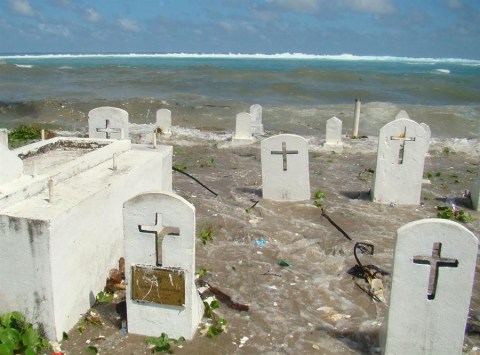
A bitter example of how vested interests (William Burroughs named them “the Nova Mob”) pervert reason, choke compassion, and stymie sane responses to global warming played itself out at this year’s Pacific Island Forum. Australian Prime Minister, Scott Morrison, refused to endorse the Tuvalu Declaration proposed by the Smaller Island States group, “which acknowledges a climate change crisis, encourages countries to revise the emissions reductions targets and calls for a rapid phase out of coal use.”
“I am accountable to the Australian people, that’s who I’m accountable for,” Mr Morrison said.

Tuilaepa Sailelethe
Not a year ago, Tuilaepa Sailelethe prime minister of Samoa, delivered a speech in Sydney, Australia, 30 August 2018, wherein he said that “Any leader … who believes that there is no climate change I think he ought to be taken to mental confinement, he is utter[ly] stupid and I say the same thing for any leader here who says there is no climate change.”
By serendipity (if not synchronicity), the year the world was supposed to end (2012), I composed a chance, fourteen-line poem in harmony with Sailelethe’s sentiments. I’m not sure it’s much of a poem per se, unless a linguistic expression that fuses topical pertinence, heart, and complex irony is enough.
“BE IT RESOLVED…”
BE IT RESOLVED that
whereas public officials
who deny the reality
of Anthropogenic Climate Change
and hinder efforts to mitigate
its destructive effects present
a clear and present danger
to themselves and others,
said public officials should be
removed from office forthwith
and placed under a physician’s care
until such time as their suicidal
and/or homicidal and/or ecocidal
tendencies cease to present.
Corpus Sample: Grappling with the Heraclitean Tao: “At Red River’s Edge” and “Tonight, the world is simple and plain…”
Filed under: poems | Tags: Grand Gnostic Central, Heraclitus, Jean Baudrillard, Mark Fisher, poems, poetry, Tao
Comments (1) Sometimes, whether sincerely or out of hubris, one comes to believe they’ve got a grip on things, and so it seemed, more or less, to me. But, recently, reading Baudrillard’s Symbolic Exchange and Death and an overview of the late Mark Fisher’s life and work, reflecting how, when I was around ten years old, the world was being maneuvered into its (apparent) Neoliberal (dis)order (a view of things probably already belated) and beginning a perceptible acceleration into what has come to be called the Anthropocene, I feel, now, there is nowhere to stand, nowhere at a standstill, that vertigo and fear just under the heart that starts at a sudden drop.
Of course, unknowingly, I’d grappled with these matters before. “At Red River’s Εdge”, the first poem of my first book (Grand Gnostic Central) attempts to resolve, with all the virtues and vices of a youthful work, this nigh metaphysical flow of things (or, as I thought of it at the time, “dissemination”), while the last poem of the book (“Tonight, the world is simple and plain…”), it appears to me now, approaches the same concern, but from a different angle.
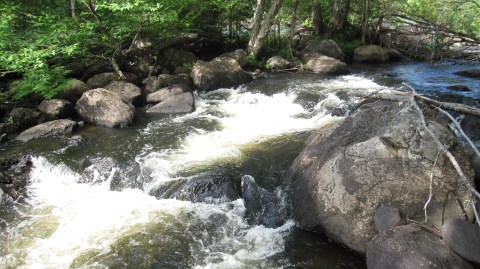
At Red River’s Edge
I shed scales and
blood the slow water
at the river’s edge, the fish
gutted on some warming rock.
A wondering after
origins and wellsprings
rises with my standing
and squinting into the glare
of light broken upstream
at my vision’s limit.
What source spills
up this river?—
numberless puddles brimming
over as rain falls
to fill them, clear
water writhing
over slick dark rock
too hard to carve
a lasting path in,
waves of rainwater
draining in rippling sheets
off flat rock walling
a gleaming highway,
or running in rivulets
charging a careening stream
from a sudden height
in an opening spray of sparks
that scatter against one
mountain’s steep
lower rises. Upward,
glaciers moan and turn
themselves to fluid under
their own weight
for the sake of motion.
Lighter ice and snow
drop, overheavy
overhang, giving
the glitter of crystals
to the lift of winds
and the long swerve of descent
to dew on darting speargrass
leaves or on the grains
of the smallest antmounds
mining the glint
of sand mixed in the topmost soil
of swelling foothills.
Clouds shadow the climb
of rock, condensing
and losing themselves
in the strain
to come to nothing
but clearest light.
Everywhere, countless sources urge
one flow that fills
perfectly any particular
gap in every ground
in its scrambling run
to that ease of gravity
proper to the sea. This river
one route before me
and beyond me on
either side, never ebbing,
only ever changing course
to another. I follow
some black bark carried free
on flashing rises of the current,
sometimes edging a shore, sometimes stilled
in the turning of
a darker random
swirl, but always
spiraling out again
to give with the slow measure
of the ocean’s deepest founding swells
or float on the light
lift of waves
and the chance of the wind
into some child’s quick
excitement in the seadrift.
“Tonight, the world is simple and plain….”
Tonight, the world is simple and plain.
The earth is round and the sky two domes
Enclosing us, excluding nothing.
The stars are all arranged in such a way
As to suggest an endless emptiness
Or heavens full of foreign deities.
And choosing to choose neither we lose
Ourselves, desiring only an end
To this plane enclosed around itself
That keeps us coming to ourselves again.
Corpus Sample: “Hamburger Smalltalk”
Filed under: poems | Tags: poems, poetry, political poetry, race science
Comments (1) While I was trying to imagine a set list for my last reading, I had thought to perform poems that, though written in the early 90s, spoke to today’s world situation. One of these would surely have been the following poem, “Hamburger Smalltalk”, composed in 1991 and later collected in Grand Gnostic Central and other poems.
One of the stops during my first visit to Europe was Hamburg, Germany, where we stayed a few days with a couple, friends of my partner at the time. One was widely travelled and had lived some time in Africa. During a very pleasant, evening walk, with our respective partners and the dog, he related the anecdote the poem retells. Accordingly, the poem is spoken in his voice, complete with Germanisms of syntax and expression.
Hamburger Smalltalk
You’ve seen a picture of a cheetah
on a gazelle: its teeth in its neck
bent back, its leg
around the gazelle’s hind leg
to break its back.
Cheetahs are a serious nuisance
for farmers in southwest Africa. Lions
and other cats kill what they need
and leave something
for the jackals and vultures.
A cheetah goes into blood-frenzies—
if you have a herd of sheep
in the morning you’ll find forty
torn apart and maybe seven lambs
carried off.
The farmers know their herds
they watch and know which cows are ready
to calve and if a calf goes missing
they mark the mother
and send her next to the abattoir.
Now you’ll see five cows gang up
on a cheetah to protect the calves
and drive it off.
(He shook his head and chuckled)
The white tribe of Africa.
New on the Video Page: Accent Poetry series 29 July 2019
Filed under: The Brouillon | Tags: Accent poetry series, poems, poetry, poetry readings
Leave a comment New on the Video Page!
Thanks to Devon Gallant for the invite; and a pleasure to have read with that evening’s other featured reader, Derek Webster.
As I have the creative metabolism of a pop star (i.e., roughly a dozen new poems a year), new volumes of work are slow to appear. Four of the seven poems I perform here are therefore “new”.
Play list:
1. Budapest Suites I (from Grand Gnostic Central)
2.”European Decadence in medias res” (from Ladonian Magnitudes)
3. Hamburg & Kassel sections from “Made in Germany”
4. Toronto Suite
5. “By Mullet River”
6. “Flying Saucers” (from Grand Gnostic Central)
7. “A sonnet is a moment’s &c.”
Doom porn: What would Martin Luther do?
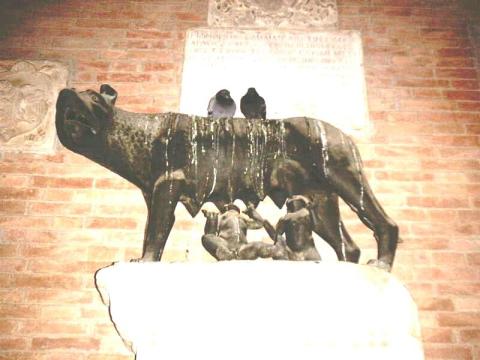
Filed under: Ecology, poems | Tags: climate change, doom porn, ecopoetics, ecopoetry, Gerard Manley Hopkins, global warming, poems, poetry
Comments (1) Again, as happens, acquaintances I believe should know better, being educated, intelligent, and reflective, let the doomporn clickbait get the better of their sincere, best intentions and share distressing articles, such as this one about a report by two (2) Australians this spring positing that there is a “‘High Likelihood of Human Civilization Coming to an End’ Starting in 2050”.
Nearly, already, three decades back, a similar despair, coupled with Hopkins’ “God’s Grandeur” I had by heart and the offhand remark by a friend visiting the lush, extinct volcano near his birthplace, inspired a poem in answer (the second of seven Budapest Suites in Grand Gnostic Central).
Budapest Suites II
for Laszlo Gefin
“There is a god here!”
In wild strawberry entangling thistle,
In maple saplings, a shroud on loam,
In chestnut and cherry blossoms over tree-line,
In goldenrod and grass, every green stalk, bowed with seed.
And there is a god who
Quarries slate for imperial highways,
Mines iron-ore out of greed,
Who would have Mount Ság again
Ash and rock.
And there is a god
In the seared, scarred, spent, still,
For lichen, poppies and song
Here rise from the bared
And broken rock to the air!
Just last year, some widely-publicized remarks by Mayer Hillman (“We’re doomed!”) inspired a number of responses, an early version of one I posted here the last time a friend disseminated some other bleak pessimism…
I’m hardly a Bjorn Lomborg playing down the gravity of the situation and the urgent, concerted, radical action it calls for, including the need for no less focussed, lively and creative reflection and critique to articulate a post-anthropocentric, if not post-humanist, biocentric ecosophy. But nor am I a latter-day Jeremiah confusing his insight into the woes and flaws of the present with visions of imminent, righteous catastrophe. (It’s high time I address at greater length this newly-arisen apocalyptic tone in cultural criticism…).
To wit, and not for the last time, I’m sure, I share here two unpublished (…because editors [eye-roll emoji][facepalm emoji]…) sections of the sequence “Made in Germany”, composed in 2012.
Waiting on a train to what was
the East, the summer of the year
the New Age believed the World
would end, wildfires smoke
from Colorado to Croatia,
floodwaters deeper than memory
drown southern Russia and Thailand,
tornadoes plough the Midwest,
hurricanes blow past records
on the Eastern Seaboard.
∞
http:// arctic-news.blogspot.de/p/global-extinction-within-one-human.html?spref=fb (21.07.2012)
Asked what he would do were the world to end
next day, Luther replied, “Plant an apple tree.”

“Mile End est mort…”
Filed under: poems, The Brouillon | Tags: gentrification, Mile End, poetry
Comments (6) For the more than three decades I’ve lived in Montreal, I’ve lived in the quarter known generally as The Plateau and more specifically and recently (to my ears, anyway) Mile End, most notably at “Grand Gnostic Central” on the corner of Rachel and St. Urbain (scenes from the cinematic version of The Apprenticeship of Duddy Kravitz were filmed just up the block), a couple of locations on Hutchison and Parc Avenue south of Bernard, and, since 1996 (for the time being) on the corner of St Joseph and Parc in what our landlady calls her Chateau du Parc.

Credit: Mary Shelley
Montreal, like any number of cities on earth, is suffering a process of gentrification. In my area, it’s been underway for years, but it’s picked up since a number of software companies (Ubisoft and Softimage) have moved in. When it all began, I reflected that more affordable if less “desirable” neighborhoods attract those who can afford to live in them, which will often include creatives, writers, painters, artists, and so forth. Their creative energies, by a cruel dialectic, make the neighborhood more beautiful, pleasant and lively, attracting more residents and businesses, beginning a process of, well, gentrification. The creatives and others who made the place attractive in the first place are forced to move out, to some other quarter, sometimes in some other city, where the process can begin all over again.
A poem in Ladonian Magnitudes, “The Intersection” remarks this process. I share it below as a manner of memorial.
The Intersection
where l’Esplanade
meets Villeneuve
that spring dusk
the air’s first
breathable classic
sunlit redbrick
the unique quaint
three-storey walkups
characteristic of
the quarter’s charm
are almost all
so made up
like new the one
run down white tshirt
underarm stain yellow
building with muddy
white frames peeling
around cracked panes
stands out like
never among
those other fronts
kept up for years
without a thought
of what they’d go for
Set List: Accent Reading Series: Monday 29 July 2019
Filed under: The Brouillon | Tags: poetry, poetry readings, travel
Leave a comment 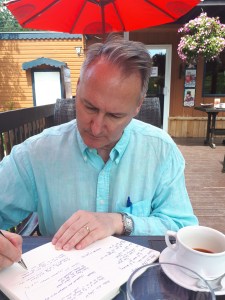 Having settled on poems that have to do with travel for my upcoming reading, I post here the set list and link poems on-line that are among those I’ll perform, for interested parties.
“European Decadence in medias res” (from Ladonian Magnitudes)
Budapest Suites I (from Grand Gnostic Central)
Two poems from Made in Germany, (“In Berlin, at the Mehringdamm U-Bahn station…” and “Cabbie on Documenta13”)
Toronto Suite (early versions of two of three poems in the suite can be read here and here)
“À Québec” (from Grand Gnostic Central)
“The Intersection” (from Ladonian Magnitudes)
“By Mullet River”
“A Sonnet is a moments, &tc.”
At the Accent Weekly bilingual poetry series & Open Mic
Filed under: The Brouillon | Tags: Accent poetry series, poetry, poetry readings
Leave a comment It’s rare and special when I get to share my work in public, and I’m grateful for this latest opportunity.
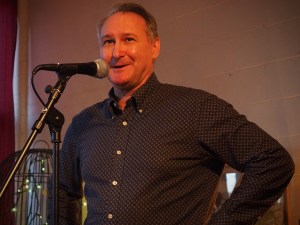
credit Brian Campbell
I’ll be one of two featured readers (with Derek Webster) at the next Accent reading series event:
Monday 29 July
at ‘La Marche a Cote’ 5043 St. Denis, Montreal, Quebec.
Officially things get underway at 19h00, but the real fit hits the shan around 20H00!
I’m working on my fifteen-minute set, now: at present, I’ll either be reading poems pertinent to the moment from my first two books, or, since we’ll all be stuck in town, maybe a selection of poems about anywhere other than Montreal!
You can read more about the series, here.

 Poeta Doctus