Archive for the ‘poems’ Category
A theme with vista: food
Filed under: poems | Tags: alchemy, food, food poetry, poems, poetry, tuna recipes
 Comments (1)
 An Australian acquaintance I know through our shared admiration for the poetry and political writing of Peter Dale Scott is fast becoming a shadow co-editor for Poeta Doctus. She weekly or so will share poems on-line, one of which has already prompted my sharing one of my own.
Today, she shared Daniel Nyikos’ poem about making Hungarian potato soup. This resonated with me for numerous reasons: food is a persistent theme in my own work, and my father’s family are Hungarian immigrants (my sister holds in her possession my grandmother’s handwritten recipe for potato soup). I share below, therefore, two (!) poems, from Ladonian Magnitudes.
The first, “Marmitako“, is similar to Nyikos’ (though it never made it into the pages of Poetry), about a traditional, Portuguese fish stew. Things have changed since it was written, as to eat tuna, today, is both to dose yourself with mercury and to contribute to the extinction of the fish. The second, “Horizontal Gold Noble Mercury”, concerns mercury, too—explicitly, but in a more rarefied sense—and, consequently, sustenance in a more sophisticated manner. Bon appetit!
Marmitako
They cut the tail section off some
Of the tuna, bonito, and mackerel
They caught, skinned and boned it,
Cleaned it up in buckets, chopped it
Up and threw it in the iron stewpot
On top of the onions, garlic, tomatoes,
And dried red peppers, cleaned and chopped,
Simmering there, oil bubbling through,
Shared loaves and some good red wine,
That Friday of all days still offshore.
Horizontal Gold Noble Mercury
1/2 grapefruit, red or white, sliced banana on bowl muesli w/ 2% milk or 1% yoghurt, brown toast w/ jam or honey on peanutbutter, 1 espresso
Piece sprouted unleavened Manna Bread, 1 espresso
Sandwich, russet apple or pear, 1 espresso
2 nights now, stir fry of Spanish onion, Hungarian pepper, bean sprouts, broccoli, tofu; 1 espresso
4500 mg vitamin C daily until cold is gone
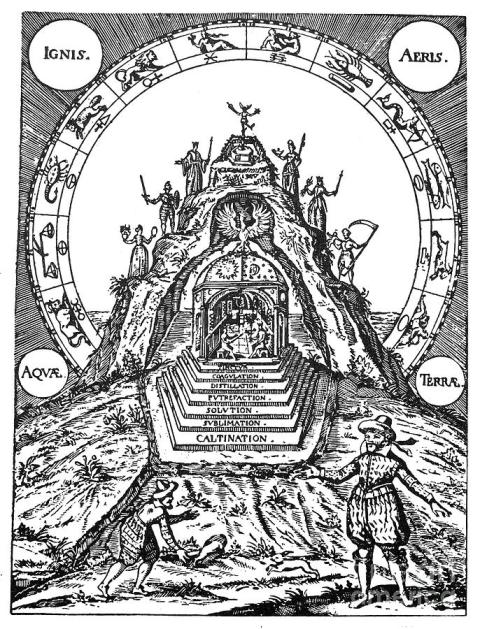
There stands a house under the mountain of the world
Be thou the happy subject of my books, a brave craft
Dash’d all to pieces, my tongue, this air,
Born here of parents born here of parents
The same, hoping to cease not, till death
Budapest on my mind
A friend of mine recently shared Anya Silver’s poem “Doing Laundry in Budapest”, which brought to mind a thematically-related poem of my own, from my first chapbook Budapest Suites (Montreal: Pneuma, 1994) and first trade edition, Grand Gnostic Central and other poems. I share it here for my friend’s, and anyone else’s, pleasure.
“Apply what you know to what you feel that’s more than enough”
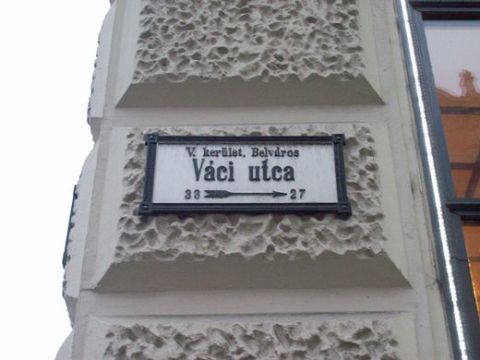
On Váci utca, mongrel pigeons, flapping,
Mount American-style shopfront windows.
Grey cops in pairs or trios patrol;
Country people bag handiwork, whistling.
At the end of Vörösmárty tér, a blind man begs fillérs at tables in Gerbaud—
A blond father yells No! at a Gypsy girl and daughter.
Behind me a woman asks for directions:
Bocsanat. Nem magyar. “Nem Magyar?!”
NOTES:
Váci utca is a famous commercial street in Budapest; Vörösmárty tér is a square at the end of the street; fillérs at the time (1991) were pennies; Gerbaud is a famous café on, I believe, the square; the Hungarian that ends the poem can be translated roughly as “Pardon me. I’m not Hungarian.” “You’re not Hungarian?!”
I am aware that the racial designation of the girl and daughter in line 6 might, today, be read as an epithet; I retain it here as an index of the time of the poem’s composition; its use, innocent at that time, was also prompted by the alliteration with ‘Gerbeaud’….
“We’re doomed.”
Filed under: Ecology, poems | Tags: ecological despair, ecology, ecopoetics, ecopoetry, global warming, insect apocalypse, Manu Saunders
Comments (1) ….or, as the refrain of another “Dark Mountain” climate change jeremiad would put it, “It’s worse than that.”
It is, surely, rationally difficult not to deny the gravity of global warming and environmental degradation in general and not to fall prey to anxiety or even despair. It is not irrational, however, to maintain an open, critical mind and culture hope.
For instance, even fairly responsible media sources distort the findings of ecological researchers. For example, two recent studies of declines in insect biomass inspired copy such as “insect apocalypse,” “global ecosystem collapse,” “loss of all insects within 100 years,” and “collapse of entire food webs.” However, learned reflection reveals the matter is less dramatic, far more complex, though hardly without concern. The same can be said for headlines about how humans have wiped out 60% of all animals on Earth in the last 30 to 40 years.
Much more could be said in this vein, but not quite eight months back, similar, dire and final pronouncements from Mayer Hillman prompted a number of poetic responses, of which the tersest and most direct was this:
Replies to Mayer Hillman
“We’re doomed.”
Your therapist would guide you
gently to see you’re fortune telling.
The dialectician would unfold the thought
that determination does not
foreclose unforeseen developments
being the condition of its own negation.
A happy chance slip of memory recalls
“What is real now was only once imagined”.

Gratitude by the syllable
Filed under: poems, The Brouillon | Tags: Canadian Thanksgiving, gratitude, poetry, Thanksgiving
Leave a comment  Tomorrow, here in Canada, it’s Thanksgiving. Regardless of the nature and origins of the holiday in the U.S. and Canada, there is mounting evidence of how gratitude can shore up happiness. It was this insight that inspired my composing the following poems, each noting some experience for which I felt spontaneously grateful. You can read the sequence, here.
Thanks!
Replies to Mayer Hillman
Filed under: poems | Tags: climate change, Mayer Hillman, poems
Comments (2) 
At the end of April, The Guardian published a dour interview with social scientist Mayer Hillman, wherein he pronounces “We’re doomed.”
Said interview resulted in some tangled discussion threads that, in turn, resulted in some poems (here, here, and here), and some friends’ sharing the interview on-line—again!—prompted the following intervention.
Replies to Mayer Hillman
“We’re doomed.”
Your therapist would guide you
gently to see you’re fortune telling.
The dialectician would unfold the thought
that determination does not
foreclose unforeseen developments
being the condition of its own negation.
A happy chance slip of memory recalls
“What is real now was only once imagined”.
(a) Work on Myth
Filed under: poems | Tags: Barrett Watten, myth, Nathaniel Mackey, poetry
Leave a comment Dispatches from the Poetry Wars has shared a lively back and forth between, mainly,  Barrett Watten and Nathaniel Mackey, which, in turn, inspired some lively on-line discussion that turned, in part, around ‘myth’. Interested parties are encouraged to investigate the Dispatches site further for much related matter.
Before I sit down to work through Hans Blumenberg’s Work on Myth, I append the short poem below from Ladonian Magnitudes as a humble contribution to the communal deliberation!
Decay Pattern
When on earth
was myth a mouth
every head muttered
or is noys or
babble first what
articulate tongues
propagated on air
to ear empty
of echo of
familiar sound
One for Neil Rushton
Filed under: poems | Tags: Faeries, Faery lights, folklore, Neil Rushton, poetry, will o' wisp, William Butler Yeats
Comments (3) Thanks to The Anomalist, I discovered this site administered by novelist Neil Rushton on Faerie lore. It resonates with some of my own concerns, an interest in the Celtic Twilight literary movement and the early work of William Butler Yeats, as well as with a parallel folklore, that around the UFO.
One aspect of said folklore is the Faery Light or Will o’ the Wisp, the topic of a poem from my first trade edition, Grand Gnostic Central, that links a sighting of Yeats’ recounted in his autobiography with tales told me by my great Uncle Peter and Aunt Julia on my father’s (Hungarian) side of their experiences in Saskatchewan.
Will of the Wisp
You say suddenly you saw
A light moving over the river
Just where the water rushes fastest
Brighter than any torch or lamp
Later a small light low down
Then over a slope seven miles off
You knew by hikes and your watch
No human pace could so quick
Here they trail wagons in blizzards
Swoop like owls to rap at windows
Come in view like oncoming engines
Over no tracks up to those waiting
Ye good old days
A friend brought to mind today his meeting a now-mutual friend, musician Zsolt Sőrés. I  had the luck to collaborate with Sőrés and his co-musician Zsolt Kovacs in Budapest, an aspect of which is memorialized in the first part of the poem I share below, from Ladonian Magnitudes. (As usual, the formatting here messes up the lineation: the original is written in tercets).
Pisces
“If our child is born in February or March it will be a Fish.”
Laszlo told us Tibor’d invited us to either his place or The Fish Restaurant
& Laszlo consistent with our unanimous consensus told him The Fish Restaurant
which miffed him a little but then why offer us the choice?—“You don’t do that!”
Besides he has a Stammtisch there
there’s always a table for him
“Of course, sir, just this way!”
So that day Kovács is supposed to arrive around five to record “Trabant” on DAT in his Trabant
because Tuesday after a solid three quarters of a litre of Tokaj, some beers before, innumerable Unicums, and even a little hash? then two big double vodkas
after the rehearsal for Wednesday night I spouted Marinneti glossolalia driving back to Laszlo’s in Kovàcs’s Trabant no one could stop me
So we went to the Tokaj bar Laszlo and I where they ladled half a deci of sweet and half a deci of dry into a glass for each of us drunk down in one go for the effect of a double martini
Then back up to Laszlo’s for a little more hash, no beer! vodka palinka Unicum whiskey two generic Gravol
Kovács an hour and a half late so I’m lying on the front balcony when the Two Zsolts arrive
Petra tells me she and Laszlo looked at each other knowingly as I swayed pale out the door
I remember raving the way I did the night before and arriving at The Fish Restaurant by surprise before seven
Sitting with Tibor and Laszlo who looked at each other and in Hungarian agreed I couldn’t eat with them
Ordering me a mineral water and putting me out on the balcony
Where I got up telling Petra I just need some air
And wander out into Buda’s streets looking for a bench
I remember Petra coming up and seeing how I was sitting tilting back and forth on a little wall over the Duna
The taxi arriving and Petra and Laszlo helping me up supporting me on each arm the taxi driver saying “Later.”
“Get up before they call the police!”
“Should I get an ambulance?”—“No, no, he’s just had too much to drink.”
And Kovács coming in his Trabant, me reeling beside him
Rolling down the window on the way and puking a great orange arc
Kovács tells me it was as if as he made the U-turn in front of The Fish Restaurant
everything I’d drunk sloshed out
One waiter pointed “Look! He’s doing it again!”
From Bremervörde we drove north to Otterndorf at the Elbe’s mouth
In the sun Matjes with raw onion on a bun and a plate of crispy gold Pommes with a big dab of mayonnaise
On the picnic table outside the strand café landside of the dike
Seaside a briny brown tide covered the sand and washed up cold over and drained through honeycombed red bricks enforcing the shore we walked on
Two black-suited windsurfers rode out fast crazy as the two boys splashing in the swimming pond just left of lunch
The sky painterly with grey-rain and sun-bleached clouds framing low sea daisy yellow mist and high blue
The Gasthaus we aimed at for an early supper closed so we drove in to Otterndorf
Brick houses cool sienna tomato rusted in early dusk
Even cobbled clean streets narrow as in Hamburg or Holland
A sample of Italian absinth and a flask of Grobmuter’s Apfelsaft in a gift shop just around the corner from the Ratskellar—“Danke, Mutti!” (Danke, Renate, for the absinthe spoon!)
A Norwegian acquavit before a litre of German beer and three rich Matjes filets Hausfrauen Art with a creamy apple onion celery relish and Bratkartoffeln punctuated by a bitter
A soft chocolate-dipped Eis eaten up quickly melting out the bottom of the cone
The way back musculature uncomfortable on bone-rack, aching joints, and threatening cramps
In bed sweat wet uncontrollable shivers chatter teeth and fingertips tingle numb
Every joint sore unable to lie still three seconds
Eyes rolling in a reeling lolling head
Delirious poetic prayers to Apollo in the name of his son Asclepius to shake from a leafy laurel branch drops blessed by Morpheus to cool my head and just let me sleep
Finally making myself puke three times about three in the morning
NaPoMo leftovers: Six Rimes
Filed under: poems, The Brouillon | Tags: National Poetry Month, poetry, puns
Comments (1) Standard eyes I shun
Dada data
Marxian Martian
‘incarnation’ read
aloud as ‘incantation’
Little Read Book
Ill-read Herring
NaPoMo (5): Some Praises of the May King
Filed under: poems, The Brouillon | Tags: National Poetry Month, poetry, translation
Leave a comment What’s Lebendig’
Welcher Lebendige, Sinnbegabte, liebt nicht vor allen Wundererscheiunungen des verbreiteten Raums um ihn, das allerfreuliche Licht—mit seinen Farben, seinen Strahlen und Wogen; seiner milden Allgegenwart, als weckender Tag. / What living person, gifted with any sense, doesn’t love, more than all the wonderful appearances of spread-out space around him, the all-joyful Light—with its colors, beams, waves; its gentle presence, as waking day.—Hymnen an die Nacht, trans. Dick Higgins
Marks in, walking home, looking
in the used book store,
stroking the one friendly, fluffy
cat, intervening in a theological
dispute at the cash quoting
Spinoza in Latin and Daisetz
Suzuki summing up an evening’s
philosophical chit-chat: “That’s what
I like about metaphysics—nobody
wins!” —stopping by the last
independent English-language bookstore, browsing
the poetry and philosophy, weighing
whether to buy a volume
or two but resolving just
to get the book I
ordered, paying off the dentist
for the new gold crown,
noticing Spring’s first green lush
after two weeks rain now
in intense sun, shaking up
a double martini or two,
commenting cante jondo on Facebook
to buck up a heartbroken
friend, priming a new withering
blog post “our postmetaphysical age”
sending me to Metaphysica Alpha
One: “the senses are loved
for themselves, especially sight,” reading
Hymnen an die Nacht aloud,
“Du kommst, Geliebte—” as Petra
opens the door, parsing that
first sentence together (…who doesn’t
love over and above appearance
spread out light, its colours,
rays and waves, gently everywhere
like the dawn?), philologizing Lebendige,
alive”, “Son of the ever-living”,
the senses of Sinn in
Sinnbegabte, allgegenwart, (omnipresent) everywhere.

 Poeta Doctus